
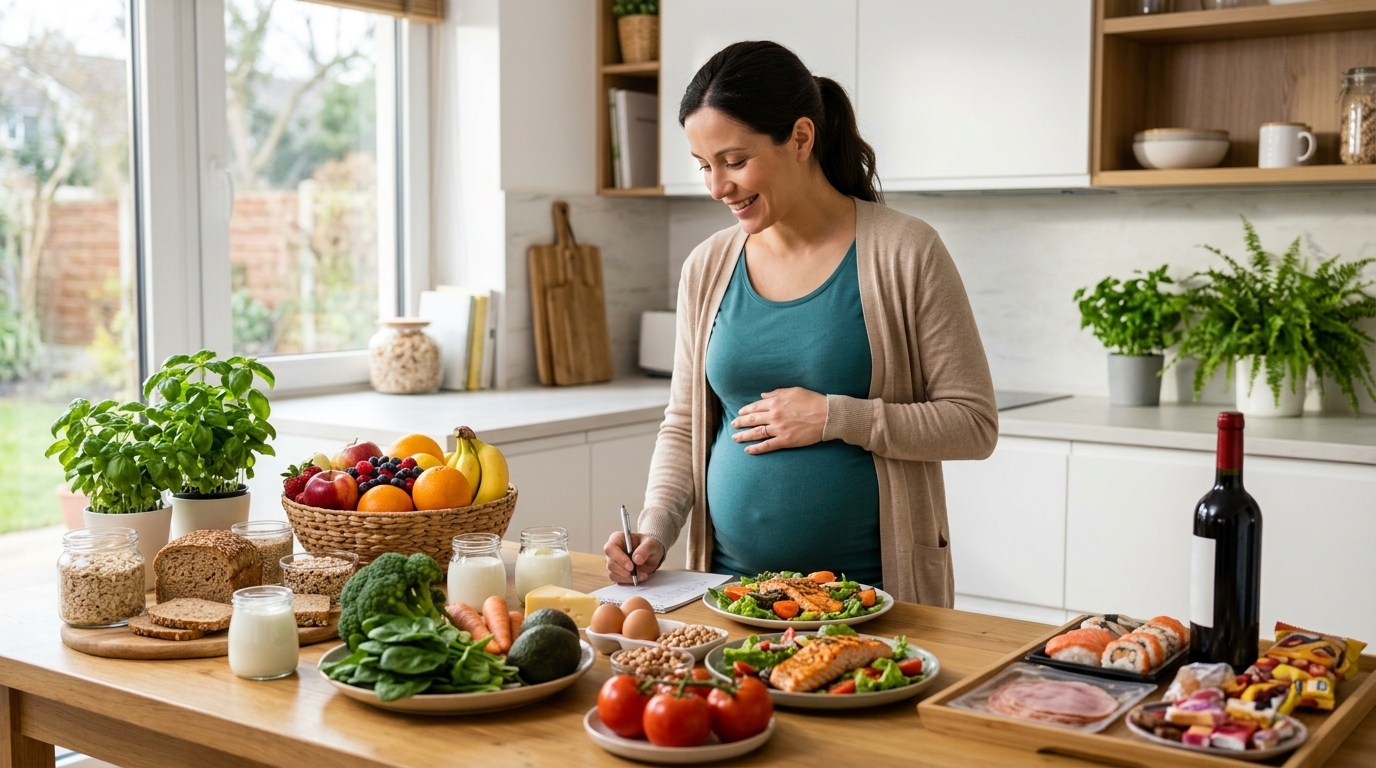
Medical Disclaimer: This article is for informational purposes only. Always consult your gynaecologist or dietitian for personalised pregnancy nutrition advice. Every pregnancy is different.
Foods to avoid during pregnancy India lists are everywhere, and most of them contradict each other. The day I told my mother I was pregnant, she handed me a list.
Not a congratulations card. A list. Foods I should not eat, written in her handwriting on the back of an old envelope, organised by category, with explanatory notes where she felt I might push back.
Papaya was at the top. Underlined. With two stars.
I spent the first trimester eating around a mental map of foods I’d been told were dangerous, many of which I later discovered were perfectly fine in normal amounts. And somehow completely missed a few things that are genuinely risky — because nobody mentioned them because they weren’t traditional worry-foods.
This guide is the clearer version. What’s actually risky and why — with the science explained, not just the rule. What’s a traditional caution that deserves respect. What’s a myth that you don’t need to stress about. And what you can eat instead, because pregnancy is hard enough without eliminating foods you don’t need to eliminate.
Before the list — how to think about food safety in pregnancy
Pregnancy changes how the immune system works. Certain immune responses are deliberately dampened during pregnancy to prevent the body from rejecting the baby — which is a remarkable biological trade-off, but it means the immune system is less effective at fighting some foodborne pathogens.
This is why the food cautions in pregnancy are mostly about pathogen risk — bacteria, parasites, and viruses that a non-pregnant person might shake off but that can cause serious complications in pregnancy, including miscarriage, preterm birth, and fetal infection.
According to the World Health Organization’s pregnancy nutrition guidelines, the key principles are: avoid raw and undercooked animal products, avoid unpasteurised dairy, be careful with high-mercury fish, limit caffeine, and avoid alcohol completely.
The Indian Academy of Pediatrics adds India-specific guidance: be cautious with street food and raw produce, and specifically avoid raw papaya throughout pregnancy.
Understanding why something is risky makes it much easier to make sensible decisions — including when it’s actually fine to eat something in moderation.
The genuinely risky ones — avoid these consistently
1. Raw and undercooked meat, poultry, and eggs
Why it’s risky: Raw or undercooked meat can carry Toxoplasma gondii (which causes toxoplasmosis), Listeria, Salmonella, and E. coli. Toxoplasmosis in pregnancy can cause miscarriage, stillbirth, or serious fetal complications. Listeria crosses the placenta and can infect the baby directly.
In the Indian context: This one needs specific attention because not all “cooked” meat is cooked through. Tandoori chicken that’s pink inside. Mutton curry with partially cooked pieces. Undercooked kheema. These are real risks, not theoretical ones.
The rule: Meat should be cooked until no pink remains inside and juices run clear. Eggs should have fully set whites and yolks — not runny.
What to watch for specifically:
- Bhurji made with half-set eggs
- Omelettes where the inside is still liquid
- Half-cooked kebabs or tikka
- Any raw egg in homemade chutneys, mayonnaise, or desserts
What you CAN eat: All fully cooked meat and eggs. Thoroughly cooked chicken curry, mutton, fish — all fine when cooked through.
2. Raw papaya — the traditional warning with real science behind it
Your grandmother was right about this one. Raw and semi-ripe papaya contains latex and papain — enzymes that can stimulate uterine contractions. In sufficient quantities, this can theoretically cause miscarriage or preterm labour, particularly in early pregnancy.
What to avoid: Green papaya completely — in salads, pickles, raw papaya ki sabzi, raw papaya chaat. Semi-ripe papaya that has any green patches. Papaya-based dishes that use unripe fruit.
What you CAN eat: Fully ripe papaya (completely orange-yellow, soft throughout, no green) is generally considered safe in moderate amounts — a few pieces occasionally, not as a daily staple. Most gynaecologists advise caution throughout pregnancy rather than only in the first trimester.
The verdict: Don’t stress if you ate some ripe papaya before you knew you were pregnant. Do avoid raw and semi-ripe papaya consistently throughout.
🛒 Helpful for pregnancy nutrition:
3. Raw sprouts — the sneaky one
This is the food that catches the most Indian mothers off guard, because raw sprouts have an extremely healthy reputation. And they are nutritious. The problem is that the warm, humid conditions required for sprouting are also ideal conditions for bacterial growth — Salmonella and E. coli particularly.
Raw mung sprouts, alfalfa sprouts, radish sprouts — the bacterial contamination happens at the root level and cannot be washed off. Washing doesn’t help here.
In the Indian context: Many families eat moong sprout chaat for breakfast, believing it’s the healthiest possible option. Sprout salads, raw sprout additions to poha or upma — these are common.
The rule: Cook your sprouts. Sprouts added to a dish that will be cooked — upma, poha, sabzi — are fine. Raw sprout salad and chaat are the problem.
What you CAN eat: Cooked sprouts in any dish. All the nutrition, none of the bacterial risk.
4. Street food and cut fruit from outside — the monsoon risk doubles
Street food during pregnancy is a genuinely complicated topic in India because avoiding it entirely is impractical and culturally disconnecting. The honest guidance is: be selective and careful, not completely restrictive.
The specific risks:
- Water used for preparation — from unclear sources, used for washing vegetables, making chutneys, mixing doughs
- Raw garnishes — raw onion, coriander, raw chutneys that haven’t been heated
- Cut fruit from vendors — pre-cut fruit sitting in the open air, handled by multiple people, potentially washed in untreated water
- Chaat — the sprouts, the raw chutneys, the raw garnishes combine multiple risk factors
During monsoon season specifically, when water contamination is at its peak, street food carries significantly elevated risk for waterborne illness that can cause dehydration, fever, and complications in pregnancy. Our pregnancy insomnia guide mentions this — monsoon is when vigilance about food safety matters most.
What you CAN eat: Freshly made, piping hot street food from clean stalls is lower risk than pre-prepared cold food. Eat at places with visible fresh preparation, high turnover, and clean surroundings. Make the same dishes at home for lower risk versions of your favourites.
5. Raw milk and unpasteurised dairy — including fresh paneer from unclear sources
This is more relevant in India than most pregnancy guides acknowledge, because raw milk — directly from the dairy — is common in many households and is often seen as more “natural” than packaged milk.
Raw milk can carry Listeria, Salmonella, and E. coli. Listeria in pregnancy can cause miscarriage, stillbirth, premature delivery, and severe neonatal infection. It’s one of the more serious pregnancy food risks.
What to avoid: Raw milk without boiling. Soft paneer made from raw milk at home or purchased from fresh dairy stalls. Soft cheeses like brie, camembert, and blue cheese (less common in India but relevant if you eat them).
What you CAN eat: Any milk that has been thoroughly boiled. Packaged pasteurised milk. Paneer made from boiled milk. Hard cheeses. Curd made from boiled milk.
The Indian household reality: If you’re using milk from a dairy delivered fresh each morning — boil it before using in any form. This is the standard practice in many Indian households anyway, but it’s worth reconfirming during pregnancy.
6. High-mercury fish — know which ones to limit
Mercury accumulates in large, long-lived fish. High mercury levels in pregnancy can damage the baby’s developing nervous system. This is a well-established risk with consistent international guidance.
Fish to avoid completely: Shark, swordfish, king mackerel. These are rarely eaten in Indian households but worth knowing.
Fish to limit (eat no more than once a week): Tuna, particularly large canned tuna. Certain larger sea fish. Prawns and smaller fish are lower in mercury.
What you CAN eat freely: Small fish — sardines, mackerel (the small Indian kind, not king mackerel), pomfret, rohu, catla, hilsa. Prawns and shrimp. Salmon. These are all lower in mercury and excellent sources of omega-3 fatty acids, protein, and other nutrients important for fetal development.
The reassurance: Most commonly eaten fish in Indian households — pomfret, rohu, katla, hilsa, prawns — are low-mercury options. Fish is a genuinely valuable food during pregnancy. Don’t avoid it; avoid the specific high-mercury varieties.
7. Excess caffeine — and it’s not just coffee
The guidance is under 200mg of caffeine per day. Most people know about coffee. Fewer realise that chai — which many pregnant women drink multiple times daily — also contains caffeine, as does dark chocolate and some soft drinks.
Caffeine content guide:
- One cup of filter coffee: 80–100mg
- One strong cup of instant coffee: 60–80mg
- One cup of chai: 25–50mg depending on brewing strength
- One cup of green tea: 20–45mg
- One 200ml can of cola: 20–40mg
Two to three cups of chai daily is generally within the safe range. Five to six cups is not. Three cups of chai plus a coffee plus a cola is probably over the limit.
What you CAN have: One to two cups of chai daily — fine. One small cup of coffee — fine. Green tea in moderation — fine. The key is counting all sources, not just the obvious ones.
8. Pineapple — the debate, honestly
Pineapple contains bromelain, which in large amounts may theoretically soften the cervix and trigger contractions. This is where the traditional caution comes from.
The honest assessment: The amounts of bromelain in a normal serving of pineapple are not sufficient to cause contractions in most pregnancies. You would need to consume extraordinary amounts — multiple whole pineapples daily — for the bromelain to reach levels where risk becomes real.
Practical guidance: A few pieces of ripe pineapple occasionally is unlikely to cause harm for most women. If you’ve had previous miscarriages or are in an early, high-risk pregnancy — discuss with your gynaecologist before including it. If you’re healthy and having a normal pregnancy — the occasional piece of pineapple is probably fine.
9. Alcohol — none, at all, ever during pregnancy
This one has no nuance and no safe level. There is no established safe amount of alcohol during pregnancy. Alcohol crosses the placenta and affects fetal development — it can cause Fetal Alcohol Spectrum Disorder, miscarriage, and preterm birth. The severity depends on amount, frequency, and stage of pregnancy.
There is no “just a sip is fine.” This is the one food caution in pregnancy where the answer is simply: none.
10. Liver and organ meats in large amounts
Liver is extraordinarily nutrient-dense — iron, B12, protein, zinc. It’s also very high in preformed vitamin A (retinol). Excessive vitamin A in pregnancy is teratogenic — it can cause birth defects.
The guidance: Small amounts of liver occasionally — once every few weeks — is fine. Liver as a weekly staple is not recommended. Liver-heavy dishes like keema with organ meats eaten frequently should be limited.
What you CAN eat: Liver occasionally. Eggs, dairy, leafy vegetables, and beta-carotene rich vegetables (carrots, sweet potato, pumpkin) for vitamin A — these are safe sources because the body converts beta-carotene to vitamin A only as needed.
Indian-specific myths — what you don’t need to stress about
Mangoes
Mangoes are fine in pregnancy. They’re a good source of vitamin C, vitamin A, and folate. The old belief that mangoes cause “body heat” and complications has no scientific basis. Eat them. Enjoy them.
Spicy food
Spicy food does not cause miscarriage. It can cause heartburn, which is already common in pregnancy — so if spicy food makes your heartburn worse, moderate it for comfort, not for safety. The baby is unaffected.
Cold foods and cold water
Cold water, cold drinks, cold fruit — none of these affect the baby or cause complications. This is a very widespread belief with no scientific basis. If cold things feel comfortable, drink them.
Coconut
Coconut in any form — fresh, oil, milk, water — is perfectly safe in pregnancy. Coconut water is actually a nice hydrating option. No concerns here.
Bananas
Bananas are fine. They’re a good source of potassium, vitamin B6, and folate. The belief that bananas are problematic in pregnancy has no scientific basis.
Foods you should eat MORE of in pregnancy
Since the list of what to avoid can feel overwhelming, here’s the shorter and more important list:
Folate-rich foods: Dal, leafy greens (palak, methi), peas, nuts, eggs. Folate is critical for neural tube development particularly in the first trimester.
Iron-rich foods: Lentils, spinach, meat (cooked through), seeds, dried fruits. Iron requirements double in pregnancy. Eat with vitamin C-rich foods for better absorption.
Calcium-rich foods: Dairy, ragi, sesame seeds, leafy greens. Essential for fetal bone and teeth development.
Protein: Dal, legumes, eggs, dairy, meat, fish. The building blocks of every new cell in your baby’s body.
Omega-3 fatty acids: Low-mercury fish (rohu, pomfret, sardines), walnuts, flaxseeds. Critical for brain and eye development.
🛒 Helpful for pregnancy nutrition:
FAQ — Foods to Avoid During Pregnancy India
About specific foods
Q: I ate raw papaya before I knew I was pregnant. Should I be worried?
A: A small amount of raw papaya eaten before you knew you were pregnant is very unlikely to have caused harm — the risk is from consistent, significant consumption, not from a single accidental exposure. Mention it to your gynaecologist at your next appointment for reassurance, but don’t panic.
Q: Can I eat paneer during pregnancy?
A: Yes — paneer made from boiled or pasteurised milk is perfectly safe and a good protein source during pregnancy. Avoid fresh paneer from roadside stalls where you can’t confirm the milk was pasteurised or boiled.
Q: I’m vegetarian. How do I get enough protein and iron without meat?
A: Very well, actually — Indian vegetarian cooking is naturally rich in both. Dal and legumes daily provide protein and iron. Pair them with vitamin C (tomatoes, lemon, amla) for better iron absorption. Dairy provides calcium and some protein. Ragi is an excellent source of calcium. Nuts and seeds provide healthy fats and minerals. A vegetarian pregnancy is nutritionally sound with a varied diet — you don’t need meat.
Q: Is chai safe during pregnancy?
A: Yes — in moderation. One to two cups of regular chai daily is well within the 200mg daily caffeine limit. Three to four cups starts to push the limit depending on brewing strength. Avoid very strong chai in large quantities. Herbal teas warrant individual checking — some herbal ingredients are not safe in pregnancy.
Q: Can I eat street food at all during pregnancy?
A: Piping hot, freshly cooked food from clean stalls carries lower risk than cold, pre-prepared food. During monsoon season especially, be more cautious. Making home versions of your favourite street food gives you the same flavours with control over water and ingredient quality. Complete avoidance isn’t necessary — selective caution is.
Q: Is Maggi / instant noodles safe during pregnancy?
A: Occasional consumption of instant noodles is unlikely to cause harm. They’re high in sodium and low in nutritional value — not the most nourishing choice for pregnancy but not specifically dangerous in small amounts. If you eat them frequently, balance with more nutritious meals.
About pregnancy diet broadly
Q: Do I need to eat for two during pregnancy?
A: No — and this is one of the most persistent and unhelpful pregnancy myths. You need approximately 300-350 extra calories per day in the second trimester and 450-500 in the third — roughly equivalent to one additional nutritious meal. Eating for two in the sense of doubling your intake leads to excessive weight gain that creates its own complications.
Q: Which supplements should I take during pregnancy?
A: Folic acid — from preconception through the first trimester at minimum, ideally throughout. Iron — as your doctor prescribes based on your blood results. Vitamin D — particularly in India where deficiency is common. DHA/omega-3 — for fetal brain development. Your gynaecologist will advise based on your specific blood work and diet. Don’t self-prescribe beyond folic acid without guidance.
Q: My mother-in-law has a long list of foods I shouldn’t eat. How do I handle this?
A: Some traditional cautions have real science behind them — papaya, raw sprouts, undercooked meat. Others don’t. When in doubt, ask your gynaecologist — having a doctor’s opinion to quote makes these conversations easier. You don’t need to argue about traditional wisdom; you just need to know which parts of it to act on.
More from MumPappaHub — Read These Next:
- Pregnancy Insomnia: What Actually Helps
- Early Signs of Labour
- Hospital Bag Checklist India
- How to Manage Morning Sickness Naturally
- First Trimester Survival Guide
- Pregnancy Yoga Poses for Normal Delivery
- How to Increase Breast Milk Supply
- Starting Baby on Solid Foods
- Baby Blues vs Postpartum Depression
- Newborn Care Tips
- Baby First Year Milestones
- Baby Fever Guide
About This Article
Written by the MumPappaHub editorial team — including a mother who received a handwritten list of forbidden foods from her mother on the day she announced her pregnancy, spent the first trimester avoiding most of them unnecessarily, and completely missed a few genuinely risky things because they weren’t on the list. The papaya, though — the papaya she was right about.
Reviewed for accuracy against WHO pregnancy nutrition guidelines, Indian Academy of Pediatrics recommendations, and current evidence on foodborne illness in pregnancy. This content is for general informational purposes only and does not constitute medical advice. Always consult your gynaecologist for personalised guidance.
MumPappaHub — Real talk for real parents. mumpappahub.com

7 Comments