
Medical Disclaimer: This article is for informational purposes only and reviewed against WHO and IAP guidelines. Diarrhea in babies under 6 months always needs same-day paediatrician assessment. Never give anti-diarrheal medicines to babies without a doctor’s prescription.
Baby diarrhea treatment India became my most urgent search at 11 PM on a Wednesday when my 14-month-old had his fifth loose stool of the day and I was trying to figure out whether this was an emergency, something I could manage at home, or something in between.
He had started with runny stools in the morning. By afternoon they were watery. By evening he seemed uncomfortable but was still drinking, still playful between episodes, still producing tears when he cried. My mother said coconut water. My mother-in-law said ORS from the medical shop immediately. The WhatsApp group had seven different opinions including one person who suggested raw banana and another who firmly opposed it.
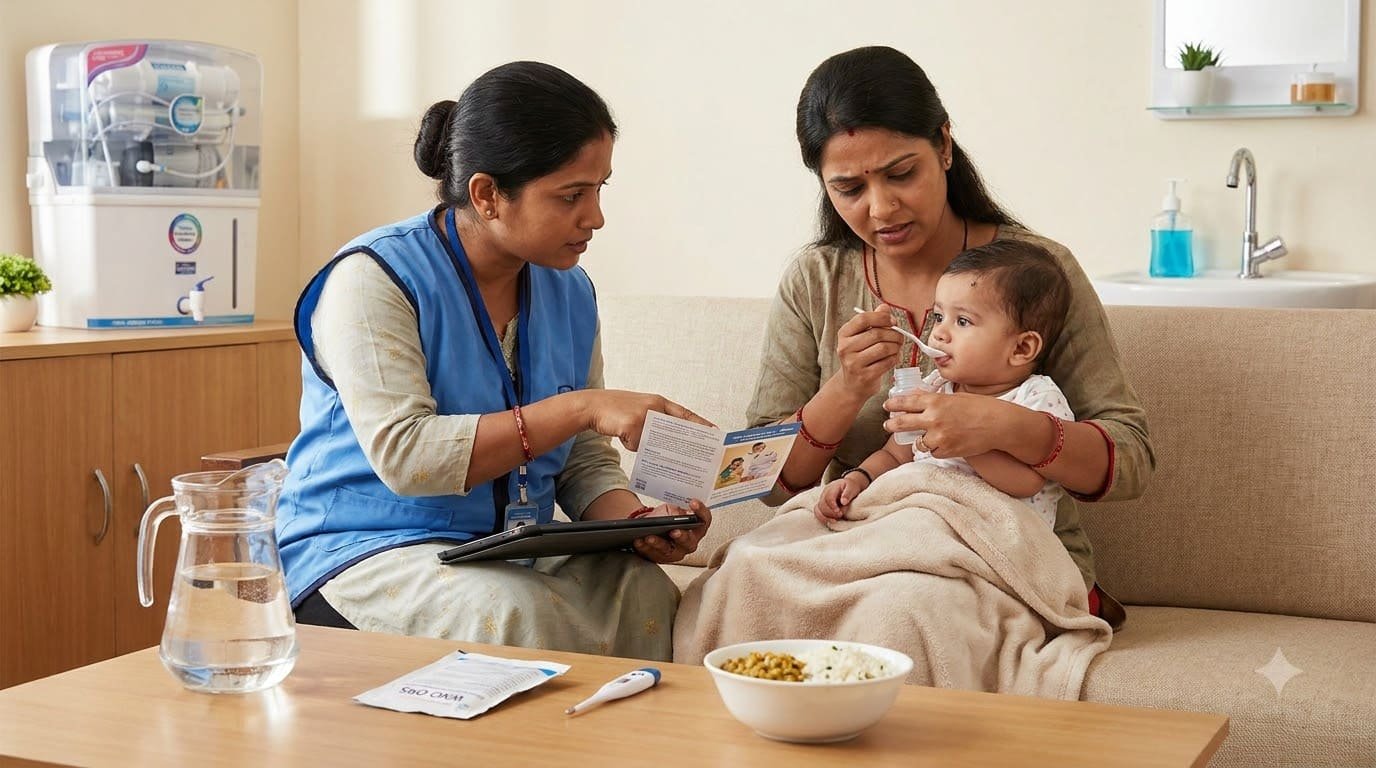
The paediatrician — when I finally called — was calm. She asked three questions: Is he producing tears? Is he urinating? Is he still accepting fluids? Three yes answers. She said: ORS, continue breastfeeding, bring him in tomorrow morning if not improving. He was better by the next afternoon.
This guide covers baby diarrhea treatment India properly — what diarrhea actually is, the dehydration signs that mean go to hospital now, the ORS protocol, safe Indian home remedies, and what must not be given.
What Is Baby Diarrhea and What Causes It in India
Baby diarrhea treatment India requires understanding what diarrhea actually is — because parents frequently confuse normal loose stools with diarrhea, particularly in breastfed babies.
The WHO definition: Diarrhea is three or more loose or watery stools in 24 hours — or more than usual for that specific baby. The consistency matters as much as the frequency.
Normal breastfed baby stools: Can be very loose, mustardy, and frequent — up to 8-10 times daily in the newborn period. This is not diarrhea. Normal breastfed stools are soft, seedy, and yellow. They do not indicate illness.
According to the World Health Organization’s guidelines on diarrhea management in children, acute diarrhea in children under 5 is one of the leading causes of child mortality worldwide — but the vast majority of cases are manageable at home with proper hydration. The Indian Academy of Pediatrics specifically notes that India’s monsoon season sees a dramatic spike in diarrheal illness due to contaminated water and food — making diarrhea management knowledge essential for every Indian parent.
Most common causes in Indian babies:
Viral gastroenteritis (stomach flu): The most common cause. Rotavirus, norovirus, adenovirus — all cause watery diarrhea, often with vomiting. Rotavirus vaccine (now part of India’s Universal Immunisation Programme) has significantly reduced severe rotavirus diarrhea.
Bacterial infection: Salmonella, E. coli, Campylobacter — more common during monsoon when food and water contamination increases.
Contaminated water: A major cause in India — particularly in areas without reliable treated water supply.
Food introduction reactions: Starting new foods at 6 months can cause temporary loose stools as the digestive system adjusts.
Antibiotic use: Antibiotics disrupt gut bacteria and commonly cause loose stools — not a true infection, but managing the disruption is important.
Teething: Teething does NOT cause true diarrhea. Slightly softer stools during teething are common — but watery diarrhea during teething is coincidental, not caused by the teething itself.
The Most Important Skill — Assessing Dehydration
Baby diarrhea treatment India must prioritise dehydration assessment above all else. Diarrhea itself rarely causes direct harm — the danger is dehydration from fluid and electrolyte loss.
Signs of NO Dehydration — Manage at Home:
✅ Tears present when crying
✅ Moist mouth and lips
✅ Urinating regularly (wet nappy every 4-6 hours)
✅ Alert and responsive
✅ Playing between episodes
✅ Accepting fluids
Signs of SOME Dehydration — See Doctor Today:
⚠️ Fewer tears than usual
⚠️ Mouth feels slightly dry
⚠️ Less urination than usual
⚠️ More irritable or restless than normal
⚠️ Slightly sunken eyes
Signs of SEVERE Dehydration — Go to Hospital NOW:
🚨 No tears at all when crying
🚨 Very dry mouth, no saliva
🚨 No urination for 6+ hours
🚨 Sunken eyes
🚨 Sunken fontanelle (soft spot) in babies under 18 months
🚨 Skin that stays "tented" when pinched
🚨 Lethargic — very difficult to rouse
🚨 No longer accepting any fluids
The skin pinch test: Gently pinch the skin on the baby’s abdomen. In a well-hydrated baby, it springs back immediately. In a dehydrated baby, it returns slowly — this is called “tenting.” This is a reliable home assessment tool.
10 Best Baby Diarrhea Treatment India — Home Remedies
1. ORS — Oral Rehydration Solution — The Most Important Treatment
ORS is the single most important intervention for baby diarrhea. The WHO and IAP both identify ORS as the cornerstone of diarrhea management — it has saved more lives globally than any other medical intervention in the last fifty years.
What ORS does: Replaces the water, salt, and sugar lost through diarrhea. It is specifically formulated to be absorbed efficiently even when the gut is inflamed — unlike plain water.
Ready-made ORS in India: Electral, Pedialyte, ORS sachets from any pharmacy. WHO-recommended low-osmolarity ORS is available at government health centres free of charge.
Homemade ORS (if sachets not immediately available):
1 litre of cooled boiled water
6 level teaspoons of sugar
½ teaspoon of salt
Mix thoroughly until dissolved
How much to give:
| Age | Amount per loose stool |
|---|---|
| Under 2 years | 50-100 ml after each loose stool |
| 2-10 years | 100-200 ml after each loose stool |
Give ORS in small, frequent sips — not large amounts at once. A baby who is vomiting can usually keep down small sips even when they can’t keep larger amounts down. Use a spoon or small cup.
Continue giving ORS throughout the illness — not just when the baby seems very unwell.
2. Continue Breastfeeding — Never Stop
This is one of the most important messages of this entire guide: breastfeeding must continue throughout diarrhea — never stop.
Breast milk provides hydration, nutrition, antibodies that fight the infection, and compounds that support gut healing. Stopping breastfeeding during diarrhea significantly worsens outcomes.
Breastfeed more frequently than usual during illness — the baby will naturally want to feed more often and this is appropriate.
Common misconception in Indian families: That breast milk or formula “feeds” the diarrhea and should be stopped. This is incorrect. Continue all milk feeds.
3. Zinc Supplementation — IAP Recommended
The IAP recommends zinc supplementation for all children with diarrhea for 14 days — because zinc deficiency is common in Indian children and zinc significantly reduces the severity and duration of diarrheal illness.
Dose:
- Under 6 months: 10 mg zinc per day for 14 days
- 6 months and above: 20 mg zinc per day for 14 days
Zinc syrup is available at pharmacies — ask your paediatrician to prescribe the correct formulation and dose for your baby’s weight.
Zinc supplementation for 14 days after diarrhea — even after recovery — also reduces the risk of future diarrheal episodes for 2-3 months.
4. Coconut Water — Excellent Natural Electrolyte
Fresh coconut water (naariyal paani) is genuinely useful during mild diarrhea in babies over 6 months. It naturally contains potassium, sodium, and magnesium — electrolytes lost during diarrhea.
For babies 6 months+: Offer small amounts of fresh coconut water between ORS. Do not substitute coconut water for ORS in moderate or severe diarrhea — ORS is more precisely formulated.
Fresh only: Fresh coconut water from a young coconut. Not packaged coconut water with added sugar or preservatives.
5. Rice Water (Maad) — Traditional Indian Remedy with Science
Rice water — the starchy water from boiling rice — is a traditional Indian remedy for diarrhea that has genuine scientific support. The starch in rice water is absorbable even by an inflamed gut, and it provides energy while being gentle on the digestive system.
How to make: Boil 1 cup of plain white rice in 6 cups of water for 15-20 minutes. Strain the water. Allow to cool to room temperature. Add a small pinch of salt. Offer in small sips.
Age: From 6 months Note: Rice water is supportive — it does not replace ORS.
6. BRAT Diet for Older Babies and Toddlers
For babies over 8-9 months who are on solids, the BRAT approach — Bananas, Rice, Applesauce (or stewed apple), Toast (plain) — provides easily digestible foods that are gentle on an inflamed gut.
Indian adaptations:
- Banana: Ripe banana is appropriate. It provides potassium lost through diarrhea and pectin that helps firm stools.
- Rice: Soft plain khichdi or plain rice — one of the most gut-friendly foods available.
- Curd (dahi): Plain curd contains probiotics that help restore gut bacteria. Add curd to the BRAT list for Indian babies — curd rice is an excellent recovery food.
- Toast/roti: Plain, without butter or ghee initially.
What to avoid during active diarrhea:
- High-sugar foods and drinks
- Fried foods
- High-fat foods
- Packaged juices
- Spicy food
7. Curd (Dahi) — Probiotic Support
Plain full-fat curd contains Lactobacillus — probiotic bacteria that help restore the gut’s normal bacterial balance disrupted by diarrhea. Multiple studies show that probiotics, particularly Lactobacillus, reduce the duration of diarrheal illness in children.
How to use: Plain curd mixed into soft rice. Small amounts — 2-3 tablespoons — two to three times daily.
Age: From 8-9 months (once curd has been introduced)
Note: Packaged flavoured yoghurt is not the same — it contains sugar and flavourings. Plain homemade or plain purchased curd is what’s needed.
8. Probiotics — Available Over the Counter
Commercial probiotic preparations specifically formulated for children — Bifilac, Darolac, Vizylac — are available at Indian pharmacies and are recommended by many paediatricians for diarrheal illness.
They work by restoring the balance of beneficial gut bacteria disrupted by infection or antibiotics.
When particularly useful:
- Antibiotic-associated diarrhea — probiotics significantly reduce the severity and duration
- Rotavirus diarrhea
- Diarrhea that is prolonged or slow to resolve
Ask your paediatrician about which specific probiotic formulation is appropriate for your baby’s age and the cause of diarrhea.
9. Hing (Asafoetida) — For Gas and Cramps
Diarrhea is often accompanied by gas, cramps, and abdominal discomfort. The traditional Indian remedy of hing (asafoetida) applied externally around the navel can help with the gas and cramping component.
How to use: Dissolve a tiny pinch of hing in 2-3 drops of warm water. Apply around the navel in gentle circular motions. Not inside the navel — around it.
This does not treat the diarrhea itself but can provide comfort relief from the accompanying cramping.
10. Adequate Rest and Warmth
A baby with diarrhea needs rest, warmth, and comfort alongside hydration management. The immune system works hardest during rest. Keep the baby comfortable — warm but not overheated, with easy access to fluids.
Skin-to-skin contact with the parent — particularly for younger babies — is genuinely soothing and supports the immune response.
What NOT to Give — Critical Safety List
❌ Anti-diarrheal medicines: Loperamide (Imodium), diphenoxylate — NEVER for babies and young children. These stop gut movement which traps the infectious organisms inside and can cause serious harm.
❌ Antibiotics without prescription: Most diarrhea is viral — antibiotics have no effect on viruses and disrupt gut bacteria further. Only certain specific bacterial causes of diarrhea require antibiotics, and only as prescribed by a doctor.
❌ Plain water only: Plain water without electrolytes does not replace the sodium and potassium lost through diarrhea. Giving only plain water to a baby with significant diarrhea can cause dangerous electrolyte imbalances. Use ORS.
❌ Packaged fruit juices: High sugar content draws water into the gut and worsens diarrhea. Not during illness.
❌ Adult ORS preparations: Formulated for adults — different electrolyte concentration. Use paediatric ORS sachets.
❌ Stopping all food: “Resting the gut” by stopping all food is outdated advice. Continue age-appropriate feeds throughout diarrheal illness. Starvation worsens recovery.
Monsoon Season — Extra Vigilance
India’s monsoon season sees a dramatic spike in diarrheal illness in children due to:
Contaminated water: Flooding contaminates water supplies. Even tap water in many areas becomes unreliable during heavy monsoon.
Food contamination: Street food, cut fruits, and foods stored without refrigeration carry higher bacterial loads in hot, humid monsoon weather.
Prevention during monsoon:
- Boil all drinking water for young children
- Avoid cut fruit from outside the home
- Ensure handwashing before food and after nappy changes
- Rotavirus vaccine on schedule
For more on protecting children during monsoon season, our waterborne diseases in children monsoon guide covers the full range of monsoon health risks.
When to Go to the Doctor
Go Same Day:
- Baby under 6 months with any diarrhea
- Signs of some dehydration (reduced tears, dry mouth, less urination)
- Blood in stool — any amount
- Vomiting that prevents keeping down ORS
- High fever (39°C+) alongside diarrhea
- Diarrhea lasting more than 3 days without improvement
Go to Hospital Immediately:
- Signs of severe dehydration (listed above)
- Baby is unusually lethargic or cannot be roused
- No urination for 6+ hours
- Persistent vomiting — cannot keep down any fluids
- Blood or mucus in stool with fever
FAQ — Baby Diarrhea Treatment India
Q: My 3-month-old has 6 loose stools today. Is this diarrhea?
At 3 months, if breastfed, 6 loose stools may be normal — breastfed babies can have very frequent soft stools. The key questions are: Is this more than usual for this baby? Are the stools watery rather than just soft? Is the baby showing any signs of dehydration? Any baby under 6 months with suspected diarrhea should be seen by a paediatrician the same day — don’t manage at home alone.
Q: Can I give ORS and continue formula feeding?
Yes — both. Continue formula feeds as usual alongside ORS. Do not dilute formula. Do not substitute ORS for formula — they serve different purposes. ORS replaces electrolytes lost through diarrhea; formula provides nutrition.
Q: My toddler refuses ORS — it tastes salty. What do I do?
Mix ORS with a small amount of fresh fruit juice (not packaged) to improve the taste. Give it very cold — cold liquids are often more acceptable when unwell. Use a straw or small cup rather than a bottle which may be associated with milk. Offer frequently in very small sips — even 5-10 ml at a time is valuable if repeated consistently.
Q: Should I give Enterogermina or other probiotics?
Commercial probiotics including Enterogermina (Bacillus clausii) are widely used in India for diarrheal illness. Evidence for specific strains varies — Lactobacillus GG and Saccharomyces boulardii have the best evidence. Ask your paediatrician which formulation is appropriate for your baby’s age and specific situation.
Q: My baby’s diarrhea started after starting antibiotics. What do I do?
Antibiotic-associated diarrhea is very common. Continue the antibiotic as prescribed — stopping it early creates resistance. Give probiotics simultaneously (at least 2 hours apart from the antibiotic dose). Give ORS if stools are watery. Plain curd helps restore gut bacteria. See your doctor if the diarrhea is severe or if there is blood in stool.
Q: How long does baby diarrhea usually last?
Viral gastroenteritis — the most common cause — typically lasts 3-7 days. Bacterial diarrhea may last slightly longer and sometimes requires antibiotics. If diarrhea is persisting beyond 7 days, see your paediatrician — persistent diarrhea needs investigation.
More from MumPappaHub — Read These Next:
- Waterborne Diseases Children Monsoon
- Baby Fever Guide India
- Toddler Fever Guide India
- Baby Constipation Remedies India
- Baby Gas & Colic Relief India
- Baby Vaccination Schedule India 2026
- Diaper Rash Treatment India
- Newborn Care Tips
- Starting Baby on Solid Foods India
- Iron Rich Foods Babies Toddlers India
- Baby Development Month by Month
- Newborn Sleep Tips
About This Article
Written by the MumPappaHub editorial team — including a mother whose 14-month-old had his fifth loose stool at 11 PM on a Wednesday while seven WhatsApp group opinions competed for attention. The paediatrician asked three questions. ORS and breastfeeding. Better by the next afternoon.
Reviewed for accuracy against WHO guidelines on diarrhea management in children, Indian Academy of Pediatrics diarrhea management guidelines, and IAP zinc supplementation recommendations. This content is for general informational purposes only. Always consult your paediatrician for babies under 6 months or any baby showing signs of dehydration.
MumPappaHub — Real talk for real parents. mumpappahub.com

1 Comment