
Medical Disclaimer: This is not medical advice. Talk to your doctor or midwife before trying anything new during pregnancy.
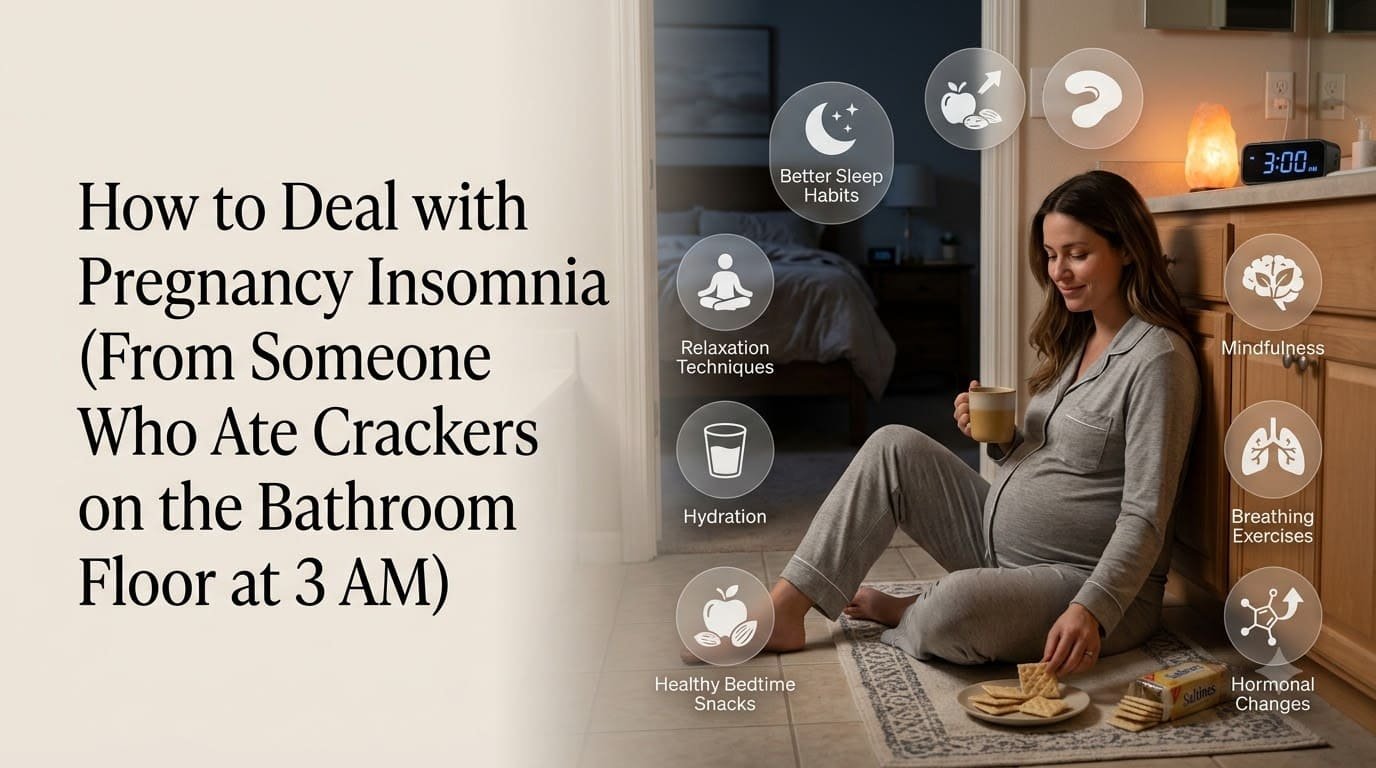
2:47 AM. Bathroom floor. Seven months pregnant. Eating crackers I didn’t even want — this is what real pregnancy insomnia looks like, not the “you may experience some disruption” version the books give you.
Not because I was hungry. Because I’d already been to the toilet twice, tried four different positions, had a ten-minute argument with a pillow, and at some point just… gave up on the idea of sleep being a thing that was going to happen to me that night.
I remember sitting there thinking — nobody told me about this part. The books mentioned sleep problems. They said things like “you may experience some disruption.” They did not say that by the third trimester you will be rationing your bathroom trips like a military operation, sleeping with a pillow between your knees that takes up more bed than your husband, and lying awake at 3 AM calculating whether you can financially afford the baby you are already growing.
So. This is the article I wish I’d had. Not the version that says “try a warm bath.” The version from someone who was actually there.
First — why is this happening, and why does nobody warn you properly
Up to 78% of pregnant women deal with significant sleep problems at some point. I looked this up during those sleepless weeks and felt simultaneously vindicated and furious. The World Health Organization notes that sleep disruption in pregnancy is one of the most common complaints — and one of the least adequately addressed. I felt seen by a WHO fact sheet at 3 AM, which tells you something about where I was.
The reasons are different depending on where you are in the pregnancy, which is why advice that works in the first trimester does nothing in the third. So let me go through it properly.
The first trimester is all hormones and bathroom trips
Progesterone surges massively in early pregnancy. It’s technically a sedating hormone — which is why you’re falling asleep on the sofa at 7 PM. But it also produces lighter, more fragmented sleep. So you’re exhausted and you keep waking up. Both things are real. Both are being caused by the same hormone. It’s not fair.
Add nausea (which for a lot of women is worst in the evenings, not the mornings, despite the name), plus the fact that your kidneys are already processing more blood and therefore making more urine, and you have a recipe for nights that feel like they last three days.
The second trimester gives you a break — briefly
For many women the second trimester is better. Not perfect, but better. The nausea often eases off. Some energy comes back. I had about six weeks in the middle of my pregnancy where I actually slept reasonably well and I remember being so relieved I almost cried.
But the physical stuff starts. The bump is now heavy enough to matter. Rolling over in bed becomes an event that requires planning. Hip pain begins — the pelvis is loosening and shifting to prepare for birth, and sleeping on your side with nothing supporting you between your knees gets uncomfortable quickly. Round ligament pain kicks in — those sharp little catching sensations when you move suddenly that are alarming the first time and just annoying every time after that.
This is when the pregnancy pillow stopped being a nice-to-have and became genuinely necessary in my life.
The third trimester is just hard and I’m not going to pretend otherwise
I’m not going to dress this up. The third trimester is the worst for sleep and if you’re in it right now you already know that.
The heartburn wakes you up. The baby is biggest now and they’ve somehow discovered that 2 AM is an excellent time to have feelings about their position. The bladder has approximately the capacity of a thimble. Braxton Hicks contractions arrive unannounced. The anxiety about birth, which was manageable before, starts taking up a lot more space in the 3 AM version of your brain.
Something that helped me — a little — was being told that the broken, fragmented sleep of late pregnancy is at least partly biological preparation. The body is beginning to shift towards the lighter sleep pattern that newborn life requires. I found this mildly comforting at 3 AM. Mildly. It didn’t make me less tired but it made the sleeplessness feel purposeful rather than random, which is something.
What actually helped — in the order I’d recommend trying things
I want to be specific here because I wasted time on things that didn’t work and I’d rather you didn’t.
Get the pregnancy pillow before you think you need it
I held off buying a full-length pregnancy pillow until 28 weeks because I thought I was managing fine. Reader, I was not managing fine. I was just not yet aware of how much better things could be.
A good pregnancy pillow supports the bump from underneath (taking the weight off the round ligaments), supports the back from behind (so you’re not rolling backward), keeps the knees separated (which reduces the hip strain that comes from sleeping on your side for months), and gives the top arm somewhere to rest. It takes up approximately half the bed. Your partner will adjust.
The U-shaped ones are the most comprehensive. The C-shaped ones take up less space. The wedge is good if you already have a body pillow and just need bump support.
U-shaped pregnancy pillow — 🛒Amazon
C-shaped pregnancy pillow — 🛒 Amazon
Wedge pillow for bump — 🛒Amazon
The left side thing — and how much you actually need to stress about it
From around 28 weeks you’ll be told to sleep on your left side. The reason is real — the weight of the uterus can press on the main vein returning blood to your heart if you’re on your back, which can reduce blood flow to the baby.
Here’s what I want to say about this though: please don’t spend your nights rigid with anxiety about your exact position. The risk is from sustained back sleeping, not from rolling there while asleep. Your body will usually signal discomfort before it becomes a genuine problem. If you wake on your back — roll to a side and go back to sleep. Right side is also fine. Left is recommended but either side works.
The heartburn strategy (antacids alone are not enough)
Heartburn was genuinely one of the worst parts of my third trimester nights. It would start around midnight and peak around 3 AM. I thought antacids were the answer and kept wondering why they weren’t fully working.
What actually made the difference was eating earlier. Not eating for at least two to three hours before lying down. A large dinner close to bedtime is a heartburn guarantee — smaller, earlier meals are genuinely better. And elevating the head of the bed slightly — not with extra pillows, which give you neck pain, but with a wedge under the mattress that gently tilts the whole surface. Gravity keeps the acid down. It works better than I expected.
🛒 Wedge pillow for heartburn — Amazon
The room temperature thing — cooler than you’re probably keeping it
Pregnancy runs genuinely hot. Your metabolism is elevated, your blood volume is higher, you’re generating more heat than usual. The bedroom temperature that was comfortable before is often too warm now.
Lighter duvet. Cotton sheets rather than synthetic. A small fan for air circulation. These sound like small things and they actually make a meaningful difference to how well you stay asleep once you get there.
🛒 Breathable cotton maternity nightwear — Amazon
🛒 Lightweight cotton duvet — Amazon
The restless legs — ask about your iron
If you’re experiencing restless legs — that crawling, itching, impossible-to-keep-still sensation — please get your iron levels checked. Specifically ferritin, not just haemoglobin. Iron deficiency is common in pregnancy and strongly associated with restless legs. Treating the deficiency often significantly improves the symptoms. This was something I wish I’d known earlier.
Gentle leg stretching before bed, warm compress on the legs, and staying moving in the evenings (rather than sitting still for long periods) also help. Magnesium is sometimes recommended — ask your doctor before taking it.
The 3 AM brain — this needs its own approach
The physical discomforts are one thing. The brain that will not stop is another.
The things that helped me most with this:
Writing things down before bed. Not in a structured way — just opening a notebook and writing whatever is actually in my head. The financial worry. The fear about birth. The thing I said to my mother six years ago that I still feel bad about for some reason. Getting it onto paper tells the brain it doesn’t need to keep rehearsing it. It genuinely helps.
The 20-minute rule. If I’d been lying awake for more than 20 minutes, I got up. Made something warm to drink, read an actual physical book for a bit, did some gentle stretching. Then went back to bed when I actually felt sleepy. This felt completely counterintuitive and worked better than anything else I tried for the mental side of the insomnia.
Not fighting it. This is easier said than done but some nights I’d shift from trying to sleep to just resting — lying comfortably, breathing slowly, not expecting sleep to come. Removing the pressure of needing to sleep sometimes made it happen faster.
For the anxiety that’s specifically about birth and parenthood — which is real and valid and worth taking seriously — our baby blues vs postpartum depression guide has some honest thoughts on the emotional weight of this whole period.
The bathroom situation — you can’t fix it but you can manage it
You will go to the toilet multiple times a night during pregnancy. This is not something that can be resolved. What you can do:
Drink most of your fluids earlier in the day rather than in the evening. Lean forward when urinating to fully empty the bladder — this sounds odd but it makes a difference to how quickly it refills. Keep a nightlight in the corridor so you don’t have to turn on a bright light that wakes you fully. Keep the path clear so the whole thing takes as little time and mental effort as possible.
🛒 Motion sensor nightlight — Amazon
Things I tried that didn’t do much
Meditation apps. I know. They work for some people. For me, lying in the dark listening to someone tell me to “notice the weight of my body” while my hip ached and the baby kicked was not the meditative experience the app seemed to assume I was having.
Drinking less water overall. Don’t do this. You need the hydration. Just front-load it in the day.
Sleeping in the spare room. This made me feel lonely and sad and didn’t actually improve sleep. Your experience may vary.
What’s safe to take — and what isn’t
| Generally okay (check with your doctor) | Skip entirely |
|---|---|
| Magnesium glycinate | Melatonin supplements |
| Chamomile tea (moderate, after first trimester) | Antihistamine sleep aids |
| Lavender aromatherapy | Valerian root |
| Calcium carbonate antacids (Tums etc.) | Alcohol (not ever, not for this) |
Magnesium glycinate — 🛒 Amazon
Aromatherapy diffuser — 🛒 Amazon
Lavender essential oil — 🛒Amazon
When to actually call your doctor
Most pregnancy insomnia is uncomfortable and normal. Some things do need a medical conversation though.
New, loud snoring — this can indicate pregnancy sleep apnoea, which is worth assessing. Gasping or pausing during sleep — same. Severe restless legs with no improvement — check iron levels. Anxiety or low mood that’s significantly affecting your daily life alongside the insomnia — prenatal mental health conditions deserve real support, not just self-management. And extreme fatigue that isn’t relieved by any amount of rest — this can indicate anaemia or thyroid issues, both of which are treatable.
The Indian Academy of Pediatrics and current obstetric guidelines both note that maternal sleep quality directly affects fetal development. So if sleep is severely disrupted, it’s genuinely worth raising with your midwife or doctor rather than just enduring it alone.
A bedtime routine that actually works
Consistency helps signal to the body that sleep is coming. Here’s what mine eventually looked like:
Stop eating about two to three hours before bed. Warm shower — not hot, pregnancy makes you overheat. Spend five minutes writing down whatever’s in my head. Ten minutes of gentle stretching or prenatal yoga (our pregnancy yoga guide has a proper sequence for this). Into bed with the pillow arrangement sorted properly. Slow breathing — four counts in, hold for four, six counts out — until something shifted.
Some nights this worked well. Some nights nothing worked and I ended up on the bathroom floor with crackers again. Both are real pregnancy experiences and both are survivable.
FAQ
Is pregnancy insomnia normal in early pregnancy?
Yes. It affects most pregnant women at some point. First trimester insomnia is mostly hormonal. Second trimester often improves. Third trimester is usually the hardest. If it’s severely affecting your daily life, speak to your midwife — you don’t have to just endure it.
Why am I exhausted but can’t sleep?
Because the causes of waking — physical discomfort, hormonal disruption, anxiety — don’t switch off just because the body is tired. Being exhausted doesn’t override these disruptions the way it would normally. It’s one of the more cruel aspects of pregnancy insomnia and it’s very common.
Is it safe to sleep on my back?
From around 28 weeks, prolonged back sleeping is discouraged because the uterus can press on the major vein returning blood to the heart. But rolling onto your back while asleep is not an emergency. Your body usually signals discomfort before it becomes a problem. If you wake on your back — roll to a side and go back to sleep.
Is a pregnancy pillow actually worth it?
Yes. Get it earlier than you think you need it. Most women who buy one say they should have done it sooner. I say this as someone who waited until 28 weeks and spent the previous weeks being unnecessarily uncomfortable.
Can I take melatonin?
Melatonin isn’t adequately studied in pregnancy and is generally not recommended without explicit medical advice. Creating the right conditions for your body to produce its own — dark room, no screens, consistent bedtime — is the safer approach.
My anxiety is worst at night. What actually helps?
The worry journal before bed is the most consistently useful thing I found. Getting concerns onto paper rather than cycling through them in your head. The 20-minute rule also genuinely helps — getting up rather than lying there anxious in bed. And if nighttime anxiety is significantly affecting your life, please speak to your midwife. It deserves proper support.
What about vivid dreams?
Normal. Very common. Driven by hormonal changes and the emotional weight of anticipation. Nothing about them is predictive. No sign of anything being wrong — just your brain processing an enormous amount of change, not always gracefully, but necessarily.
More on MumPappaHub worth reading:
- Early Pregnancy Symptoms
- First Trimester Survival Guide
- How to Manage Morning Sickness Naturally
- Pregnancy Yoga Poses for Normal Delivery
- Baby Blues vs Postpartum Depression
- Hospital Bag Checklist
- Early Signs of Labour
- 7 Foods to Avoid During Pregnancy
- Newborn Sleep Tips
- Baby Sleep Training Guide
- 4 Month Sleep Regression
- 5 Safe Postpartum Exercises
About This Article
Written by the MumPappaHub editorial team — including contributions from real mothers who have been there. The bathroom floor crackers story is true. The 2:47 AM timestamp is accurate. We write from experience because that’s the only kind of writing that actually helps at 3 AM.
Reviewed for medical accuracy against current obstetric and sleep medicine guidelines. This content is for general informational purposes only and does not constitute medical advice. Always consult your doctor or midwife for guidance specific to your pregnancy.
MumPappaHub — Real talk for real parents. mumpappahub.com

7 Comments