
Medical Disclaimer: This article is for informational purposes only and reviewed against WHO and IAP guidelines. If your baby’s heat rash is spreading rapidly, appears infected, or is accompanied by fever, consult your paediatrician immediately.
Baby heat rash India is one of the most common skin problems that Indian parents deal with — not just in summer but during the monsoon season too, when high humidity and trapped sweat combine to produce the tiny red bumps that every Indian parent knows as ghamori or ghamoriyan.
My neighbour’s four-month-old daughter developed heat rash during a particularly humid August week. Her mother had swaddled her snugly — the traditional bundling that generations of Indian grandmothers swear by — and the result was a neck and chest full of tiny, angry red bumps. The baby was cranky, scratching constantly, unable to settle.
Her mother-in-law suggested prickly heat powder immediately. Her own mother suggested coconut oil. I suggested removing the extra layer of clothing first.
The last suggestion worked fastest — but the full recovery took the combination of several things. This guide covers what heat rash actually is, why Indian babies are particularly prone to it, and ten safe home remedies that actually work.
Baby Heat Rash India — What Is It?
Baby heat rash India — medically called miliaria, commonly called ghamori or ghamoriyan — occurs when sweat ducts become blocked and sweat is trapped under the skin. Instead of evaporating, the trapped sweat causes inflammation, producing the characteristic tiny red bumps or clear blisters.
According to the World Health Organization’s guidelines on newborn skin care, heat rash is one of the most common skin conditions in newborns and young babies, particularly in hot and humid climates. The Indian Academy of Pediatrics identifies heat rash as especially common in Indian babies due to India’s climate — the hot summers, the humid monsoon season, and traditional swaddling practices that can trap heat and sweat.
Why Indian babies are especially prone:
Hot, humid climate: India’s summer and monsoon months create the ideal conditions for heat rash — high heat combined with high humidity prevents sweat from evaporating naturally.
Traditional over-bundling: The Indian tradition of wrapping babies snugly — particularly in the first months — is well-intentioned but can trap heat and sweat in hot weather, directly causing heat rash.
Immature sweat glands: Babies’ sweat glands are not fully developed, making them less efficient at regulating temperature. Sweat ducts are easily overwhelmed and blocked.
Skin folds: Babies have multiple skin folds — neck, wrists, behind the knees, groin — where sweat accumulates and heat rash commonly develops.
Types of Heat Rash — Which Does Your Baby Have?
Miliaria Crystallina — Mildest Form
Tiny, clear, fluid-filled blisters on the surface of the skin. They break easily. No redness, no itching. Most common in newborns in the first weeks of life.
Management: Keep cool and dry — these resolve on their own.
Miliaria Rubra — Most Common (Prickly Heat)
The most common type — the red, itchy, prickly bumps that Indian parents know as ghamori. Small red bumps or spots, often with a stinging or prickly sensation. Baby may be irritable and scratch at the affected areas.
Management: Cooling, light clothing, the remedies in this guide.
Miliaria Pustulosa — With Pus
Similar to Miliaria Rubra but the bumps fill with pus. This does not necessarily indicate infection, but warrants paediatrician review if widespread.
Management: See paediatrician.
Miliaria Profunda — Deep Layer
Rare in babies, more common in older children. Flesh-coloured bumps in a deeper skin layer. Warrants medical assessment.
Where Heat Rash Appears — Know the Common Areas
✅ Neck and neck folds
✅ Chest and upper back
✅ Armpits
✅ Elbow creases
✅ Groin and nappy area
✅ Behind the knees
✅ Forehead and scalp
✅ Anywhere clothing fits snugly
10 Best Baby Heat Rash India Home Remedies
1. Remove Extra Layers — The Most Important First Step
The single most effective immediate action for heat rash is removing excess clothing and layers. This sounds obvious — but in many Indian households, babies are kept in multiple layers out of concern about cold, even in warm weather.
In the context of heat rash: A baby with heat rash needs less clothing, not more. One soft cotton layer — or no clothing at all for short periods in a warm, safe indoor environment — allows air circulation and lets the skin breathe.
The bundling problem: If your baby has heat rash and is being swaddled tightly or kept in multiple layers, removing those layers is the most important thing you can do. The rash will not improve while the cause is present.
Age-appropriate guidance: A baby whose temperature is normal (36.5–37.5°C) does not need extra layers “just in case.” Dress the baby in one layer more than an adult would comfortably wear in the same environment.
2. Cool the Baby — Cooling is Treatment
Cooling the affected skin is both immediate relief and active treatment. Heat rash resolves when the skin cools and sweat can flow freely again.
How to cool:
Cool water wipe: Dip a soft cotton cloth in cool (not cold) water. Gently wipe the affected area. Let it air dry — do not rub dry.
Cool bath: A lukewarm-to-cool bath — not cold, which can cause temperature shock in young babies — for 5-10 minutes. Let the skin air dry or pat very gently. No soap on the rash area.
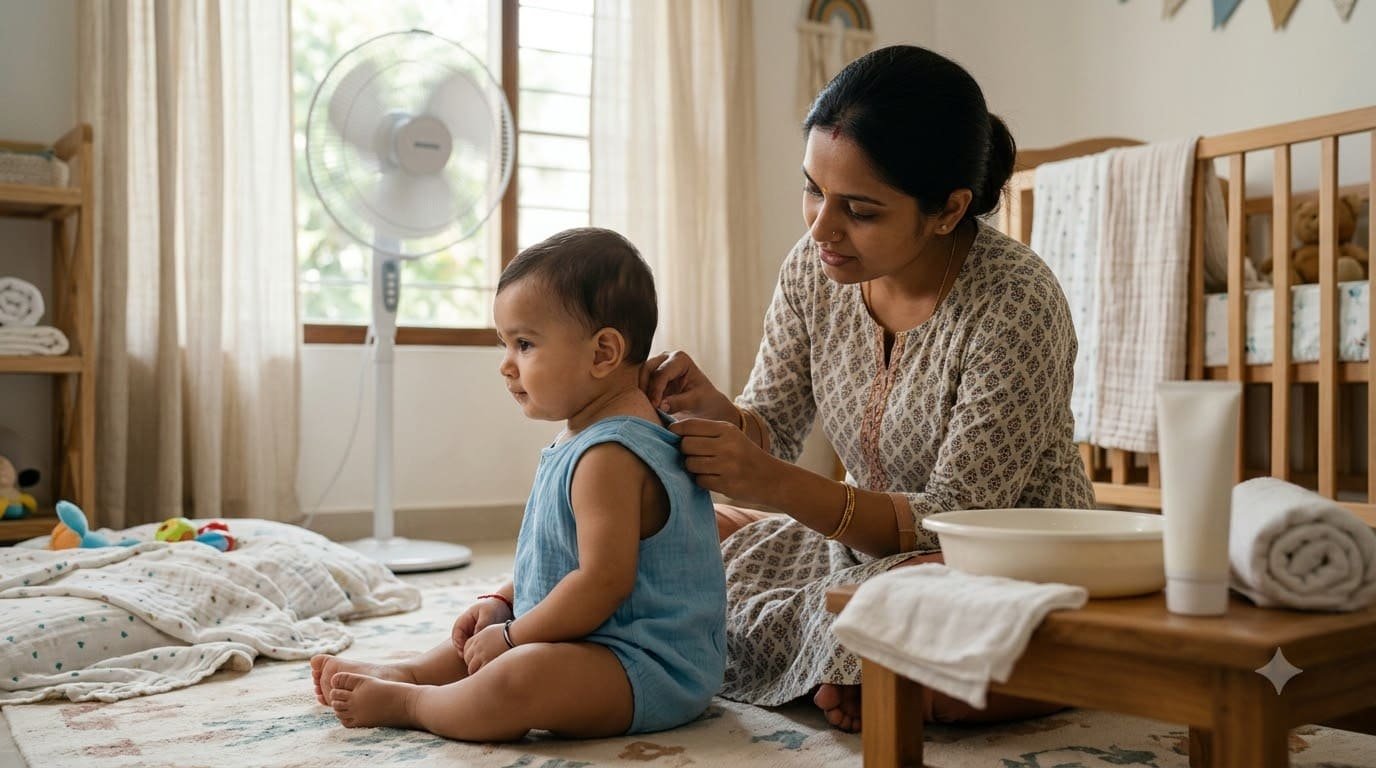
Fan or air circulation: A fan blowing gently in the room — not directly on the baby — helps. Air conditioning is appropriate and helpful for a baby with heat rash; the concern about AC causing cold is misplaced if the temperature is not extreme.
Frequency: Cool wipes 2-3 times daily during active rash. Cool bath once daily.
3. Coconut Oil — Applied Correctly
Virgin coconut oil applied in a very thin layer can soothe the inflammation of heat rash. Its antimicrobial and anti-inflammatory properties help.
How to apply: After cooling and drying the skin, apply a very thin layer of virgin coconut oil to the affected area. Thin is key — a heavy application of any oil traps heat and makes heat rash worse.
What not to do: Heavy coconut oil application, or massaging oil into an area with active heat rash, blocks the sweat ducts further and prolongs the rash.
When to skip it: If the rash is very active and inflamed, skip oil entirely and focus on cooling and keeping the area dry. Oil is more appropriate for soothing mild, resolving heat rash.
4. Neem Water — Traditional Remedy with Science
Neem (Azadirachta indica) has documented antibacterial and anti-inflammatory properties — the basis for its traditional use in Indian skin care for generations.
How to make neem water: Boil 8-10 fresh neem leaves in 2 cups of water for 10 minutes. Strain. Cool completely to room temperature. Use to wipe the affected area with a soft cotton cloth, or add to the baby’s bath water.
Age: From 2 months+ Frequency: Once daily during active rash
Note: Neem is for external use only. Neem oil or neem preparations should not be ingested by babies.
5. Multani Mitti (Fuller’s Earth) — Cooling Clay
Multani mitti has been used in Indian skin care for centuries for its cooling, oil-absorbing, and anti-inflammatory properties. For older babies (6 months+) with heat rash on the body, a thin multani mitti paste can provide cooling relief.
How to use: Mix multani mitti with cool rose water (gulab jal) or plain cool water to make a thin, smooth paste. Apply a thin layer to the affected area. Leave for 5-10 minutes. Rinse off gently with cool water.
Age: 6 months+ Frequency: Once daily during active rash Avoid: Face and sensitive skin areas. Use only on body heat rash patches.
6. Chandan (Sandalwood) Paste — Cooling and Soothing
Pure sandalwood powder mixed with rose water makes a cooling paste that has been used for infant skin care across India for generations. Sandalwood has mild anti-inflammatory and cooling properties.
How to use: Mix 1 teaspoon of pure sandalwood powder (chandan) with enough rose water to make a smooth paste. Apply a thin layer to the affected area. Leave for 10 minutes. Rinse off gently.
Age: 3 months+ Note: Use only pure sandalwood powder — not synthetic fragrance products. Test on a small area first.
7.The Correct Clothing Choice — Cotton Only
Clothing during active heat rash directly affects how quickly the rash resolves.
What to dress the baby in:
- Soft, lightweight cotton only — preferably muslin cotton which is the most breathable
- Loose-fitting — nothing that creates friction or traps heat against the skin
- One layer — not more
- Clean, freshly washed clothing — residual detergent can irritate already-inflamed skin
What to avoid:
- Synthetic fabrics — they trap heat and sweat
- Tight-fitting clothing over rash areas
- Nappy area: change nappies frequently during heat rash — the closed, moist nappy area is a common heat rash location and needs maximum air circulation
8. Oatmeal Bath — Anti-Inflammatory Soothing
Ground oatmeal in the bath water has documented anti-inflammatory and itch-relief properties. It is safe for babies from birth and provides genuine relief from the itching and discomfort of heat rash.
How to make: Blend plain uncooked oats in a mixie to a fine powder. Add 2-3 tablespoons to cool-lukewarm bath water. Stir until the water becomes milky. Bathe the baby for 5-10 minutes.
Frequency: Once daily during active rash After: Pat gently dry — do not rub. Allow maximum air drying.
9. Keep the Sleep Environment Cool
Heat rash is typically worst in the morning after a night’s sleep — because the sleeping environment is enclosed and body heat accumulates. Addressing the sleep environment is essential.
Practical steps:
- Light cotton bedding only — no heavy blankets or multiple layers
- Fan in the room (not directly on the baby)
- Air conditioning if available — an appropriate room temperature of 24-26°C is comfortable and helps resolve heat rash
- Loose cotton sleep suit or just a nappy in very warm weather
- Change position during the night if possible to prevent sweat from accumulating in one area
The swaddling issue: If you are swaddling your baby in warm weather — stop, or significantly loosen the swaddle, during active heat rash. Tight swaddling in warm weather is one of the most common causes of heat rash in Indian newborns.
10. What NOT to Use — Common Indian Mistakes
Several traditional Indian approaches to heat rash actually make it worse:
Heavy talcum powder: Talcum powder clogs sweat ducts and worsens heat rash. It also carries an inhalation risk. The IAP advises against talcum powder on babies.
Heavy oils (mustard oil, sesame oil) on heat rash: Oil applied to active heat rash blocks sweat ducts and traps heat. This makes the rash worse.
Tight bandaging or covering: Wrapping the rash area tightly traps heat and sweat — the exact opposite of what is needed.
Antiseptic creams without medical advice: Betadine, calamine, or other medicated creams should only be used on a paediatrician’s recommendation.
Fragranced products: Any fragranced cream, powder, or oil on inflamed skin can cause additional contact irritation.
When to See the Doctor
Most heat rash resolves within 2-4 days with appropriate management. See your paediatrician if:
The rash is spreading rapidly despite cooling measures
The rash is accompanied by fever (38°C+)
Blisters are weeping, crusting, or producing coloured discharge — signs of infection
The baby seems significantly unwell beyond normal irritability
The rash has not improved at all after 4-5 days of appropriate home management
You are unsure whether it is heat rash or another condition — fever with rash can indicate other conditions including dengue or viral illness during monsoon season
Prevention — Aage Se Ghamori Nahi Hogi
Dress appropriately for the weather: One cotton layer in warm weather. Check the baby’s neck and back — if warm and sweaty, they are overdressed.
Avoid over-bundling: The tradition of keeping babies bundled is appropriate in cool weather. In Indian summer and monsoon, it causes heat rash. Adjust according to actual temperature, not tradition.
Cool baths daily: A daily cool-lukewarm bath in warm weather prevents sweat duct blockage.
Cotton bedding: Light cotton bedding year-round in India.
Regular nappy changes: Especially in warm weather — a wet nappy against the skin is a heat rash trigger.
Air circulation: A gently moving fan in the room where the baby sleeps and plays prevents the still, humid air that causes heat rash.
FAQ — Baby Heat Rash India
Q: My baby has tiny red bumps on the neck. How do I know it’s heat rash and not something else?
Heat rash typically appears in areas where sweat accumulates — neck folds, chest, back, armpits, groin. The bumps are small, red, and appear in clusters or patches. The baby has been in warm or humid conditions. If the rash appears suddenly with fever, or looks very different from small red bumps, consult your paediatrician — during monsoon season, fever with rash should always be assessed.
Q: My mother-in-law says to apply prickly heat powder. Should I?
Traditional prickly heat powders with talcum powder base are not recommended by the IAP for babies — talcum powder can be inhaled and can clog sweat ducts. Some prickly heat powders use cornstarch base and herbal ingredients which are less problematic, but even these should be applied very lightly. The most effective approach remains cooling, light cotton clothing, and keeping the skin dry — not covering it with powder.
Q: The baby has heat rash in the nappy area. How do I manage it?
Change nappies more frequently — every 1-2 hours during active nappy area heat rash. Allow nappy-free time for 15-20 minutes several times daily. Cool water wipe at every change. Avoid nappy cream on heat rash — it traps heat. If the nappy area rash is severe or not improving, see your paediatrician to distinguish heat rash from nappy rash or candidal infection which require different treatment.
Q: It’s monsoon — can my baby get heat rash even in rainy weather?
Yes — and this surprises many parents. Monsoon humidity is actually one of the most significant heat rash triggers. High humidity prevents sweat from evaporating even at relatively moderate temperatures. A baby kept in a non-air-conditioned room during a humid monsoon day is at higher risk of heat rash than during a dry summer day of similar temperature.
Q: How long does heat rash last?
With appropriate management — removing excess clothing, keeping cool and dry — most heat rash resolves within 2-4 days. Without addressing the underlying cause (over-bundling, humid environment), it may persist or recur.
More from MumPappaHub — Read These Next:
- Diaper Rash Treatment India
- Baby Massage Maalish India
- Monsoon Baby Care Tips
- Baby Eczema Treatment India
- Baby Fever Guide India
- Baby Vaccination Schedule India 2026
- Newborn Care Tips
- Baby Eye Care India
- Baby Constipation Remedies India
- Baby Gas Colic Relief India
- Baby Development Month by Month
- Newborn Sleep Tips
About This Article
Written by the MumPappaHub Research Team — including a researcher whose neighbour’s four-month-old had a neck full of ghamori from over-bundling in August. The mother-in-law said powder. Her own mother said coconut oil. The correct first step was removing the extra layer. All three were partly right — but the order mattered.
Reviewed for accuracy against WHO guidelines on newborn skin care and Indian Academy of Pediatrics recommendations on heat rash management in Indian infants. This content is for general informational purposes only and does not constitute medical advice. Consult your paediatrician for any rash accompanied by fever or not resolving with home management.
MumPappaHub — Real talk for real Indian parents. mumpappahub.com
