
Medical Disclaimer: This article is for informational purposes only and does not replace advice from your paediatrician or qualified healthcare professional. Always consult your doctor if your baby shows signs of illness.
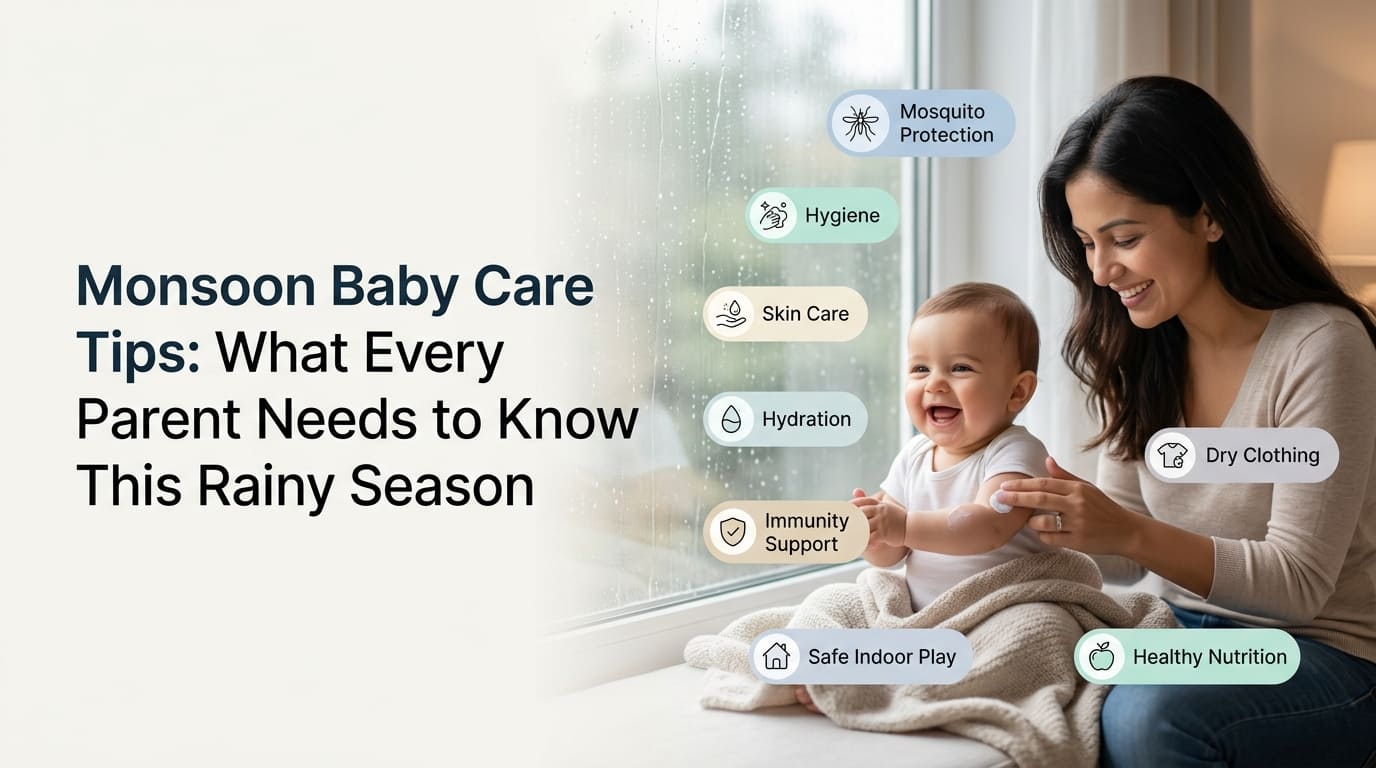
Monsoon baby care tips are the thing nobody hands you along with the diaper bag — you just have to figure it out in real time. The first monsoon with a baby is something nobody fully prepares you for.
I remember sitting by the window watching the rain come down, my four-month-old on my lap, thinking — okay, I kept her alive through the heat. Now what? Because suddenly everything felt different. The air was heavier. The house smelled different. Her skin felt different against mine. And I had absolutely no idea what I was supposed to be doing differently, if anything.
Turns out — quite a lot.
Monsoon is beautiful. It’s also the season that brings more baby health problems than any other time of year. Colds, rashes, infections, tummy troubles, mosquito-borne illnesses — all of it spikes between July and September. And most of it is preventable, or at least manageable, if you know what you’re dealing with.
This is everything I learned — through experience, through panicked three-AM searches, and through finally finding a paediatrician who explained things properly.
Why Monsoon Is Hard on Babies Specifically
Their immune systems are still learning
Babies — especially under twelve months — don’t have fully developed immune systems yet. They’re still building their defences, borrowing antibodies from breast milk, learning to fight off pathogens they’ve never encountered before.
Monsoon throws a lot at them at once. Bacteria thrive in warm, humid conditions. Mosquitoes breed in standing water. Fungal infections love the dampness. Viral infections pass more easily when windows are closed and families spend more time indoors together.
Adults can manage most of this without noticing. Babies cannot. Their systems get overwhelmed more easily, symptoms escalate faster, and what looks like a minor sniffle on a Monday can become a high fever by Wednesday if you’re not paying attention.
Humidity changes everything
The sudden spike in humidity that comes with monsoon affects a baby’s skin, their breathing, their digestion, and their sleep — all at once. Skin that was dry in summer suddenly becomes prone to rashes in the heat-humidity combination. Milk and food spoil faster. Nappies feel damper even when clean. Fungal infections appear in skin folds that were perfectly fine a month ago.
None of this is a crisis. But all of it requires a shift in how you’re caring for your baby day to day.
Skin Care in Monsoon — The Biggest Issue Most Parents Miss
Why rashes spike in July and August
Humidity plus heat plus a nappy equals the perfect environment for a rash. Heat rash, nappy rash, and fungal rashes all peak during monsoon, and they can appear very quickly — sometimes within twenty-four hours of the weather changing.
Heat rash — small red bumps, usually on the neck, chest, and back — happens when sweat glands get blocked. It looks alarming and it’s usually harmless. Keep the area cool and dry, use loose cotton clothing, and it resolves on its own within a few days.
Nappy rash in monsoon needs more frequent nappy changes than usual — even if the nappy doesn’t feel very wet. The humidity means the skin stays damp longer between changes. Change every two hours during the day regardless, and let your baby have some nappy-free time on a waterproof mat every day. Air is the best treatment.
Fungal rash looks different — it tends to appear in the folds of skin, around the neck, in the armpits, between fingers and toes. It’s usually redder than heat rash, sometimes has small raised edges, and doesn’t improve with normal barrier cream. If you see this, it needs antifungal cream — speak to your paediatrician before applying anything.
The bath question
Daily baths are important in monsoon — more important than in winter, less complicated than people think. Use lukewarm water, not cold. Dry thoroughly — especially skin folds, behind the ears, under the arms, between the toes. Damp skin in humid air is an invitation to fungal growth.
Don’t over-bathe either. Once a day is enough. More than that strips the natural oils that protect the skin barrier.
After bathing, use a light moisturiser — not a heavy cream. In monsoon, heavy creams sit on the skin and trap moisture, which makes rashes worse. A light baby lotion applied to slightly damp skin is enough.
Respiratory Health — Colds, Coughs and What to Watch For
Why babies get more respiratory infections in monsoon
Cold viruses spread easily when people spend more time indoors together. Add the temperature swings of monsoon — hot and humid outside, cold and air-conditioned inside — and a baby’s respiratory system takes a real hit.
Most respiratory infections in babies during monsoon are viral, which means antibiotics don’t help and shouldn’t be given. The body needs to fight it out. Your job is to keep them comfortable while it does.
What actually helps
Keep the baby’s head slightly elevated during sleep — a folded towel under the mattress works well and is safer than a pillow. This helps with drainage and makes breathing a little easier.
Saline drops are your friend. A few drops of saline in each nostril, followed by gentle suctioning with a nasal aspirator, can clear congestion significantly and make feeding much easier. It’s one of those things that sounds fiddly and becomes second nature very quickly.
Steam helps older babies — sit with them in a steamy bathroom for ten to fifteen minutes. Not boiling water near the baby — just a hot shower running in the closed room.
Breast milk remains the best medicine for a breastfed baby during illness. The antibodies in breast milk are specifically tailored to whatever pathogen the mother has been exposed to — which is exactly what the baby needs.
When to call the doctor
A mild cold in a baby over three months can usually be managed at home for a few days. But some signs need prompt medical attention — and monsoon is not the season to wait and see.
Call your paediatrician if your baby has a temperature above 38°C and is under three months old — this is always an emergency. If your baby is over three months but the fever has lasted more than two days, call. If they’re not feeding, are unusually lethargic, are breathing faster than normal or with visible effort, or if they have a high-pitched cry that’s different from their usual — don’t wait. Our guide on toddler fever management covers the fever question in detail, and our baby fever guide explains exactly what to watch for by age.
Tummy Troubles — Diarrhoea, Vomiting and Food Safety
Why digestive illnesses peak in monsoon
Bacteria multiply faster in warm, humid conditions. Food spoils quicker. Water contamination is more common. Flies carry pathogens from one surface to another more actively. All of this means gastroenteritis — vomiting and diarrhoea — is significantly more common in monsoon, especially in babies who are starting solids.
Prevention
Wash your hands before every feed, every nappy change, every time you prepare food. This one thing prevents more illness than anything else.
If you’re breastfeeding — keep breastfeeding. Breast milk provides gut-protective antibodies and is itself completely safe throughout monsoon.
If your baby is on formula — prepare each feed fresh. Don’t store made-up formula in monsoon even in the fridge for longer than an hour. The risk of bacterial growth is significantly higher than in cooler months.
If your baby is on solids — be stricter about freshness. Make smaller batches. Don’t use purees that have been in the fridge for more than twenty-four hours. Reheat thoroughly. When in doubt, throw it out. For more on safe solid feeding, our starting baby solid foods guide has a section specifically on food safety.
Managing diarrhoea at home
Mild diarrhoea — two to three loose stools more than usual — can be managed at home with increased fluids. For breastfed babies, offer more frequent feeds. For babies on solids, offer oral rehydration solution (ORS) between feeds.
Don’t stop feeding. The old advice to rest the gut is outdated — continuing to feed actually helps the gut recover faster.
Watch for signs of dehydration: dry mouth, no tears when crying, sunken fontanelle (the soft spot on the head), significantly reduced wet nappies, unusual lethargy. If you see these — seek medical attention immediately.
Mosquitoes — The Monsoon Threat Nobody Takes Seriously Enough
Why mosquito protection matters more than you think
Dengue, malaria, and chikungunya all peak during and after monsoon. Mosquitoes breed in standing water — plant pots, tyres, water containers, blocked drains, water collected in folds of tarpaulins. The week after heavy rain, mosquito populations spike dramatically.
Babies cannot communicate that they’ve been bitten repeatedly. They can’t tell you they have a headache or that their joints ache. By the time symptoms are obvious, the illness is already established.
Safe mosquito protection for babies
Mosquito nets over the cot or sleeping area are the safest and most effective protection for young babies. No chemicals, no questions about safety — just a physical barrier. Use them for every sleep, day and night.
For babies over six months, DEET-free mosquito repellents formulated specifically for babies can be used on exposed skin — never on the face, never on hands that go in the mouth. Check the age recommendation on any product before using it.
Clothing is underused as protection. Long-sleeved cotton tops and full-length trousers during dawn and dusk — when mosquitoes are most active — significantly reduce biting. Cotton is breathable enough to be comfortable even in monsoon heat.
Eliminate standing water around your home. Every container, every plant saucer, every blocked drain is a breeding ground. This is the single most effective community-level prevention measure and it starts in your own space.
Sleep in Monsoon — More Complicated Than It Should Be
Why babies sleep differently in July and August
Humidity disrupts sleep for everyone, but babies are particularly sensitive to temperature and environment changes. A room that feels comfortable to you may still be too humid for a baby to sleep well.
Aim for a room temperature between 24 and 26 degrees if using air conditioning. If not using AC, a fan on a low setting — directed away from the baby, not at them directly — helps circulate air and keeps the room from feeling stifling.
Cotton everything. Cotton sheets, cotton sleep clothes, cotton swaddles if you’re still using them. Synthetic fabrics trap heat and moisture against the skin. In monsoon, this causes discomfort and rashes.
For more on baby sleep generally — what’s normal, what’s not, and how to help — our newborn sleep tips and baby sleep training guide are both worth reading.
Going Outside in Monsoon — Yes or No?
Short answer — yes, just sensibly.
Fresh air and time outdoors matters for babies even in monsoon. Complete indoor confinement for months isn’t good for development or for parental sanity.
Avoid going out during heavy rain and in the hour immediately after rain when puddles and mud create slip hazards and water contamination risks are highest. Avoid crowded indoor spaces like malls and busy markets where viral spread is easy.
Parks and open spaces after light rain, when the air is fresh and the temperature is cooler — these are actually lovely times to take a baby out. Use a pram cover to shield from unexpected light showers. Dress in an extra light layer that can be removed easily.
When you come back inside — wash hands, wipe down the pram wheels, and change the baby’s clothes if they’ve been out for a while. Monsoon mud carries bacteria that babies will inevitably get on their hands and in their mouths.
Breastfeeding in Monsoon — What Changes
Not as much as you might think, but a few things are worth knowing.
Milk supply can be affected by dehydration — which is easy to miss in monsoon because you don’t feel as visibly hot as in summer. Drink more than you think you need. If your milk supply has dipped unexpectedly, dehydration is the first thing to check. Our guide on how to increase breast milk supply covers this thoroughly.
Breast milk itself is always safe — it’s produced inside the body and isn’t affected by monsoon conditions. The protective antibodies in breast milk are actually more valuable during monsoon than at any other time of year.
Engorgement and blocked ducts can worsen in monsoon humidity. Wear breathable cotton nursing bras. Feed frequently. If you feel a hard, painful lump developing — address it immediately with warm compresses and frequent feeding from that side. Don’t wait for it to resolve on its own.
Monsoon Baby Kit — What to Have at Home
Before the season hits fully, make sure you have these basics at home so you’re not scrambling when your baby gets sick at nine at night:
Infant paracetamol in the correct dose for your baby’s weight — ask your paediatrician what dose is right before you need it. Saline nasal drops and a nasal aspirator. Oral rehydration solution sachets. A reliable thermometer — rectal for under three months, axillary or ear for older babies. Antifungal powder recommended by your paediatrician for rashes. Mosquito net in good condition with no holes.
Having these things ready means you’re making calm decisions, not panicked ones.
FAQ — Monsoon Baby Care
About Illness and Prevention
Q: How do I know if my baby’s cold is serious in monsoon?
A mild cold — runny nose, slight cough, mild temperature — can be managed at home for two to three days in babies over three months. Seek medical attention immediately if your baby is under three months with any fever, if breathing is laboured or faster than usual, if they’re not feeding, are unusually difficult to rouse, or if a fever above 38°C lasts more than two days.
Q: Can I take my baby out in the rain?
Light drizzle with proper coverage — a pram cover or rain cover — is fine. Avoid heavy rain, waterlogged streets, and flooded areas. The concern isn’t the rain itself but contaminated water, cold and wet clothing, and the infection risk from crowds sheltering together indoors.
Q: How often should I bathe my baby in monsoon?
Once daily is ideal. Dry thoroughly afterwards — especially skin folds. In very humid weather, a second quick clean of the nappy area and skin folds in the evening helps prevent fungal issues.
About Skin and Rashes
Q: My baby has a rash — is it heat rash or fungal?
Heat rash appears as small red pimples on the trunk, neck, and face. It improves when the skin is kept cool and dry. Fungal rash appears in skin folds, has a more defined red edge, and doesn’t improve with standard barrier cream. If you’re unsure — call your paediatrician. Don’t apply antifungal cream without medical advice.
Q: What moisturiser is safe for babies in monsoon?
A light, fragrance-free baby lotion is best. Avoid heavy creams and oils in monsoon — they trap moisture and worsen rashes. Apply to slightly damp skin after bathing for best absorption.
About Feeding and Digestion
Q: My breastfed baby has loose stools in monsoon. Is this normal?
Breastfed babies naturally have looser stools than formula-fed babies. If it’s a change from their usual pattern — more frequent, more watery, or accompanied by vomiting or fever — it needs attention. Offer more frequent feeds and watch for dehydration signs.
Q: Is it safe to give babies water in monsoon?
Babies under six months need no water — breast milk or formula provides all hydration. Babies over six months can have small amounts of water with meals. Always use boiled and cooled water during monsoon regardless of your usual water source.
Q: My baby seems more cranky than usual in monsoon. Why?
Humidity causes genuine physical discomfort — sticky skin, disrupted sleep, congestion from beginning infections. Babies feel all of this and can’t tell you. More cuddles, lighter clothing, cooler sleep environment, and checking for early signs of illness usually helps.
More from MumPappaHub — Read These Next:
- Baby Fever Guide: What’s Normal and What’s Not
- Toddler Fever Guide
- Baby Blues vs Postpartum Depression
- Summer Baby Care Tips
- Newborn Sleep Tips
- Baby Sleep Training Guide
- How to Increase Breast Milk Supply
- Starting Baby on Solid Foods
- Child Development Milestones
- Newborn Care Tips
About This Article: Written by the MumPappaHub editorial team. Reviewed for accuracy against current paediatric guidelines. This content is for general informational purposes only and does not constitute medical advice. Always consult your paediatrician for concerns about your baby’s health.
MumPappaHub — Real talk for real parents. mumpappahub.com

7 Comments