
Medical Disclaimer: This article is for informational purposes only and does not replace professional medical advice. Always consult your paediatrician or eye specialist if your child shows signs of conjunctivitis, especially if there is pain, swelling, or vision changes.
Conjunctivitis in children is one of those monsoon problems every Indian parent eventually deals with. Every monsoon, the same scene plays out in schools and paediatric clinics across India: a child comes home with red, watery, sticky eyes, and within two or three days, a sibling or classmate has the exact same symptoms.
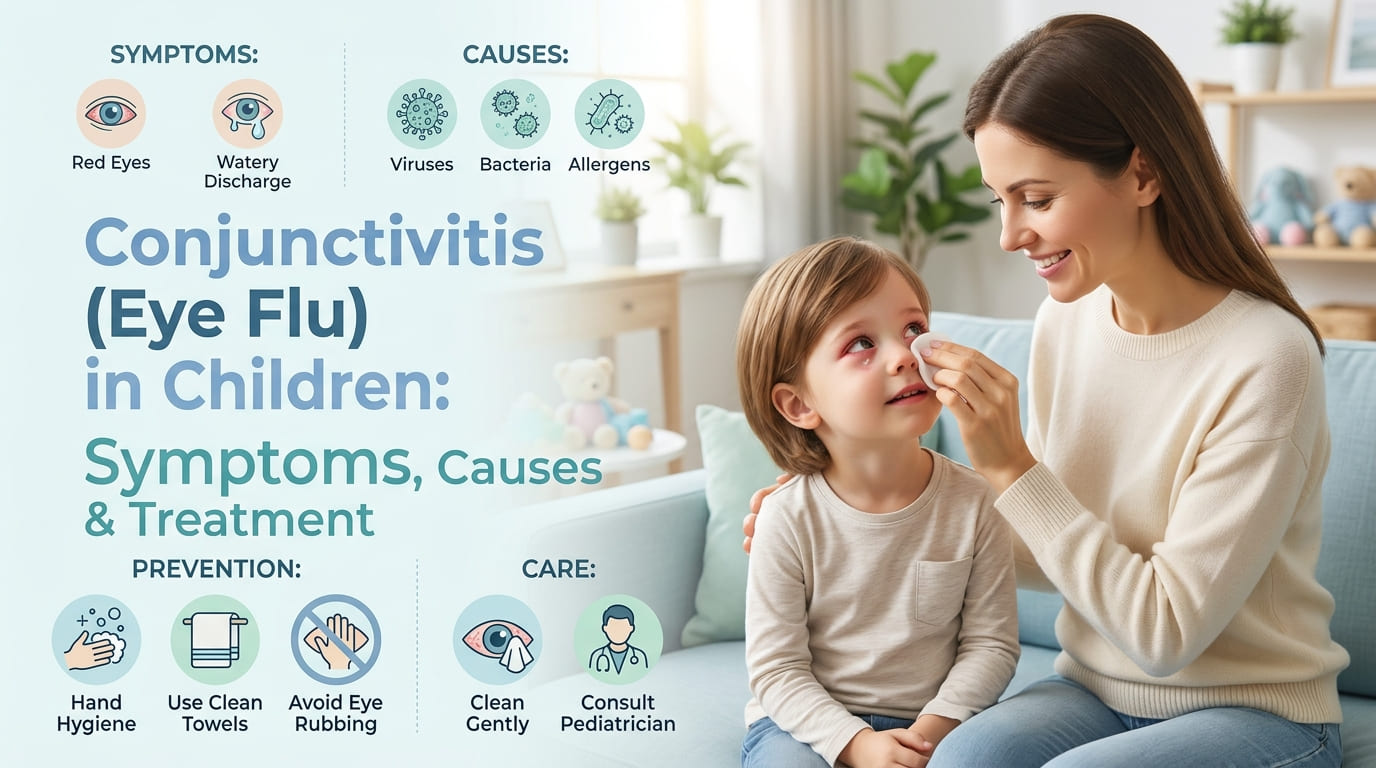
This is conjunctivitis — commonly called “eye flu” or “pink eye” — and it is one of the most common monsoon-season illnesses in children. It spreads fast, looks alarming, and causes real discomfort, but in most cases it resolves on its own within one to two weeks with simple home care.
This article covers everything parents need to know: what causes conjunctivitis, how to recognise it, how it spreads, what to do at home, and when it’s time to see a doctor.
What Is Conjunctivitis and Why It Spikes in Monsoon
Conjunctivitis is inflammation of the conjunctiva — the thin, transparent layer that covers the white part of the eye and the inside of the eyelids. When this layer becomes inflamed, blood vessels dilate, which is why the eye looks red or pink.
According to the World Health Organization, conjunctivitis can be caused by viruses, bacteria, allergens, or irritants, and viral conjunctivitis in particular spreads easily in crowded settings such as schools and daycare centres.
Monsoon creates ideal conditions for outbreaks. Increased humidity supports the survival of viruses and bacteria on surfaces. Waterlogging and contaminated water increase the chance of eye contact with infected water. Children spend more time indoors in close contact with each other at school. Frequent hand-to-eye contact in young children who are still learning hygiene habits makes transmission faster.
The Indian Academy of Pediatrics has noted that conjunctivitis outbreaks in children rise sharply during and immediately after the monsoon months, closely tracking humidity and school-attendance patterns.
Symptoms to Watch For in Babies and Toddlers
Conjunctivitis symptoms can appear in one eye first and then spread to the other within a day or two. Common signs include:
Redness in the white part of the eye or inner eyelid. Watery or thick, sticky discharge — yellow, white, or greenish depending on the cause. Eyelids that are stuck together, especially after sleep. Increased tear production. Itching or a gritty, burning sensation. Mild swelling of the eyelids. Sensitivity to light in some cases.
In babies who cannot describe discomfort, watch for frequent eye rubbing, fussiness, difficulty keeping the eyes open, or reluctance to look toward bright light.
It helps to distinguish between the three common types:
Viral conjunctivitis — watery discharge, often starts in one eye, usually accompanies a cold or respiratory infection, highly contagious.
Bacterial conjunctivitis — thicker, yellow or green discharge, eyelids often stuck shut in the morning, can affect one or both eyes.
Allergic conjunctivitis — intense itching, watery discharge, often affects both eyes at once, usually accompanied by sneezing or a runny nose, not contagious.
Is It Contagious? How It Spreads at Home and School
Viral and bacterial conjunctivitis are both highly contagious, spreading through direct contact with eye discharge, contaminated hands, shared towels, pillowcases, or toys, and respiratory droplets in the case of viral conjunctivitis linked to a cold.
A child can spread the infection for as long as symptoms are present, and sometimes for a short period even after symptoms clear. This is why schools and paediatricians often recommend keeping a child home during the most contagious phase, typically the first three to five days.
Allergic conjunctivitis is not contagious at all, since it is a reaction to pollen, dust, or another allergen rather than an infection.
Home Care Tips for Managing Eye Flu Safely
Most cases of conjunctivitis in children are viral and resolve on their own. The goal of home care is comfort, hygiene, and preventing the spread to others in the household.
Clean gently and frequently. Use a clean, soft cotton pad soaked in cooled, boiled water or sterile saline solution to wipe away discharge, moving from the inner corner of the eye outward. Use a fresh pad for each eye to avoid cross-contamination.
Cold compress for comfort. A clean, cool, damp cloth held gently over closed eyes for a few minutes can reduce swelling and soothe irritation.
Wash hands frequently. Both the child’s hands and the caregiver’s hands should be washed thoroughly after every contact with the eyes or discharge.
Avoid touching or rubbing. This is difficult with young children, but gently discouraging eye rubbing reduces both discomfort and spread.
Do not share personal items. Towels, pillowcases, and washcloths used by the affected child should be kept separate and washed in hot water.
Keep the child home during the most contagious period, usually until discharge has significantly reduced and a doctor confirms it is safe to return.
Never use over-the-counter eye drops without medical advice, particularly steroid-containing drops, which can worsen certain infections if used incorrectly.
For general hygiene supplies to help manage this at home, a soft sterile eye wipe set and hand sanitizer are useful to keep on hand during monsoon season.
Buy Sterile Eye Care Wipes on Amazon →
|Buy Kids’ Hand Sanitizer on Amazon →
When to See a Doctor Immediately
While most conjunctivitis resolves without complications, certain signs need prompt medical attention:
Significant pain, not just discomfort or itching. Sensitivity to light that seems severe. Blurred vision or any change in vision. Intense redness with swelling that is worsening. Discharge that is thick, continuous, and greenish. Symptoms lasting more than a week without improvement. Any conjunctivitis in a baby under one month old — this always needs prompt evaluation, as it can occasionally indicate a more serious underlying infection. Fever accompanying the eye symptoms.
A doctor may prescribe antibiotic eye drops for bacterial conjunctivitis, antihistamine drops for allergic conjunctivitis, or simply recommend supportive home care for viral conjunctivitis, since antibiotics do not work against viruses.
Prevention Tips for Monsoon Season
Preventing conjunctivitis, especially in a household with multiple children or during a school outbreak, comes down to consistent hygiene habits.
Encourage regular handwashing, especially before touching the face. Avoid sharing towels, pillows, handkerchiefs, and eye cosmetics. Keep children’s hands away from their eyes as much as possible. Wash bedsheets and pillowcases frequently during outbreaks. Keep an infected child’s belongings separate until symptoms clear. Inform the school promptly if your child is diagnosed, since many schools track outbreaks. Encourage children to avoid touching shared surfaces like door handles and toys with their hands before washing.
Protective, UV-blocking kids’ sunglasses can also help reduce eye irritation from bright light and reduce accidental hand-to-eye contact when outdoors during recovery.
Buy Kids’ UV Protection Sunglasses on Amazon →
For more on keeping your child healthy through the rest of monsoon season, see our guide on monsoon baby care tips and our detailed guide to dengue and malaria protection in children.
FAQ — Conjunctivitis in Children
Q: How long does conjunctivitis last in children?
Viral conjunctivitis typically lasts seven to fourteen days and resolves on its own. Bacterial conjunctivitis usually improves within two to three days of starting antibiotic treatment. Allergic conjunctivitis lasts as long as the child is exposed to the allergen.
Q: Can babies get conjunctivitis?
Yes, babies can develop conjunctivitis, and it should always be evaluated by a doctor promptly, particularly in babies under one month old, since newborn eye infections can occasionally be more serious and require immediate treatment.
Q: Should my child stay home from school with eye flu?
Most schools and paediatricians recommend keeping a child home during the most contagious phase, typically the first three to five days, or until a doctor confirms it is safe to return. This helps prevent classroom outbreaks, which are common during monsoon.
Q: Is it safe to use adult eye drops on a child with conjunctivitis?
No. Always consult a paediatrician or eye specialist before using any eye drops on a child, including drops that seem mild. Some over-the-counter drops are not appropriate for children and steroid-containing drops in particular can worsen an underlying infection if used incorrectly.
Q: Can conjunctivitis affect a child’s vision permanently?
In the vast majority of cases, no — conjunctivitis resolves completely without any lasting effect on vision. Severe or improperly treated bacterial infections can occasionally lead to complications, which is why prompt medical attention for concerning symptoms is important.
More from MumPappaHub — Read These Next:
- Monsoon Baby Care Tips
- Dengue and Malaria in Children
- Waterborne Diseases in Children
- Monsoon Skin Infections & Rashes in Children
- Baby Cold and Cough Home Remedies
- Immunity-Boosting Foods for Kids in Monsoon
- Monsoon-Safe Baby Skincare Products
- Toddler Fever Guide
- Baby Fever Guide
About This Article: Written by the MumPappaHub editorial team. Reviewed for accuracy against current paediatric health guidelines. This content is for general informational purposes only and does not constitute medical advice. Always consult your paediatrician for concerns about your child’s eye health.
MumPappaHub — Real talk for real parents. mumpappahub.com
