
Medical Disclaimer: This article is for informational purposes only. Always consult your gynaecologist or registered dietitian for a pregnancy diet plan specific to your needs, especially if you have gestational diabetes, anaemia, or other conditions.
Pregnancy diet chart India is what I searched obsessively in my first trimester — usually between bouts of nausea when the thought of eating anything at all seemed optimistic.
My mother gave me a list on a piece of paper. My mother-in-law gave me a different list. My gynaecologist said “eat well, balanced diet” without specifying what that meant. A well-meaning colleague sent me a Western pregnancy diet plan that suggested avocado at every meal and salmon three times a week.
I live in Ghaziabad. We don’t eat salmon for breakfast.
What I needed was an Indian pregnancy diet chart — actual Indian foods, trimester by trimester, with the nutrients they provide and why those nutrients matter. Not avocado. Dal. Not quinoa. Ragi. Not “lean protein” — a concept so vague it’s useless — but eggs, paneer, moong dal, and chicken curry.
This is that guide.
Pregnancy Diet Chart India — What Your Body Needs and Why
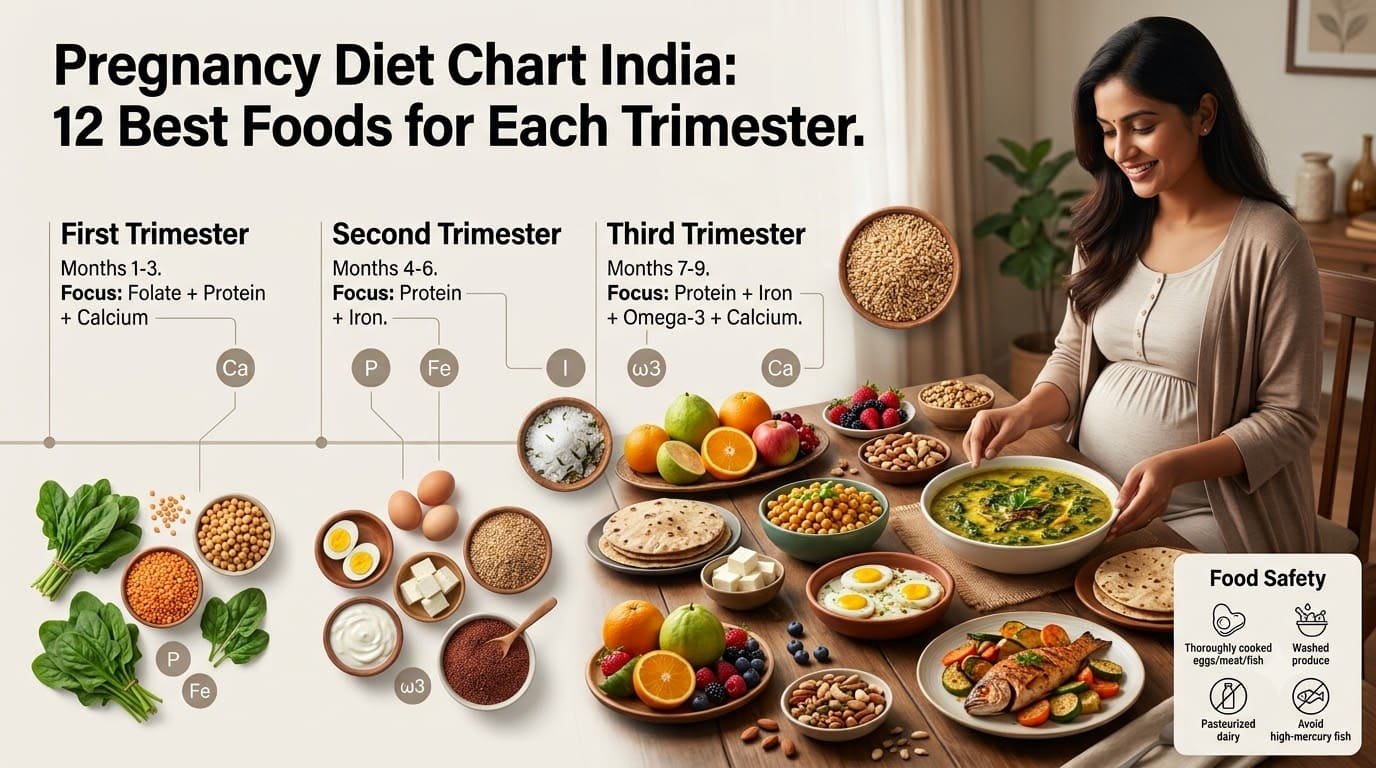
Pregnancy diet chart India must address the specific nutritional needs that change across all three trimesters — because what your body needs in week 6 is genuinely different from what it needs in week 32.
According to the World Health Organization’s nutrition guidelines for pregnancy, adequate nutrition during pregnancy is one of the most significant determinants of birth outcomes — affecting fetal growth, brain development, birth weight, and maternal health. The Indian Academy of Pediatrics and the Indian Council of Medical Research both emphasise that Indian pregnant women have specific nutritional vulnerabilities — particularly iron deficiency anaemia, calcium deficiency, and folate deficiency — that a well-designed Indian pregnancy diet can address.
How much more do you need to eat?
The common instruction to “eat for two” is outdated and inaccurate. The actual calorie increases are modest:
| Trimester | Additional Calories Needed |
|---|---|
| First trimester | ~0–100 extra calories/day |
| Second trimester | ~300 extra calories/day |
| Third trimester | ~450 extra calories/day |
The quality of what you eat matters far more than the quantity. An extra 300 calories of ragi porridge with ghee provides iron, calcium, and healthy fats. An extra 300 calories of biscuits provides almost nothing useful.
Key Nutrients — What They Are and Where to Find Them in Indian Food
Folate/Folic Acid — Critical from Day One
Why it matters: Folate prevents neural tube defects — serious birth defects affecting the brain and spinal cord — that develop in the first four weeks of pregnancy, often before the mother knows she’s pregnant. This is why folic acid supplementation is recommended from the time you start trying to conceive, not after a positive test.
Daily requirement: 400–600 mcg during pregnancy Supplement: Yes — dietary folate alone is unlikely to meet the requirement. Take a folic acid supplement as prescribed by your doctor.
Indian food sources:
- Green leafy vegetables — palak, methi, coriander
- Dal and legumes — moong, masoor, chana
- Okra (bhindi)
- Amla (one of the richest sources available)
- Beetroot
- Eggs
Iron — India’s Most Critical Pregnancy Nutrient
Iron deficiency anaemia affects approximately 50% of Indian pregnant women — the highest rate in the world. Low haemoglobin during pregnancy is associated with preterm birth, low birth weight, and maternal fatigue that significantly affects quality of life.
Daily requirement: 27 mg during pregnancy (up from 18 mg normally) Supplement: Almost certainly — dietary iron alone rarely meets pregnancy needs. Your doctor will prescribe iron supplements. Take them on an empty stomach with vitamin C (a glass of amla juice or nimbu paani) for maximum absorption.
Indian food sources:
- Dal — moong, masoor, chana, rajma
- Ragi — one of the best plant-based iron sources
- Palak and green leafy vegetables
- Jaggery (gud)
- Sesame seeds (til)
- Dried dates (khajoor)
- Liver and organ meats (for non-vegetarians)
- Eggs
The absorption rule: Never have chai within an hour of iron-rich meals. The tannins in tea bind to iron and prevent absorption. This single habit change can significantly improve iron levels.
Calcium — For Bones and Your Baby’s Development
Your baby’s bones and teeth develop primarily in the second and third trimesters. If your diet doesn’t provide enough calcium, your body takes it from your bones — which affects your bone density long-term.
Daily requirement: 1000–1200 mg during pregnancy
Indian food sources:
- Full-fat curd (dahi) — one of the best Indian sources
- Paneer
- Full-fat milk
- Ragi
- Til (sesame) — extraordinarily calcium-rich
- Rajma and chole
- Green leafy vegetables
Vegetarian note: Most of India’s vegetarian population gets calcium primarily from dairy. If you don’t eat dairy, sesame and ragi become your most important calcium sources and you should discuss supplementation with your doctor.
Protein — For Fetal Growth at Every Stage
Protein provides the amino acids that build your baby’s organs, muscles, brain, and every cell in their body. Protein needs increase significantly in the second and third trimesters when fetal growth accelerates.
Daily requirement: 75–100g protein during pregnancy
Indian food sources:
- Dal (lentils) — at every meal if possible
- Paneer
- Dahi (curd)
- Eggs
- Chicken, fish, mutton (for non-vegetarians)
- Rajma, chole, chana
- Soya — tofu, soya milk, edamame
DHA and Omega-3 — For Brain Development
DHA is a fatty acid that is essential for fetal brain and eye development. The fetal brain grows most rapidly in the third trimester and the first two years of life.
Indian food sources:
- Fish — particularly fatty fish like mackerel (bangda), sardines (pedvey), hilsa (ilish), rohu
- Walnuts
- Flaxseeds (alsi) — ground, added to roti or porridge
- Chia seeds
- Eggs (choose omega-3 enriched eggs where available)
For vegetarians: The plant-based omega-3 (ALA) in flaxseeds and walnuts converts to DHA at a low rate. Your doctor may recommend a DHA supplement derived from algae, particularly in the third trimester.
First Trimester Pregnancy Diet Chart India (Weeks 1–12)
The Reality of the First Trimester
Nausea and food aversions make the first trimester the hardest for eating well. Many women cannot eat normally at all in weeks 6–10. This is normal. The baby is still very small in the first trimester and their nutritional needs are met primarily by your pre-pregnancy stores.
The goal in the first trimester is not to eat perfectly. It is to eat what you can, take your supplements, and survive.
What Helps With Nausea
- Small, frequent meals rather than three large ones
- Dry, bland foods — plain roti, plain rice, toast, plain crackers
- Ginger — adrak chai, fresh ginger in warm water, ginger biscuits
- Cold foods over hot (strong smells trigger nausea)
- Nimbu water — cold, sipped slowly
- Eating before getting out of bed in the morning (keep crackers on the bedside table)
For detailed guidance on managing morning sickness with Indian remedies, our manage morning sickness naturally guide covers what actually works.
First Trimester Focus Nutrients
Folic acid — supplement + folate-rich foods (palak, dal, amla) Iron — start building stores early (dal, ragi, jaggery) Vitamin B6 — helps with nausea (whole grains, dal, banana)
Sample First Trimester Day (When Nausea Allows)
| Meal | Food |
|---|---|
| Before bed/morning | 2 plain crackers or toast (nausea prevention) |
| Breakfast | Ragi porridge with jaggery + small banana |
| Mid-morning | Curd with a little honey |
| Lunch | Dal + rice + palak sabzi + small portion curd |
| Evening | Handful of nuts + nimbu water |
| Dinner | Khichdi with ghee + light dal |
| Night | Warm haldi doodh |
Second Trimester Pregnancy Diet Chart India (Weeks 13–26)
The Second Trimester — When Eating Gets Easier
For most women, nausea resolves by week 14 and the second trimester is the most comfortable period of pregnancy. Appetite returns — sometimes strongly. This is when building nutritional reserves becomes the priority.
The baby is growing rapidly. The placenta is fully functional. Iron, calcium, and protein needs increase significantly.
Second Trimester Focus Nutrients
Iron — fetal iron stores build in the second trimester Calcium — bones and teeth formation accelerates Protein — fetal muscle and organ development Vitamin D — essential for calcium absorption (sun exposure + supplements)
12 Best Indian Foods for the Second Trimester
1. Moong Dal Khichdi with Ghee Complete protein, iron, complex carbohydrates, and healthy fat in one bowl. Ghee provides fat-soluble vitamin absorption. One of the most complete pregnancy meals available in the Indian kitchen.
2. Ragi (Finger Millet) Extraordinary calcium and iron content. Ragi porridge with warm milk provides calcium for both mother and developing baby bones. Non-negotiable for vegetarian pregnant women.
3. Palak (Spinach) Dal Iron + folate + protein in one dish. Add a squeeze of lemon after cooking — the vitamin C doubles iron absorption. One of the most efficient iron sources in Indian cooking.
4. Paneer High-quality protein + calcium + vitamin B12 in a form that most Indian women enjoy. 100g of paneer provides approximately 20g protein and 200mg calcium.
5. Full-Fat Curd (Dahi) Calcium, protein, probiotics, and vitamin B12. Also helps with the constipation that is extremely common in pregnancy. Full-fat specifically — not toned or skimmed.
6. Eggs Complete protein with all essential amino acids. Choline — essential for fetal brain development. DHA if omega-3 enriched. Iron. Vitamin D. Possibly the single most nutritionally complete food available. If tolerated, one to two eggs daily in pregnancy is strongly beneficial.
7. Amla (Indian Gooseberry) Extraordinarily rich in vitamin C — which dramatically improves iron absorption. Also provides folate, antioxidants, and immune support. Fresh amla, amla murabba, or amla powder in warm water are all useful. One amla alongside every iron-rich meal transforms the iron absorption from that meal.
8. Sesame Seeds (Til) Concentrated source of calcium and iron. Add to food — ground into chutney, sprinkled on sabzi, in laddoos. A tablespoon provides meaningful amounts of both minerals.
9. Rajma and Chole High protein, iron, folate, and complex carbohydrates. Rajma chawal with a tomato-based gravy (vitamin C improves iron absorption) is an outstanding pregnancy meal.
10. Banana Potassium (reduces leg cramps, very common in second trimester), vitamin B6 (helps with residual nausea), easily digestible carbohydrates. One of the most practical pregnancy snacks.
11. Walnuts DHA and ALA omega-3 fatty acids for fetal brain development. A small handful daily — 4–5 walnuts — is sufficient. Also provides protein and healthy fats.
12. Sweet Potato Beta-carotene (which the body converts to vitamin A), vitamin C, potassium, fibre, and complex carbohydrates. Naturally sweet, easy to cook in multiple ways. Excellent for the second trimester when constipation is common.
Sample Second Trimester Day
| Meal | Food |
|---|---|
| Early morning | Warm water with amla powder or fresh amla |
| Breakfast | 2 eggs any style + 1 roti with ghee + nimbu chai (light) |
| Mid-morning | Ragi laddoo or handful of walnuts + dates |
| Lunch | Rajma/chole + rice + palak sabzi + curd + amla |
| Evening | Banana + til chikki or peanut chikki |
| Dinner | Moong dal khichdi with ghee + seasonal sabzi |
| Night | Warm haldi doodh |
Third Trimester Pregnancy Diet Chart India (Weeks 27–40)
The Third Trimester — Highest Nutritional Demand
The third trimester is when fetal growth is most rapid — the baby gains more than half their birth weight in the last 10 weeks. Iron stores are transferred to the baby primarily in the last trimester. Brain development is at its peak. Calcium demand is highest.
At the same time, the growing uterus compresses the stomach, making large meals uncomfortable. Small, frequent, nutrient-dense meals become essential.
Third Trimester Focus Nutrients
DHA — peak brain development period Iron — fetal iron stores build most in third trimester Calcium — continued bone development Vitamin K — blood clotting for delivery Fibre — constipation is often worst in third trimester
What Changes in the Third Trimester
Smaller portions, more frequent meals. The stomach has less room. Six small meals work better than three large ones. Every meal must count nutritionally.
More omega-3. Fish (if non-vegetarian), walnuts, flaxseeds daily. Discuss DHA supplementation with your doctor.
More iron-focus. The baby is actively drawing iron from you in the last 10 weeks. Iron supplementation plus iron-rich food is important.
More fibre. Fruits, vegetables, whole grains, dal — all provide fibre that prevents the constipation that peaks in the third trimester.
More water. Adequate hydration is critical — 8–10 glasses daily. Coconut water is an excellent hydration option with added electrolytes.
Foods to Prioritise in the Third Trimester
Fish (non-vegetarian): Mackerel, sardines, hilsa — DHA for fetal brain development in the critical final weeks. Well-cooked only. Avoid high-mercury fish (swordfish, shark, king mackerel).
Liver (non-vegetarian, once a week): One of the most nutrient-dense foods available — extraordinarily high in iron, vitamin A, B12, and folate. Once a week only — too much vitamin A from liver is not appropriate.
Flaxseeds (vegetarian omega-3): Ground flaxseeds added to roti atta, porridge, or curd — the most practical plant-based DHA source for vegetarian women.
Green leafy vegetables daily: Palak, methi, drumstick leaves — iron, folate, calcium, vitamin K.
Dates (khajoor): Research suggests consuming dates in the last four weeks of pregnancy may support cervical ripening and reduce the need for induced labour. Six dates daily from week 36 is the dosage studied. Discuss with your gynaecologist.
Coconut water: Natural electrolytes, hydration, some nutrients. Particularly valuable in hot weather and as the baby’s weight increases.
Sample Third Trimester Day
| Meal | Food |
|---|---|
| Early morning | Warm water + soaked almonds (10) + walnuts (4) |
| Breakfast | Ragi dosa or methi paratha + curd |
| Mid-morning | Fresh fruit (papaya/mango/chikoo) + a glass of milk |
| Lunch | Small portion rice + palak dal + sabzi + curd + amla |
| Evening | Dates (6) + coconut water or nimbu paani |
| Dinner | Khichdi with ghee + fish curry (if non-veg) or paneer sabzi |
| Night | Warm haldi doodh |
Foods to Avoid During Pregnancy — India-Specific List
Raw papaya (kaccha papaya): Contains papain which may stimulate uterine contractions. Ripe papaya is generally safe in moderation. Raw papaya in salads, chutneys, or unripe papaya sabzi — avoid throughout pregnancy.
Excess vitamin A from supplements: Vitamin A toxicity can cause birth defects. Don’t take high-dose vitamin A supplements unless prescribed. Food-based vitamin A (from vegetables and fruits) is safe.
Raw sprouts: Salmonella and E. coli contamination risk. Cook sprouts thoroughly.
Unpasteurised milk and paneer: Listeria risk. Ensure milk is pasteurised and paneer is from a reliable source.
High-mercury fish: Shark, swordfish, king mackerel. Safe fish include rohu, katla, pomfret, sardines, mackerel, hilsa.
Excess caffeine: Limit chai and coffee to 1–2 cups daily. High caffeine is associated with miscarriage risk and low birth weight.
Alcohol: Zero amount of alcohol is safe in pregnancy. None.
For a complete guide to food safety in pregnancy, our foods to avoid during pregnancy India guide covers every food question in detail.
Pregnancy Supplements — What You Actually Need
Folic acid: Start before conception if possible. 400–600 mcg daily throughout pregnancy.
Iron: As prescribed. Most Indian women need supplementation. Take with vitamin C on an empty stomach.
Calcium: As prescribed, particularly if dairy intake is low.
Vitamin D: Most urban Indians are deficient. Supplementation is usually recommended.
DHA/omega-3: Discuss with your doctor, particularly if fish intake is low.
What you don’t need: Expensive “pregnancy health drinks” like Horlicks Mother’s Plus or similar products. They contain significant sugar and their nutritional content can be obtained from real food. Save the money for better quality dal and vegetables.
FAQ — Pregnancy Diet Chart India
Q: I have gestational diabetes. Can I follow this chart?
This general chart is not designed for gestational diabetes, which requires specific carbohydrate management. If you have gestational diabetes, you need a personalised plan from a registered dietitian alongside your gynaecologist’s guidance. The general principles — protein at every meal, reducing refined carbohydrates, emphasising vegetables and dal — still apply, but the specifics need professional guidance.
Q: I’m vegetarian. Am I getting enough protein?
Vegetarian Indian women can meet pregnancy protein needs through dal at every meal, paneer, curd, eggs (if lacto-ovo vegetarian), rajma, chole, and nuts. The key is variety and quantity — dal at both lunch and dinner, curd daily, paneer several times a week. If you’re vegan (no dairy), discuss protein needs with a dietitian.
Q: I have terrible nausea and can barely eat. Is my baby okay?
In the first trimester, yes — most babies are fine even when their mothers can barely eat. The baby is tiny and your pre-pregnancy stores cover most needs. Focus on whatever you can tolerate, take your folic acid and iron supplements even if the rest of the diet is minimal, and stay hydrated. Severe nausea (hyperemesis gravidarum) that prevents any eating needs medical assessment.
Q: My mother-in-law says I should eat ghee every day. Is this true?
Ghee in moderate amounts during pregnancy is beneficial — it provides healthy fats, fat-soluble vitamins, and helps with the absorption of other nutrients. One to two teaspoons per day added to dal, khichdi, or roti is appropriate. Large amounts of ghee — as sometimes recommended in traditional practice to “ease delivery” — are not evidence-based and add unnecessary calories.
Q: Should I eat more in the third trimester because the baby is bigger?
Yes — approximately 450 extra calories daily in the third trimester. But because the stomach has less room, the way to achieve this is through more frequent smaller meals rather than larger portions. Focus on nutrient density — every bite should earn its place.
Q: Can I drink coconut water daily in pregnancy?
Yes — coconut water is safe and beneficial in pregnancy. It provides natural electrolytes, hydration, and some nutrients. It’s particularly valuable in hot weather and as a healthy alternative to sugary drinks. No evidence that it causes harm.
More from MumPappaHub — Read These Next:
- Foods to Avoid During Pregnancy India
- Manage Morning Sickness Naturally
- Pregnancy Insomnia: What Helps
- Hospital Bag Checklist India
- First Trimester Survival Guide
- Early Signs of Labour
- Pregnancy Yoga for Normal Delivery
- Baby Blues vs Postpartum Depression
- How to Increase Breast Milk Supply
- Baby Development Month by Month
- Indian Baby Weight Chart 0-12 Months
- Iron Rich Foods Babies Toddlers India
About This Article
Written by the MumPappaHub editorial team — including a mother who searched “pregnancy diet chart India” obsessively in her first trimester between bouts of nausea, received three different lists from three different people, and found a Western guide suggesting salmon for breakfast. She lives in Ghaziabad. This is the guide she needed.
Reviewed for accuracy against WHO nutrition guidelines for pregnancy, ICMR dietary guidelines for pregnant women, and Indian Academy of Pediatrics recommendations. This content is for general informational purposes only and does not constitute medical or dietary advice. Always consult your gynaecologist and registered dietitian for guidance specific to your pregnancy.
MumPappaHub — Real talk for real parents. mumpappahub.com

9 Comments