
Medical Disclaimer: This article is for informational purposes only and does not replace professional medical advice. If your child shows signs of serious illness, seek medical attention immediately. Always consult your paediatrician for concerns about your child’s health.
Waterborne diseases in children monsoon season are more common than parents realise — last July, my son came home from playing outside, drank two glasses of water straight from the tap, and by midnight he was vomiting every twenty minutes.
Three days in hospital. IV fluids. A very tired, very scared four-year-old who just wanted to go home.
The doctor said it almost certainly came from contaminated water. Waterborne diseases in children spike dramatically during monsoon — the flooding overwhelms drainage systems, pipes get compromised, and what looks like clean tap water in July and August can carry pathogens that a small child’s immune system genuinely cannot handle.
I wish someone had told me this before it happened rather than after.
So this is for every parent heading into monsoon season with young children. The practical, honest guide to waterborne diseases in children during monsoon — what they are, how children catch them, and what you can do right now to protect your family.
Why Monsoon Makes Waterborne Diseases in Children So Much Worse
How waterborne diseases spread during heavy rain
According to the World Health Organization (WHO), contaminated drinking water causes over 485,000 diarrhoeal deaths globally each year — the majority in children under five. During monsoon, this risk multiplies significantly.
When heavy rain hits, it doesn’t just fall and flow away cleanly. It carries surface contaminants — animal waste, sewage overflow, chemicals, soil bacteria — into water sources. In urban areas, flooding overwhelms drainage systems and sewage mixes with groundwater. In rural areas, open wells and handpumps become contaminated when surface water flows in.
The water that comes out of taps during and after heavy rain is not necessarily the same water that comes out in March. Treatment systems get overwhelmed. Pipes that run through waterlogged ground can develop micro-cracks that allow contamination in under pressure.
Even bottled water supply chains get disrupted — storage conditions at shops and distribution points become less reliable in floods.
Why children are so much more vulnerable than adults
A child’s immune system is still developing. This is the core reason waterborne diseases in children during monsoon are so dangerous — their gut flora, the community of beneficial bacteria that fights off pathogens, is less established than an adult’s. Their stomach acid, which kills many bacteria before they can cause infection, is less concentrated.
Crucially, children also dehydrate faster than adults. A bout of diarrhoea and vomiting that an adult manages through in a day can push a toddler into serious dehydration within hours. This is why waterborne diseases that cause digestive illness are genuinely dangerous in young children in a way they often aren’t for the adults in the same household.
The Most Common Waterborne Diseases in Children During Monsoon — Know These
Cholera
Cholera is caused by the bacterium Vibrio cholerae and spreads through contaminated water and food. It causes profuse, watery diarrhoea — sometimes described as “rice water” stools — that can cause severe dehydration extremely rapidly.
In children, cholera can become life-threatening within hours if not treated. Fortunately, early treatment with oral rehydration and, in severe cases, IV fluids, is highly effective. The key is acting fast.
Cholera cases spike dramatically in India during monsoon, particularly in areas with compromised water infrastructure.
Typhoid
Typhoid fever — caused by Salmonella typhi — spreads through contaminated water and food. Unlike cholera, typhoid builds gradually. Symptoms include sustained high fever that goes up every day, headache, abdominal pain, and a general sense of being very unwell.
Children with typhoid often don’t have the classic adult presentation — they may just have fever and seem more tired and less interested in food than usual. This is why typhoid is frequently missed in the early stages.
Untreated typhoid can lead to serious complications. Treatment requires antibiotics — self-medicating or waiting it out is not appropriate.
Hepatitis A
Hepatitis A is a viral liver infection spread through contaminated water and food. In young children, it often causes mild or no symptoms — but they can still spread it to adults, in whom it causes more significant illness.
When children do have symptoms — jaundice (yellowing of the skin and eyes), fatigue, nausea, loss of appetite, dark urine — it warrants prompt medical assessment.
A vaccine for Hepatitis A exists and is recommended for children. If your child hasn’t had it — speak to your paediatrician.
Gastroenteritis — The Most Common One
Viral and bacterial gastroenteritis — stomach flu — is the most common waterborne illness in children during monsoon. Symptoms are vomiting, diarrhoea, stomach cramps, and sometimes fever.
Most cases resolve within three to seven days with careful management at home. The danger is dehydration — which in young children can escalate quickly and needs to be taken seriously.
Leptospirosis
Less commonly discussed but genuinely dangerous — leptospirosis is a bacterial infection spread through water contaminated with the urine of infected animals, particularly rodents. Children who play in floodwater or waterlogged areas are at risk.
Symptoms include high fever, severe headache, muscle pain, red eyes, and sometimes a rash. It can progress to affect the liver and kidneys if not treated promptly.
If your child has played in floodwater and develops fever within two weeks — mention this specifically to your doctor.
How Children Actually Get Waterborne Diseases
Understanding the routes of infection helps you target prevention where it actually matters.
Drinking contaminated water
The most obvious route — drinking water that contains pathogens. This includes tap water during and after heavy rain, well water, stored water that has been standing in containers exposed to contamination, and water from street vendors or unreliable sources.
Eating contaminated food
Water is used to wash, prepare, and cook food. If the water is contaminated, so is the food. Street food during monsoon carries particularly high risk — ingredients washed in contaminated water, prepared in conditions where food safety is hard to maintain, and often left out in warm, humid conditions that accelerate bacterial growth.
Cut fruit sold on streets during monsoon is one of the highest-risk foods for children. It’s been cut with knives that may not be clean, washed in questionable water, and is sitting exposed to flies and humidity.
Hand-to-mouth transmission
Children put their hands in their mouths constantly. If those hands have been in contact with contaminated surfaces — doorknobs, playground equipment, soil — the pathogens go straight into the digestive system. During monsoon, when surfaces are wet and bacterial growth is faster, this route becomes more significant.
Playing in floodwater
Floodwater is not rainwater. It’s a mixture of sewage, runoff, animal waste, and whatever was on the streets before the rain came. Children playing in it — which they absolutely will if given the chance — are exposed to everything that’s in it through skin contact, and through the inevitable hand-to-face contact that comes with playing.
How to Actually Protect Your Child from Waterborne Diseases This Monsoon
Water safety — the most important thing
Boil drinking water. During monsoon — boil water before drinking, even if you usually drink tap water without issues. Bring it to a rolling boil for at least one minute. Let it cool in a covered container. Use it within twenty-four hours.
Use a water purifier with UV filtration if you have one — but know that monsoon can affect its effectiveness if the incoming water has more sediment than usual. Change filters as recommended and don’t skip maintenance during this season.
Don’t assume bottled water is always safe. Check seals carefully. Buy from reputable sources. During active flooding, even bottled water supply can be compromised.
Use boiled or purified water for everything — not just drinking. Brushing teeth, washing fruits and vegetables, making ice. Children frequently swallow water during tooth brushing and this is a genuinely underestimated exposure route.
Store water safely. Covered containers, cleaned regularly. Don’t leave water standing open in the kitchen during monsoon.
Food safety during monsoon
Cook food thoroughly and eat it while hot. Bacterial growth happens fastest in warm, cooked food that’s been sitting out. During monsoon, the window between “safe” and “risky” is shorter than in other seasons.
Avoid raw and cut foods outside the home. Salads, cut fruit, chutneys, and raw vegetables from restaurants and street stalls carry high risk during monsoon. At home, wash produce thoroughly in purified water before eating.
Don’t reheat food more than once. Each cycle of cooling and reheating creates more opportunity for bacterial growth.
Be more careful with leftovers than usual. What keeps fine in the fridge for two days in January may not be safe after one day in July.
Avoid street food during peak monsoon — not forever, just during the weeks of heaviest rain and flooding when food safety conditions are most compromised.
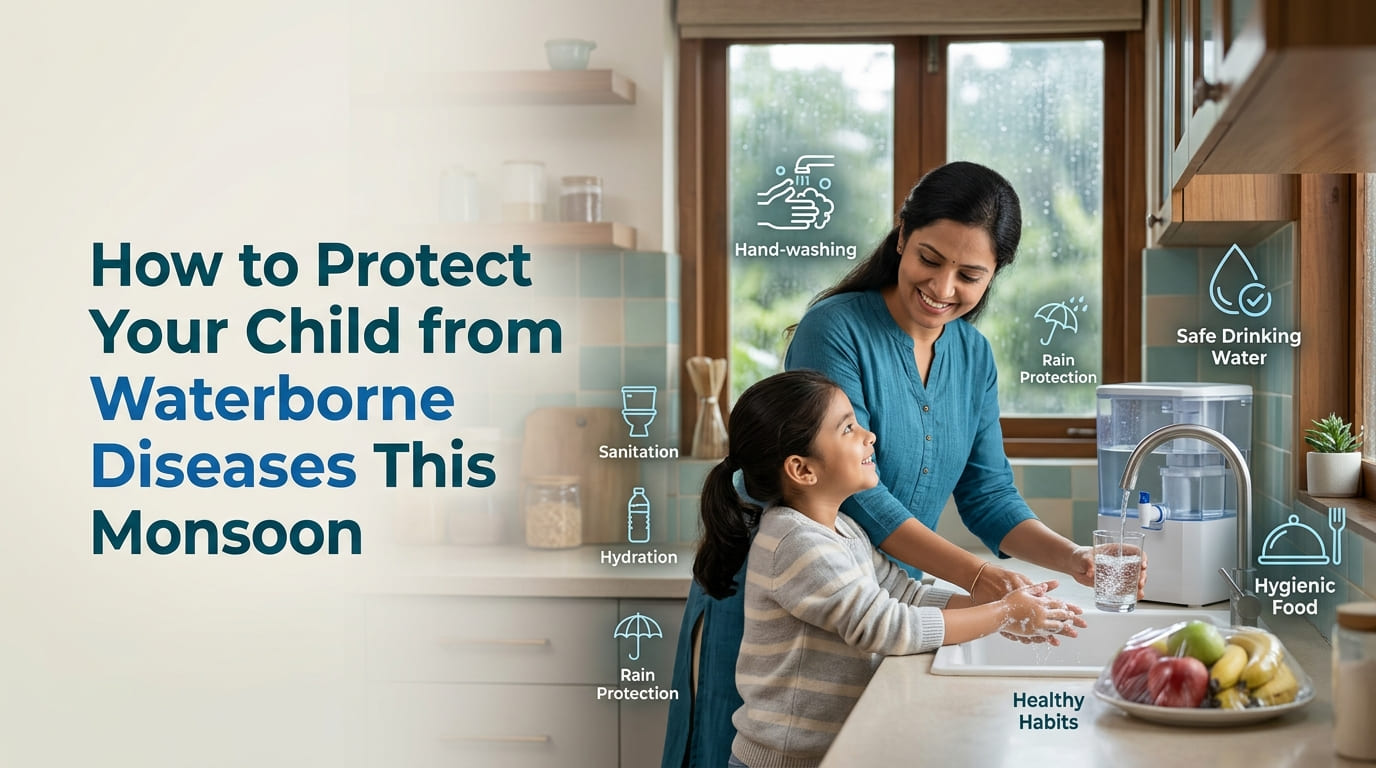
Handwashing — the most powerful protection against waterborne diseases in children
Handwashing with soap and water is the single most effective intervention against waterborne and foodborne illness in children. More effective than any supplement, any probiotic, any immunity booster.
Teach your child to wash hands — properly, for twenty seconds, with soap — before eating, after using the toilet, after playing outside, after touching animals, after touching surfaces in public spaces. Make it a habit that happens automatically, not something they do when reminded.
Keep a hand sanitiser in your bag for situations where soap and water aren’t immediately available. It’s not as effective as proper handwashing but significantly better than nothing.
If your child is too young to wash their own hands reliably — wash their hands for them. Every time, without exception, before food goes in their mouth.
For more on building healthy habits in children from early on, our child development milestones guide covers age-appropriate independence and how much you can expect from different ages.
Keep children out of floodwater
This one requires a direct conversation with older children — because floodwater looks like an adventure and feels like one too.
Explain clearly and without drama — this water has sewage in it. It can make you very sick. It’s not the same as rain. This is a rule, not a suggestion.
For younger children — supervision is the only answer. Keep them physically away from waterlogged areas, even for a few minutes of play.
If your child does play in floodwater — wash them thoroughly with clean water and soap as soon as possible, including hair and face. Change all clothing. Watch for any symptoms in the two weeks following.
Vaccinations — check these now
Some waterborne diseases have vaccines. If your child’s vaccinations aren’t up to date — monsoon is a good reminder to check.
Typhoid vaccine — recommended for children in India from two years old. The Indian Academy of Pediatrics recommends typhoid vaccination as part of the routine immunisation schedule. Discuss timing and type with your paediatrician.
Hepatitis A vaccine — two doses, given from twelve months. If your child hasn’t had this, speak to your doctor.
Rotavirus vaccine — given in infancy, protects against one of the most common causes of severe diarrhoeal illness in young children.
For a complete guide to what’s normal and when to check in with your doctor, our toddler fever guide and baby fever guide both cover when illness needs medical attention.
If Your Child Gets Sick — What to Do
Managing gastroenteritis at home
For most cases of diarrhoea and vomiting in children — mild to moderate, no blood, no very high fever — careful home management is appropriate for the first twenty-four to forty-eight hours.
Oral rehydration is everything. ORS — oral rehydration solution — is available at every pharmacy and should be in every home before monsoon starts. Give small, frequent sips. A teaspoon every minute is more effective than large amounts that overwhelm a nauseous stomach.
Continue feeding. The old advice to withhold food and “rest the gut” is outdated. Continue feeding — soft, easily digestible foods like khichdi, curd rice, mashed banana. The gut recovers faster with food.
Monitor for dehydration. Signs include: dry mouth and lips, no tears when crying, sunken fontanelle in babies, significantly fewer wet nappies, unusual lethargy or drowsiness, skin that stays tented when gently pinched. Any of these — seek medical attention that day.
Don’t give anti-diarrhoeal medicines to children without a doctor’s advice. In some infections, stopping diarrhoea prolongs the illness by keeping the pathogen in the gut longer.
When to go to the doctor immediately
Go the same day — don’t wait — if:
Your child is under six months old with any vomiting or diarrhoea. Young babies dehydrate in hours not days.
Blood in the stool. This indicates a more serious infection that needs investigation and likely antibiotics.
High fever alongside diarrhoea and vomiting — above 38.5°C.
Vomiting that is projectile or has continued for more than twelve hours without any improvement.
Signs of dehydration as described above.
Your child seems unusually confused, unresponsive, or difficult to rouse.
Your gut tells you something is more wrong than a regular stomach bug.
Our baby fever guide covers fever management in detail and is worth having bookmarked before you need it.
Building Immunity — The Long Game
While none of this replaces the specific precautions above, supporting your child’s immune system through nutrition and routine makes them more resilient to the infections they will inevitably encounter.
Adequate nutrition — varied diet, sufficient protein, iron, zinc, and vitamin D — forms the foundation. For ideas on what to feed young children to support development and immunity, our superfoods for toddler brain development article covers the nutritional side in detail.
Sleep — immune function is deeply tied to sleep quality. A well-rested child fights infection more effectively than a sleep-deprived one. Our newborn sleep tips and baby sleep training guide cover sleep at different stages.
Breastfeeding for babies still nursing — breast milk provides specific immune protection and gut-protective factors that formula cannot replicate. Continue breastfeeding through monsoon illness. For support with supply, our how to increase breast milk supply guide is a helpful resource.
The Monsoon Kit — Have This Ready Before You Need It
Before the season peaks, stock these at home:
ORS sachets — at least ten. You will use them. Infant paracetamol at the correct dose for your child’s weight. A digital thermometer. Zinc syrup — zinc reduces the severity and duration of diarrhoeal illness in children and is recommended by WHO. Ask your pharmacist. Probiotics — there is reasonable evidence that probiotics reduce the duration of acute gastroenteritis in children. A few days of a child-appropriate probiotic during illness can help. Covered water storage containers. Hand soap — more than you think you need.
Having these things ready means you’re making calm decisions when your child is sick at eleven at night, not panicked ones.
FAQ — Waterborne Diseases in Children During Monsoon
About Prevention
Q: Is tap water safe to drink during monsoon?
During heavy rain and flooding, tap water safety cannot be guaranteed even in areas where it’s normally reliable. Boil drinking water during monsoon season as a precaution. If you have a UV water purifier, maintain it and use it — but boiling is the most reliable method during peak monsoon.
Q: Should I give my child a probiotic during monsoon?
A child-appropriate probiotic during monsoon can support gut health and may reduce the severity of gastroenteritis if it occurs. Speak to your paediatrician about which product is appropriate for your child’s age. Curd and yoghurt are natural probiotic foods that can be included in the daily diet.
Q: Can my child go swimming during monsoon?
Swimming pools that are properly maintained and chlorinated are generally safe. Natural water bodies — rivers, lakes, ponds — should be avoided during and after heavy rain as they become significantly contaminated with runoff and sewage overflow. Flooded streets and parks are not safe to play in.
About Illness Management
Q: How do I make ORS at home if I don’t have sachets?
WHO home ORS: one litre of boiled and cooled water, six level teaspoons of sugar, half a level teaspoon of salt. Mix thoroughly. Use within twenty-four hours. This is a temporary measure — get pharmacy ORS as soon as possible as it has the correct electrolyte balance.
Q: My child has had diarrhoea for three days. When is this serious?
Diarrhoea lasting more than three days in a child needs medical assessment regardless of severity. Even if the child seems okay — continued diarrhoea beyond three days warrants a doctor’s review to check for specific infections that may need treatment and to assess nutritional status.
Q: My child played in floodwater. What should I watch for?
Wash thoroughly immediately. Watch for the following in the two weeks after — fever, headache, muscle pain, red eyes, rash, jaundice (yellowing of skin or whites of eyes), or any digestive illness. If any of these appear, tell your doctor specifically that your child was in floodwater and when.
About Vaccines and Long-Term Protection
Q: Which vaccines protect against waterborne diseases?
Typhoid vaccine, Hepatitis A vaccine, and Rotavirus vaccine (given in infancy) all protect against common waterborne illness. Check your child’s vaccination records and speak to your paediatrician about any that may be due or overdue.
Q: My child got typhoid last monsoon. Will they get it again?
Natural immunity after typhoid infection offers some protection but is not complete or permanent. Vaccination is still recommended. Speak to your paediatrician about timing after recovery.
More from MumPappaHub — Read These Next:
- Baby Fever Guide: What’s Normal and When to Worry
- Toddler Fever Guide
- Monsoon Baby Care Tips
- Baby Cold and Cough Home Remedies
- Baby Blues vs Postpartum Depression
- Superfoods for Toddler Brain Development
- How to Increase Breast Milk Supply
- Child Development Milestones
- Child Safety Proofing Guide
- Newborn Sleep Tips
- Baby Sleep Training Guide
- Newborn Care Tips
About This Article: Written by the MumPappaHub editorial team. Reviewed for accuracy against current paediatric and public health guidelines. This content is for general informational purposes only and does not constitute medical advice. Always consult your paediatrician for concerns about your child’s health.
MumPappaHub — Real talk for real parents. mumpappahub.com

6 Comments