
Medical Disclaimer: This article is for informational purposes only and does not replace professional medical advice. If you are experiencing severe or prolonged hair loss after delivery, please consult your doctor or a dermatologist.
Nobody warned me about the hair.
They warned me about the sleepless nights. About the feeding challenges. About the emotional rollercoaster of the first few weeks. But nobody — not my mother, not my doctor, not a single antenatal class — mentioned that around three months after my baby was born, I would start losing my hair in quantities that made me wonder if something was seriously wrong with me.
I found clumps in the shower drain. On my pillow every morning. Wrapped around my fingers every time I ran a hand through my hair. My ponytail — which had been thick and heavy throughout pregnancy — suddenly felt like half of what it was.
I called my mother in tears. She laughed — not unkindly — and said “oh yes, that happened to me too. It stops.”
She was right. It did stop. But I wish someone had told me what was actually happening, why it was happening, and what I could do about it while I waited. So that’s what this is.
Why Postpartum Hair Loss Happens — The Real Explanation
What pregnancy does to your hair first
To understand why hair falls out after birth, you need to understand what happens to it during pregnancy — because the two things are directly connected.
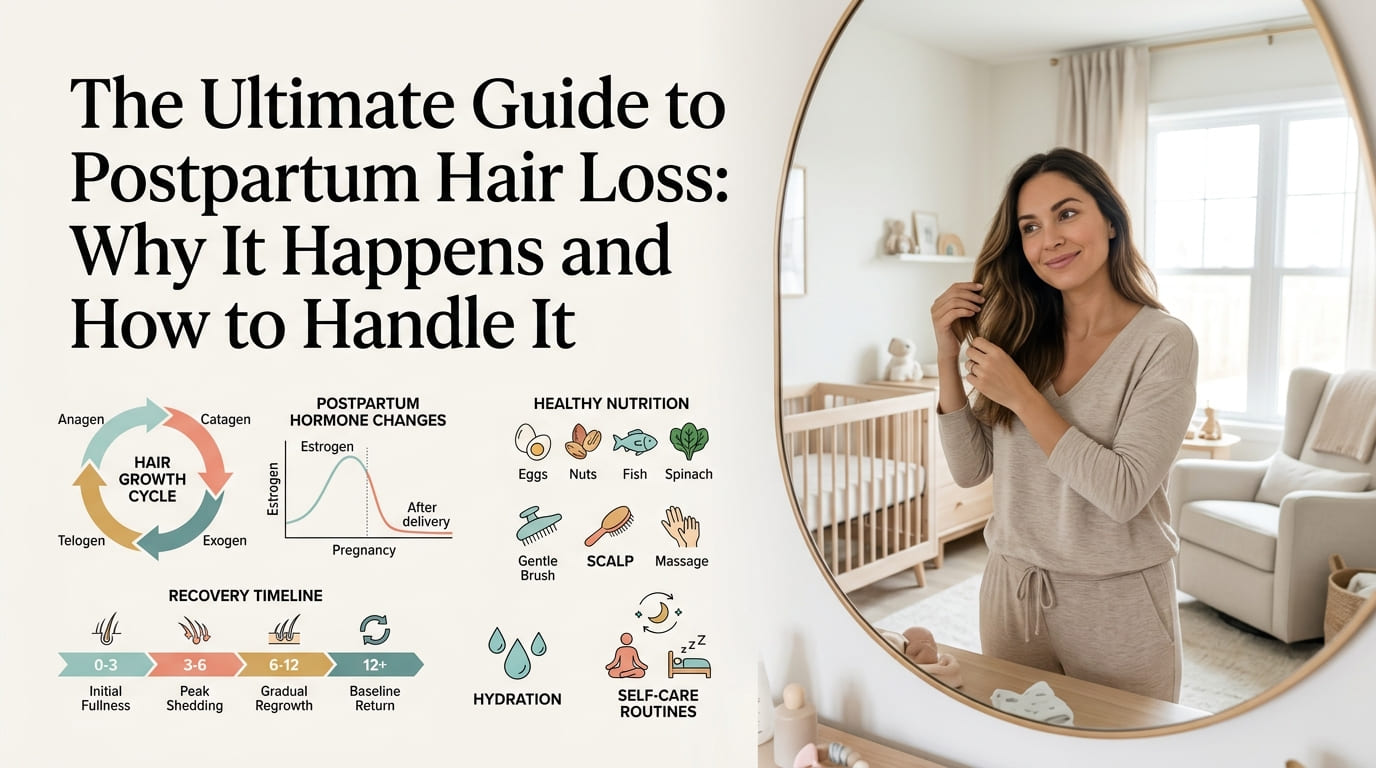
Hair grows in cycles. At any given time, about 85 to 90 percent of your hair is in the growth phase — called anagen — and about 10 to 15 percent is in the resting phase — called telogen — before it falls out and is replaced by new growth. This cycling means you normally shed around 50 to 100 hairs per day, which sounds alarming but is completely normal.
During pregnancy, oestrogen levels rise dramatically. One of the effects of high oestrogen is that it extends the growth phase of hair — keeping more hairs in the anagen phase for longer than usual. Hair that would normally have moved into the resting phase and shed stays on your head instead.
The result — your hair during pregnancy is thicker, fuller, and more lustrous than usual. Not because it’s growing faster, but because it’s not falling out at its normal rate. You’re essentially accumulating hair that should have shed over many months.
What happens after birth
Then the baby arrives. Oestrogen drops sharply — one of the most significant hormonal shifts the human body goes through. And all that hair that was being held in the growth phase? It moves into the resting phase simultaneously.
Around two to four months later — after the resting phase runs its course — it all starts falling out at once. This is called telogen effluvium. It’s not hair loss in the clinical sense. Nothing is wrong with your follicles. The hair will grow back. But the sheer volume of shedding — weeks and weeks of accumulated normal hair loss all happening together — is genuinely shocking if you don’t know it’s coming.
This is why the timing catches most new mothers off guard. The birth was months ago. Things seemed to be settling down. And then suddenly — the drain, the pillow, the brush full of hair.
When Does Postpartum Hair Loss Start and Stop
The typical timeline
Most women notice postpartum hair loss starting between two and four months after delivery. It peaks around three to four months postpartum — which is when it tends to feel most alarming — and then gradually slows.
For most women, shedding returns to normal somewhere between six and twelve months after delivery. Full regrowth — where the new hair has grown long enough to blend in with existing hair — takes longer. Usually twelve to eighteen months from the point of peak loss.
The short hairs you notice around your hairline and temples — those fine, flyaway strands that refuse to lie flat — are new growth. They’re actually a good sign. They mean regrowth has started.
Why some women experience it more severely
Breastfeeding prolongs the hormonal shifts of the postpartum period, which can extend the shedding phase slightly — though it doesn’t make it significantly worse in most cases. Nutritional deficiencies — particularly iron, zinc, and vitamin D — can worsen hair loss and slow regrowth. Thyroid issues, which are more common in the postpartum period, can also intensify hair loss.
Stress — and the postpartum period has plenty of that — is itself a trigger for telogen effluvium. Sleep deprivation, emotional pressure, physical recovery from birth — all of it can contribute.
This is not weakness. It’s biology responding to an enormous physical event.
What You Can Actually Do About It
1. Nutrition first — this matters more than any product
The most impactful thing you can do for postpartum hair loss is make sure your body has what it needs to support regrowth. Hair is not the body’s priority — when nutrients are scarce, hair follicles are among the first things to be deprioritised. Which means deficiencies show up in hair before almost anywhere else.
Iron is the big one. Iron deficiency is extremely common postpartum — blood loss during delivery, the demands of breastfeeding, and disrupted eating in the newborn haze all contribute. Low iron is one of the most common causes of prolonged or severe postpartum hair loss. If your hair loss seems more extreme than described here, or is lasting longer than a year, ask your doctor to check your iron levels before trying anything else.
Protein — hair is made of keratin, which is a protein. If you’re not eating enough protein, your body doesn’t have the building blocks to grow new hair. New mothers often eat poorly — meals skipped, food grabbed quickly, nutrition an afterthought. Try to include protein at every meal — eggs, dal, paneer, chicken, yoghurt, legumes.
Biotin — a B vitamin that supports hair and nail growth. Found in eggs, nuts, seeds, sweet potato, and avocado. Biotin supplements are widely marketed for hair loss and are generally safe, but food sources are more bioavailable and usually sufficient.
Vitamin D — deficiency is widespread and is linked to hair loss. Most people in India have adequate sun exposure but postpartum mothers who are spending most of their time indoors may be deficient. Ask your doctor to check your levels if you’re unsure.
Zinc — supports hair follicle health. Found in pumpkin seeds, chickpeas, lentils, meat, and dairy.
Continuing your prenatal vitamins into the postpartum period — especially if breastfeeding — helps cover nutritional gaps during a time when eating well is genuinely difficult. For a detailed guide on what to eat postpartum, our postpartum recovery guide covers nutrition alongside physical recovery.
2. Be gentle with your hair right now
This sounds obvious. It’s harder in practice because the habits that feel normal — tight ponytails, daily heat styling, vigorous towel drying — are exactly the things that accelerate shedding when follicles are already in the resting phase.
Avoid tight hairstyles. Tight ponytails, buns, and braids put tension on the hair shaft and follicle — this is called traction alopecia and it worsens existing shedding. Loose hairstyles are better during this period.
Avoid heat. Blow dryers, straighteners, and curling irons weaken the hair shaft and increase breakage. Air dry when you can. If you must use heat, use the lowest setting and a heat protectant.
Be gentle when detangling. Wet hair is weaker than dry hair. Use a wide-tooth comb, start from the ends and work upward, and do it when the hair has a leave-in conditioner in it to reduce friction.
Don’t rub your hair dry. Pat it instead. Rubbing creates friction that causes breakage in already-weakened hair.
3. Scalp care — more important than most people realise
A healthy scalp is the foundation of healthy hair growth. During postpartum hair loss, scalp care matters more than the products you put on the lengths of your hair.
Keep your scalp clean. Product buildup, excess oil, and dead skin cells can clog follicles and slow regrowth. Wash regularly — not so frequently that you strip the scalp’s natural oils, but don’t avoid washing because you’re afraid of seeing hair come out. The hair that comes out in the shower was already in the resting phase. Washing doesn’t cause it to fall — it just releases what was going to fall anyway.
Scalp massage — five minutes daily, using the pads of your fingers in small circular motions — increases blood circulation to the follicles. There is actual research suggesting that regular scalp massage can improve hair thickness over time. It also takes five minutes, costs nothing, and feels good during a period when very little is about you.
Oils — coconut oil, castor oil, bhringraj oil — have long been used in Indian hair care traditions for good reason. Warm oil massaged into the scalp before washing nourishes the scalp and may support follicle health. Castor oil in particular has some evidence behind it for supporting hair growth. Mix it with a lighter oil like coconut or almond if pure castor oil feels too thick.
4. Products that can help — and ones that aren’t worth the money
Worth trying:
- A volumising or thickening shampoo — these won’t stop hair loss but will make existing hair look fuller while you wait for regrowth
- A scalp serum containing minoxidil — this is the only topical treatment with solid evidence behind it for hair loss. It’s available over the counter and there is a postpartum-safe version. Check with your doctor before using, especially if breastfeeding
- Biotin-enriched shampoos — the evidence is limited but they’re harmless and some women find them helpful
Not worth the money:
- Most “hair growth” supplements that make dramatic claims — the evidence base is thin for most of them
- Keratin treatments during active shedding — the chemicals can worsen breakage
- Any product promising results in two to four weeks — postpartum hair regrowth takes months regardless of what you use
5. Haircuts and styling — the practical solution
This is the one nobody wants to hear but genuinely helps the most in the short term.
A good haircut can make a significant visual difference when hair is thin. Layers add movement and make thin hair look fuller. A shorter length removes the weight that makes fine hair look flat. A cut that works with your hair’s current texture — rather than fighting it — makes the whole experience more manageable.
It won’t make the hair grow back faster. But it makes the months of waiting significantly easier to live through.
Postpartum Hair Loss and Breastfeeding
One of the most common questions — does breastfeeding make hair loss worse?
The honest answer is — slightly, for some women. Breastfeeding keeps prolactin levels elevated and oestrogen levels lower for longer, which can extend the period of shedding. But the difference compared to non-breastfeeding mothers is usually modest.
The more significant issue is nutrition. Breastfeeding increases nutritional requirements considerably — your body prioritises milk production, and if you’re not eating enough, your hair follicles feel it. Iron, zinc, and protein needs all increase while breastfeeding, and most new mothers underestimate how much more they need to eat.
Do not stop breastfeeding to address hair loss. The benefits of breastfeeding — for both you and your baby — far outweigh the modest difference it may make to the timeline of hair regrowth. For everything on maintaining milk supply while managing your own nutrition, our how to increase breast milk supply guide is worth reading.
When Postpartum Hair Loss Is Something More
Most postpartum hair loss is telogen effluvium — normal, temporary, and self-resolving. But sometimes hair loss after delivery indicates something that needs medical attention.
Signs to see your doctor about
Hair loss that is still severe at twelve months postpartum — by this point, shedding should be significantly reduced. If it isn’t, investigate.
Hair loss in patches — bald spots, rather than diffuse thinning across the scalp — can indicate alopecia areata, an autoimmune condition that is more likely to develop in the postpartum period and needs separate treatment.
Hair loss accompanied by other symptoms — extreme fatigue beyond normal new-mother tired, unexpected weight changes, feeling very cold all the time, brain fog that’s worsening rather than improving — these can indicate a thyroid issue. Postpartum thyroiditis affects around five to ten percent of women and is frequently missed because its symptoms overlap with normal postpartum experience. A simple blood test checks thyroid function.
Hair loss accompanied by significant scalp irritation, redness, or scaling — this may indicate a scalp condition that needs treatment.
Hair loss that is emotionally overwhelming — this matters. If the way you feel about your hair is significantly affecting your mental health and daily functioning, please speak to someone. It’s not vanity. Hair is tied to identity, and losing it unexpectedly is genuinely distressing. Our baby blues vs postpartum depression guide covers the emotional side of the postpartum period honestly — worth reading alongside this one.
The Emotional Side — Because Nobody Talks About This
Hair loss after having a baby sits in a strange emotional space.
On one hand, you know intellectually that it’s temporary. You know it’s normal. You know it’s not dangerous. And yet — standing in the shower watching handfuls of hair go down the drain, at three months postpartum when you’re already exhausted and possibly struggling and trying to figure out who you are now — it feels like one thing too many.
Some women find it genuinely distressing. Some feel embarrassed about how much it bothers them. Some feel like they should be grateful — they have a healthy baby, what does hair matter?
All of these feelings are valid. Hair matters. How you feel about your appearance matters. You are allowed to be bothered by this even while knowing it’s temporary.
Be kind to yourself about it. Find a hairstyle that makes you feel good right now. Ask for help when you need it. And know that it ends — even when the drain tells you otherwise.
FAQ — Postpartum Hair Loss
About Timing and What’s Normal
Most women notice it between two and four months after delivery. It peaks around three to four months postpartum and then gradually reduces. For most women it returns to normal somewhere between six and twelve months after birth.
The volume can be alarming — significantly more than the normal 50 to 100 hairs per day. Handfuls in the shower, hair on the pillow, a noticeably thinner ponytail — all of this falls within the range of normal telogen effluvium. If you’re losing hair in patches rather than diffuse thinning, or if severe loss continues past twelve months, see your doctor.
For the vast majority of women — yes, completely. Postpartum hair loss is temporary. The follicles are not damaged. Once the hormonal shift stabilises and nutritional needs are met, regrowth happens. Full regrowth to pre-pregnancy thickness typically takes twelve to eighteen months from the point of peak shedding.
About Causes and Contributing Factors
It can extend the timeline slightly for some women by keeping oestrogen levels lower for longer. The more significant factor is nutrition — breastfeeding increases nutritional demands and deficiencies worsen hair loss. Maintain good nutrition and continue prenatal vitamins while breastfeeding.
Yes. Telogen effluvium — the type of hair loss that causes postpartum shedding — can be triggered or worsened by physical and emotional stress. The postpartum period has both in abundance. Managing stress where possible and prioritising sleep and nutrition helps.
The mechanism of postpartum hair loss is hormonal — the same oestrogen drop happens regardless of how you delivered. C-section recovery does add physical stress, which can contribute to the severity of shedding, but the fundamental cause and timeline are the same.
About Treatment and What Helps
Biotin helps if you’re deficient in it — and some postpartum women are. If your diet is varied and you’re continuing prenatal vitamins, you’re likely already getting sufficient biotin. Supplements won’t hurt but aren’t a guaranteed fix. Iron and protein are usually more impactful for most women.
Chemical treatments weaken hair shafts and can worsen breakage during a period when hair is already fragile. If you want to colour, opt for gentler options — semi-permanent rather than permanent, or highlights rather than full colour. Avoid keratin treatments and relaxers during active shedding.
Minoxidil — a topical treatment available over the counter — is the only medication with solid evidence for hair regrowth. There is a version safe for use postpartum, but check with your doctor before using it, especially if breastfeeding. Postpartum hair loss does resolve on its own for most women — medication is not necessary in the majority of cases.
📚 More from MumPappaHub — Read These Next:
- Postpartum Hair Loss Tips
- Postpartum Recovery Guide
- 5 Safe Postpartum Exercises to Rebuild Your Core
- Baby Blues vs Postpartum Depression
- How to Increase Breast Milk Supply
- Increase Breast Milk Supply Guide
- Symptoms of Pregnancy
- First Trimester Survival Guide
- Child Development Milestones
- Newborn Care Tips
- Working Mum Guide
About This Article: Written by the MumPappaHub editorial team. Reviewed for accuracy against current dermatological and obstetric guidelines. This content is for general informational purposes only and does not constitute medical advice. Consult your doctor or dermatologist if you have concerns about hair loss after delivery.
MumPappaHub — Real talk for real parents. mumpappahub.com

1 Comment