
News Source: DD News, Government of India | All India Institute of Ayurveda (AIIA), Ministry of AYUSH | August 24, 2026
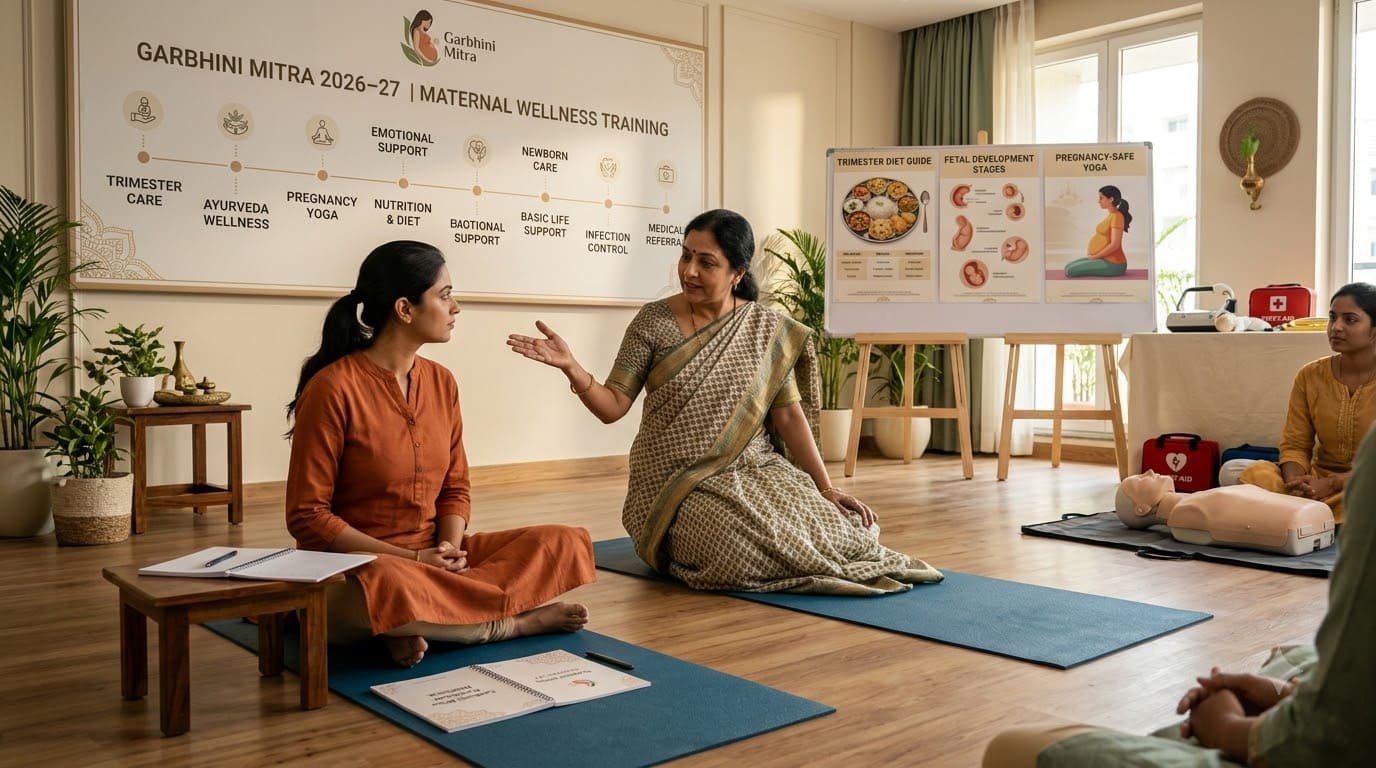
Garbhini Mitra 2026 India pregnancy support — the All India Institute of Ayurveda (AIIA), New Delhi, has launched a significant new programme for Indian pregnant women and new mothers. The Garbhini Mitra Course, launched for the 2026–27 academic session under the Ministry of AYUSH, aims to create a trained network of community-level maternal wellness supporters rooted in traditional Ayurvedic care.
For Indian parents — particularly pregnant mothers and those in the postnatal period — this initiative signals a meaningful expansion of community support that could directly affect the quality of guidance available in your neighbourhood, Anganwadi centre, or maternity clinic.
What Is the Garbhini Mitra Course?
The Garbhini Mitra Course is a six-month, offline, skill-development training programme that blends traditional Ayurvedic maternal care with fundamental modern healthcare-support practices.
It is conducted at the AIIA campus in Sarita Vihar, New Delhi, Monday to Friday from 3 PM to 5 PM. Each batch admits a maximum of 20 students. The minimum eligibility is 18 years of age and completion of Senior Secondary (10+2) examination from any recognised board.
Application deadline: August 31, 2026.
The programme is rooted in three core Ayurvedic concepts:
Garbhini Paricharya — the Ayurvedic framework for antenatal care, covering diet, lifestyle, yoga, and emotional wellness during pregnancy.
Sutika Paricharya — the Ayurvedic framework for postnatal care, covering recovery, nutrition, and newborn support in the weeks after birth.
Garbhadhana Vidhi — pre-conceptional care and preparation for a healthy pregnancy.
What the Course Covers — Relevant for Pregnant Mothers
The curriculum is directly relevant to what Indian pregnant women and new mothers actually need:
Trimester-specific diet guidance — what to eat in the first, second, and third trimesters according to Ayurvedic principles alongside modern nutritional understanding.
Lifestyle modifications — sleep, movement, stress management, and daily routines appropriate for pregnancy at each stage.
Pregnancy-safe yoga — supervised, appropriate yoga practice for pregnant women. For more on yoga during pregnancy, our pregnancy yoga for normal delivery guide covers safe poses at each trimester.
Emotional support during labour — supporting the emotional and psychological experience of birth alongside the physical.
Newborn massage — traditional and evidence-supported techniques for infant massage in the postnatal period. A significant body of research supports infant massage for newborn wellbeing.
Basic life support protocols — first response skills including recognition of warning signs that require urgent medical referral.
The programme also covers infection control, sanitation, and biomedical waste management — practical public health knowledge for community health workers.
Why This Matters for Indian Pregnant Women
India has made significant progress in institutional delivery rates — now at 90.6% — and antenatal care coverage — now at 95.9% (NFHS-6, 2026). But the gap between clinical care and community-level support remains significant, particularly in the areas of:
Nutrition guidance during pregnancy — clinical antenatal visits cover medical monitoring but rarely provide detailed dietary advice. A trained Garbhini Mitra at the community level could fill this gap with trimester-specific guidance.
Postnatal recovery support — the immediate postnatal period (the first six weeks) is often when Indian mothers most need practical support. While the joint family system provides some of this, knowledge-based guidance on recovery, breastfeeding, and newborn care is not always available.
Mental health support — the Garbhini Mitra curriculum includes emotional support during labour and the postnatal period. Postnatal mental health — including baby blues and postpartum depression — affects approximately 22% of Indian mothers. Community-level awareness and early recognition can make a meaningful difference. For more on this, our baby blues vs postpartum depression guide covers the signs and where to get help.
Warning sign recognition — trained Garbhini Mitras will be specifically taught to recognise danger signs during pregnancy and the postnatal period and facilitate timely referral to qualified medical professionals. This is a critical function in communities where women may not recognise early warning signs of serious complications.
Important Clarification — What Garbhini Mitras Are Not
The AIIA and Ministry of AYUSH are clear on this: Garbhini Mitras are not doctors, nurses, or midwives. They are trained wellness support workers and community health guides.
They provide lifestyle guidance, dietary advice, and wellness support. They do not provide medical treatment, clinical assessment, or obstetric care. Their role includes facilitating referrals to qualified healthcare professionals when clinical issues arise.
This distinction matters for expectant mothers: Garbhini Mitra support should complement — not replace — regular antenatal care with your gynaecologist or government health centre, your vaccination visits, and clinical monitoring of blood pressure, haemoglobin, and fetal growth.
For the complete picture of what your antenatal care should include, our hospital bag checklist and pregnancy guide covers what to prepare and when.
Where Garbhini Mitras Will Work
Graduates of the programme can work as:
Garbhini Mitra Assistants at AYUSH centres, maternity clinics, and wellness institutions. Prenatal or Postnatal Care Assistants. Antenatal Wellness Guides. Maternal Health Support Workers.
The intention is to expand this network progressively — creating a cadre of trained community-level support workers who can reach women who might otherwise have limited access to specialised antenatal guidance.
MumPappaHub’s Take
The Garbhini Mitra initiative reflects something important about where Indian maternal healthcare is heading: the recognition that clinical care alone is insufficient for the full spectrum of what pregnant women and new mothers need.
The traditional Indian practice of community and family support during pregnancy and the postnatal period — the concept of the experienced elder or dadi-nani who provides practical guidance — is being formalised, trained, and given evidence-based structure through programmes like this.
Whether this translates meaningfully into better outcomes for Indian pregnant women will depend on how widely and how effectively trained Garbhini Mitras are deployed. The concept is sound. The application will determine the impact.
For pregnant mothers and families reading this: your primary care remains with your registered gynaecologist and government health centre. Community-level support, however well trained, complements rather than replaces clinical care.
Related Reading on MumPappaHub:
- Early Signs of Labour
- Hospital Bag Checklist India
- Foods to Avoid During Pregnancy India
- Pregnancy Insomnia: What Helps
- Pregnancy Yoga for Normal Delivery
- Baby Blues vs Postpartum Depression
- How to Increase Breast Milk Supply
- Newborn Care Tips
Source: DD News, Government of India. “AIIA launches ‘Garbhini Mitra’ course to strengthen Ayurveda-based maternal wellness support.” August 24, 2026. All India Institute of Ayurveda (AIIA), Ministry of AYUSH official announcement.
MumPappaHub — Real talk for real parents. mumpappahub.com
