
Medical Disclaimer: This article is for informational purposes only. Every toddler has different nutritional needs. Consult your paediatrician if you have concerns about your child’s diet or growth.
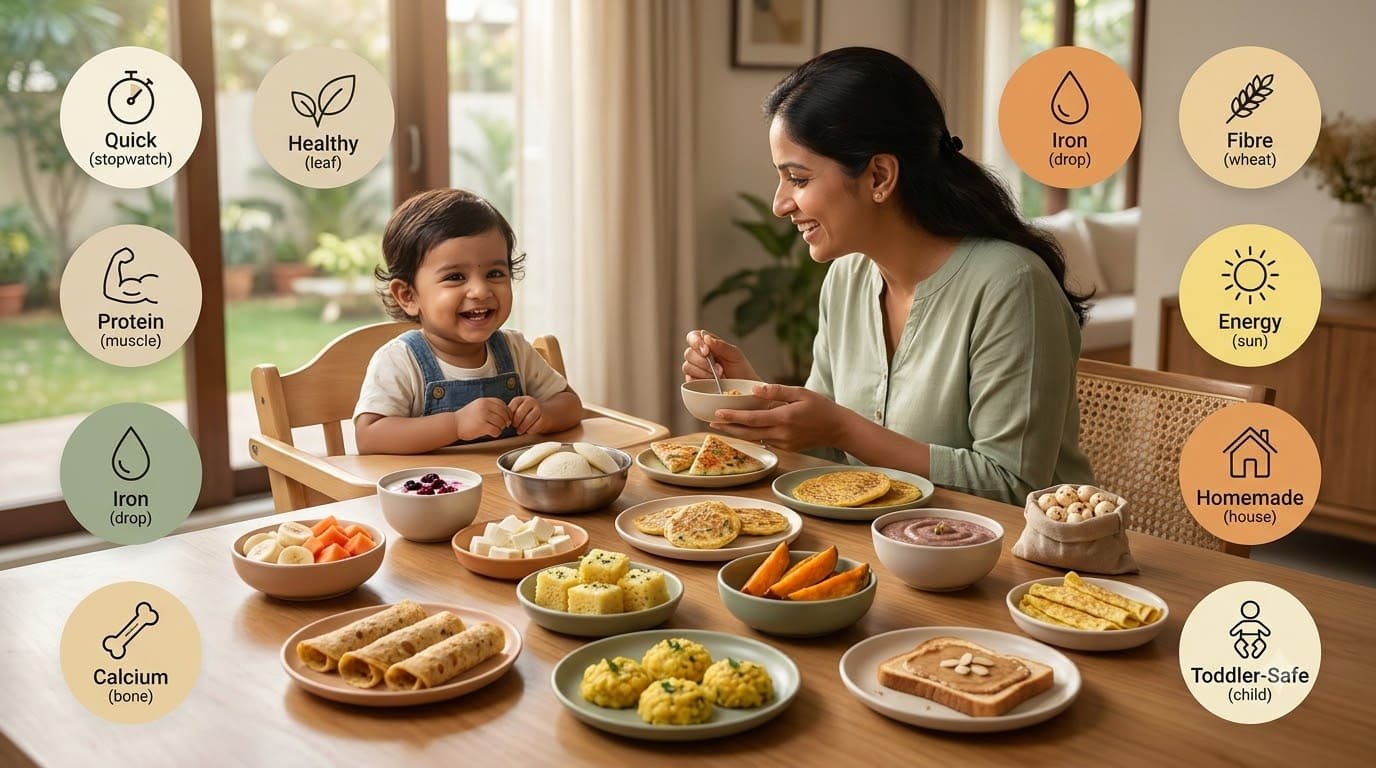
Healthy snacks for toddlers India is a topic that becomes urgent the moment your baby crosses the twelve-month mark and suddenly needs food every two hours, has opinions about everything you offer, and will eat a full bowl of something on Monday and refuse to look at it on Thursday.
My son went through a phase at sixteen months where the only snack he would reliably eat was ragi laddoo — which I had made in a batch of twenty, feeling very organised, and he consumed all twenty over four days and then decided he was done with ragi laddoos forever.
That week taught me two things. First: never make large batches of anything until you know it’s a sustained preference. Second: having a rotation of eight to ten genuinely nutritious snack options that you can cycle through is far more sustainable than perfecting one snack.
This guide is that rotation — fifteen healthy snacks for toddlers India that are quick to make, actually nutritious, and most importantly, acceptable to the discerning palates of children who have somehow developed restaurant-critic-level food opinions before learning to use a spoon properly.
Why Toddler Snacks Matter More Than Most Parents Think
Healthy snacks for toddlers India are not optional extras between “real meals.” For toddlers aged one to three years, snacks are a nutritional necessity.
A toddler’s stomach holds approximately 200–250ml — about the size of their fist. This is far too small to get adequate nutrition from three meals alone. Two to three planned snacks daily are not indulgence — they are how toddlers meet their caloric and nutritional requirements given their stomach capacity.
According to the World Health Organization’s complementary feeding guidelines, children aged 12–24 months need three meals plus two snacks daily. Children aged 2–3 need three meals plus one to two snacks. The Indian Academy of Pediatrics recommends that snacks for Indian toddlers prioritise nutrient density — iron, calcium, protein, and healthy fats — rather than simply providing calories.
The challenge with Indian toddler snacks is twofold: the commercially available options (biscuits, packaged chips, flavoured puffs) are high in sugar, refined flour, and salt — and low in genuine nutrition. And the genuinely nutritious options require some preparation. This guide solves both problems.
What Makes a Good Toddler Snack
Before the list — the criteria that make a snack genuinely worth giving:
Nutrient dense: Every snack should provide something useful — protein, iron, calcium, healthy fat, or fibre. Not just calories.
Age-appropriate texture: No choking hazards. Soft, easily mashed, or appropriately sized pieces.
Relatively low sugar: Natural sugars from fruit are fine. Added sugar — in biscuits, packaged snacks, flavoured milk drinks — is not what a toddler’s snack time should be built around.
Practical: If it takes forty-five minutes to make, you won’t make it consistently. The best snacks are ones you’ll actually prepare.
15 Best Healthy Snacks for Toddlers India
1. Ragi Laddoo — Iron + Calcium in One Bite
Ragi (finger millet) is one of the most nutritionally dense grains available in India — extraordinarily rich in calcium and iron, both critical for toddler development. Made into laddoos with jaggery and ghee, it becomes a snack that toddlers often love and parents can feel genuinely good about.
How to make: Dry roast ragi flour until fragrant (2–3 minutes). Cool slightly. Mix with melted jaggery and a small amount of warm ghee. Shape into small balls. Store in an airtight container for up to a week.
Nutrition: Iron, calcium, complex carbohydrates, healthy fat Age: From 12 months Make-ahead: Yes — lasts a week
2. Banana with Peanut Butter — Quick Energy + Protein
A banana sliced with a thin smear of peanut butter is one of the fastest, most nutritious toddler snacks available. Banana provides potassium and quick energy. Peanut butter provides protein and healthy fats that slow sugar absorption and provide sustained energy.
Important: Use natural peanut butter with no added sugar or salt. Thin smear only — not a thick layer. Ensure no peanut allergy (introduce peanuts early as per current IAP guidance to reduce allergy risk).
Nutrition: Potassium, protein, healthy fat, vitamin B6 Age: From 12 months (peanuts from 6 months per current guidance) Make-ahead: No — serve fresh
3. Curd with Fruit — Calcium + Vitamin C Together
Full-fat curd with soft fresh fruit is a calcium-rich snack that most toddlers enjoy. The combination of curd protein and fruit vitamins makes it one of the most complete snack options available.
How to serve: Full-fat curd (not flavoured, not low-fat) with mashed or soft-cut seasonal fruit — banana, mango, chikoo, papaya. A small amount of jaggery can be added if needed for sweetness.
Indian seasonal options: Summer: Mango curd (aam lassi consistency), watermelon pieces alongside Monsoon: Banana curd, pear pieces Winter: Apple curd, chikoo
Nutrition: Calcium, protein, probiotics, vitamin C Age: From 10 months Make-ahead: Mix just before serving
4. Boiled Egg — Complete Protein in Minutes
A hard-boiled egg provides complete protein, choline for brain development, vitamin D, and iron — all in five minutes of boiling. It is possibly the most nutritionally efficient toddler snack available.
How to serve: Hard-boiled, peeled, cut into quarters or mashed. A tiny pinch of jeera powder or mild spice makes it more interesting for toddlers who’ve tried plain egg multiple times.
Make-ahead: Boil a batch of 4–5 eggs on Sunday, refrigerate, and use throughout the week. The fastest nutritious snack you can prepare.
Nutrition: Complete protein, choline, vitamin D, iron Age: From 6 months Make-ahead: Yes — refrigerate up to 5 days
5. Moong Dal Chilla — Protein-Packed Mini Pancakes
Moong dal chilla — thin pancakes made from soaked and ground moong dal — are protein-rich, quick to make once the dal is soaked, and can be customised with grated vegetables for extra nutrition.
How to make: Soak moong dal for 2–3 hours. Grind to smooth batter. Add grated carrot or palak, minimal salt. Cook like small pancakes on a tawa with a few drops of ghee.
Toddler serving: Cut into small pieces or strips for finger food.
Nutrition: Protein, iron, complex carbohydrates Age: From 8 months (very soft pieces) Make-ahead: Batter lasts 24 hours refrigerated
6. Paneer Cubes — Calcium + Protein Finger Food
Soft paneer cubes are one of the best finger foods for toddlers — high in protein, high in calcium, and mild in flavour. Most toddlers accept paneer readily because of its soft texture and neutral taste.
How to serve: Plain at room temperature. Or lightly pan-tossed with a tiny amount of jeera and ghee for more flavour. Cut into small cubes appropriate for your toddler’s age.
Nutrition: Calcium, protein, vitamin B12 Age: From 8 months Make-ahead: Cut ahead, refrigerate, serve at room temperature
7. Sweet Potato Fingers — Vitamin A + Fibre
Boiled or baked sweet potato cut into finger-length pieces is naturally sweet, soft, and rich in beta-carotene (which the body converts to vitamin A). Most toddlers enjoy the natural sweetness.
How to make: Boil or bake until soft. Cut into thick fingers. A tiny amount of ghee and a pinch of mild spice makes it more interesting. Should be soft enough to squash easily between fingers.
Nutrition: Beta-carotene, vitamin C, fibre, complex carbohydrates Age: From 6 months Make-ahead: Yes — cook ahead, refrigerate, serve at room temperature
8. Til Chikki — Traditional Iron + Calcium Snack
Til (sesame) chikki — sesame seeds bound with jaggery — is one of the most traditional Indian snacks with genuinely extraordinary nutritional density. Sesame seeds are among the richest plant-based sources of calcium and iron.
Important: Til chikki must be soft enough for the toddler to manage — traditional hard chikki is a choking hazard for young toddlers. Soft-set chikki made with more jaggery is appropriate from about 18 months. Small pieces only.
Nutrition: Calcium, iron, healthy fat, protein Age: From 18 months (soft version), 2+ years (harder version) Make-ahead: Yes — lasts 2 weeks
9. Sprouted Moong — Iron + Protein + Vitamin C Together
Sprouted moong is a nutritional powerhouse — the sprouting process increases vitamin C content (which helps iron absorption), increases protein digestibility, and makes the legume easier to digest.
How to serve for toddlers: Steam or boil sprouted moong until very soft. Season with minimal salt and a tiny amount of lemon juice. Mash slightly for younger toddlers.
Nutrition: Iron, protein, vitamin C (which doubles iron absorption), folate Age: From 10 months (cooked and soft) Make-ahead: Sprout ahead (2 days), cook fresh
10. Dates and Almonds — Natural Energy + Brain Food
Medjool dates or any soft ripe dates, paired with a few soaked almonds, provide iron, natural sugar for quick energy, and healthy fats for brain development.
How to serve: Remove pits from dates — this is a choking hazard. Cut into small pieces. Soak almonds overnight, peel, and offer whole (for toddlers with sufficient teeth) or ground into almond butter.
Nutrition: Iron, natural sugars, healthy fat, vitamin E Age: From 12 months (dates without pit, cut small) Make-ahead: Soak almonds the night before
11. Idli with Mild Sambar — Complete Balanced Snack
A small idli with mild sambar — dal-based, no chilli — is one of the most complete toddler snacks available. Idli provides carbohydrates and some protein from the fermented batter. Sambar adds dal protein, vegetables, and iron. Together they provide a balanced mini-meal.
How to make toddler-friendly sambar: Dal-based sambar with soft vegetables, no whole spices, no chilli. The tempering can include mustard seeds, curry leaves, hing — these are appropriate for toddlers and beneficial for digestion.
Nutrition: Carbohydrates, protein, iron, vegetables Age: From 8 months Make-ahead: Idli ahead, sambar fresh or reheated
12. Fruit Chaat — Seasonal Fruit with Mild Spice
A simple seasonal fruit chaat — soft fruits cut into toddler-appropriate pieces with a tiny pinch of jeera powder and a squeeze of lemon — introduces variety, provides vitamin C, and is genuinely enjoyed by most toddlers.
Safe soft fruits: Banana, mango, chikoo, papaya, pear, watermelon, melon, cooked apple.
Avoid for young toddlers: Whole grapes (cut into quarters), whole berries — choking hazards.
Nutrition: Vitamins, fibre, natural sugars, hydration Age: From 8 months (soft fruits, appropriate size) Make-ahead: Cut just before serving
13. Peanut Chikki — Protein + Iron in Traditional Form
Peanut chikki — groundnuts bound with jaggery — is a traditional Indian snack with genuine nutritional value. Peanuts provide protein and iron. Jaggery provides iron and natural sweetness.
Important: Ensure no peanut allergy. Use soft-set chikki for toddlers — hard brittle chikki is a choking risk. Small pieces.
Nutrition: Protein, iron, healthy fat Age: From 18 months (soft version, no allergy) Make-ahead: Yes — lasts 2 weeks
14. Poha — Quick Iron-Rich Snack
Soft cooked poha — with vegetables, mustard seeds, curry leaves, and a squeeze of lemon — is a quick, iron-rich snack that toddlers generally accept readily because of its mild flavour.
The lemon is essential: Poha’s iron is non-heme iron. A squeeze of lemon juice on cooked poha significantly increases the iron absorbed from it. This single habit makes a meaningful nutritional difference.
Nutrition: Iron, carbohydrates, B vitamins Age: From 10 months (soft cooked) Make-ahead: Best served fresh, takes 10 minutes
15. Warm Haldi Doodh — Immunity + Comfort
Warm turmeric milk — a small cup of full-fat milk with a pinch of haldi and optional jaggery — is more a drink than a snack but functions as a mid-morning or evening snack for toddlers. Curcumin in turmeric has anti-inflammatory and antimicrobial properties. Full-fat milk provides calcium and protein.
How to make: 150ml full-fat milk, warmed. A pinch of haldi (less than ¼ teaspoon). Tiny amount of jaggery if needed. Do not boil after adding turmeric — just warm.
Nutrition: Calcium, protein, anti-inflammatory compounds Age: From 12 months (cow’s milk from 12 months as main drink) Make-ahead: Make fresh — takes 3 minutes
What to Avoid — Packaged Snack Reality Check
The most common packaged snacks given to Indian toddlers and what’s actually in them:
| Snack | The Problem |
|---|---|
| Parle-G / Marie biscuits | Refined flour, sugar, minimal nutrition |
| Packaged fruit juice | Sugar equivalent to 4–5 teaspoons, no fibre |
| Flavoured milk drinks | High sugar, minimal actual nutrition |
| Puffed corn/rice snacks | Salt, artificial flavour, empty calories |
| Packaged rusk | Refined flour, sugar, marketed as “baby-safe” |
| Instant noodles | Salt, refined flour, MSG — not appropriate |
The pattern: most packaged toddler snacks are high in refined carbohydrates, sugar, and salt — and low in protein, iron, calcium, and genuinely useful nutrition. The home-made options above provide significantly better nutrition at lower cost.
Snack Timing — When to Give Snacks
7:00 AM  — Breakfast
10:00 AM — Morning snack (fruit + protein)
12:30 PM — Lunch
3:30 PM  — Afternoon snack (more substantial)
7:00 PM  — Dinner
Two hours before a meal: Don’t give snacks within two hours of a main meal — they reduce appetite at mealtimes where more complete nutrition is offered.
Snack size: Small — a toddler snack should be approximately ¼ to ⅓ of a meal portion.
FAQ — Healthy Snacks for Toddlers India
Q: My toddler only wants biscuits for snacks. How do I transition?
Gradually. Don’t remove biscuits abruptly — offer a new snack alongside the biscuit first. Over two to three weeks, reduce the biscuit portion and increase the new snack. Toddlers accept new foods through repeated exposure — typically 10–15 exposures before a food is accepted. Offer without pressure.
Q: How much snack is appropriate for a 18-month-old?
Approximately ¼ to ⅓ of their meal portion. A ragi laddoo, half a banana, 3–4 paneer cubes, or 2–3 tablespoons of curd with fruit. The goal is to take the edge off hunger without displacing appetite at the next meal.
Q: Can I give the same snack every day?
You can, but variety is nutritionally better and reduces the risk of your toddler developing a fixed preference for one snack and refusing all others. A rotation of 5–6 snacks is more sustainable than a single daily snack.
Q: My toddler refuses everything except packaged snacks. What do I do?
This is extremely common — packaged snacks are engineered to be intensely palatable. Reduce access to packaged snacks gradually rather than eliminating them overnight. Offer whole food snacks first, before hunger leads to demanding packaged options. Eat the snack yourself alongside the toddler — modelling is one of the most powerful ways to introduce new foods.
Q: Is ragi laddoo with jaggery okay for diabetic risk toddlers?
If there is a family history of diabetes and you have specific concerns, discuss with your paediatrician. Jaggery is still sugar — it has a slightly lower glycaemic index than refined sugar but is not sugar-free. For healthy toddlers, jaggery in moderation is appropriate and nutritionally preferable to refined sugar.
More from MumPappaHub — Read These Next:
- Starting Baby on Solid Foods India
- Superfoods for Toddler Brain Development
- Foods to Help Toddler Gain Weight India
- Iron Rich Foods Babies Toddlers India
- Picky Eater Strategies That Work
- Toddler Nutrition and Picky Eating
- Baby Led Weaning India
- Baby Development Month by Month
- Indian Baby Weight Chart
- Baby Vaccination Schedule India 2026
- Baby Fever Guide
- Newborn Care Tips
About This Article
Written by the MumPappaHub editorial team — including a mother who made twenty ragi laddoos in one batch, watched her sixteen-month-old eat all of them over four days, and then discovered he was done with ragi laddoos forever. The rotation approach was born from necessity.
Reviewed for accuracy against WHO complementary feeding guidelines and Indian Academy of Pediatrics nutrition recommendations for toddlers. This content is for general informational purposes only and does not constitute medical advice. Consult your paediatrician with specific concerns about your toddler’s diet.
MumPappaHub — Real talk for real parents. mumpappahub.com

2 Comments