
News Source: Ommcom News, Odisha | Ministry of Women and Child Development | October 8, 2026
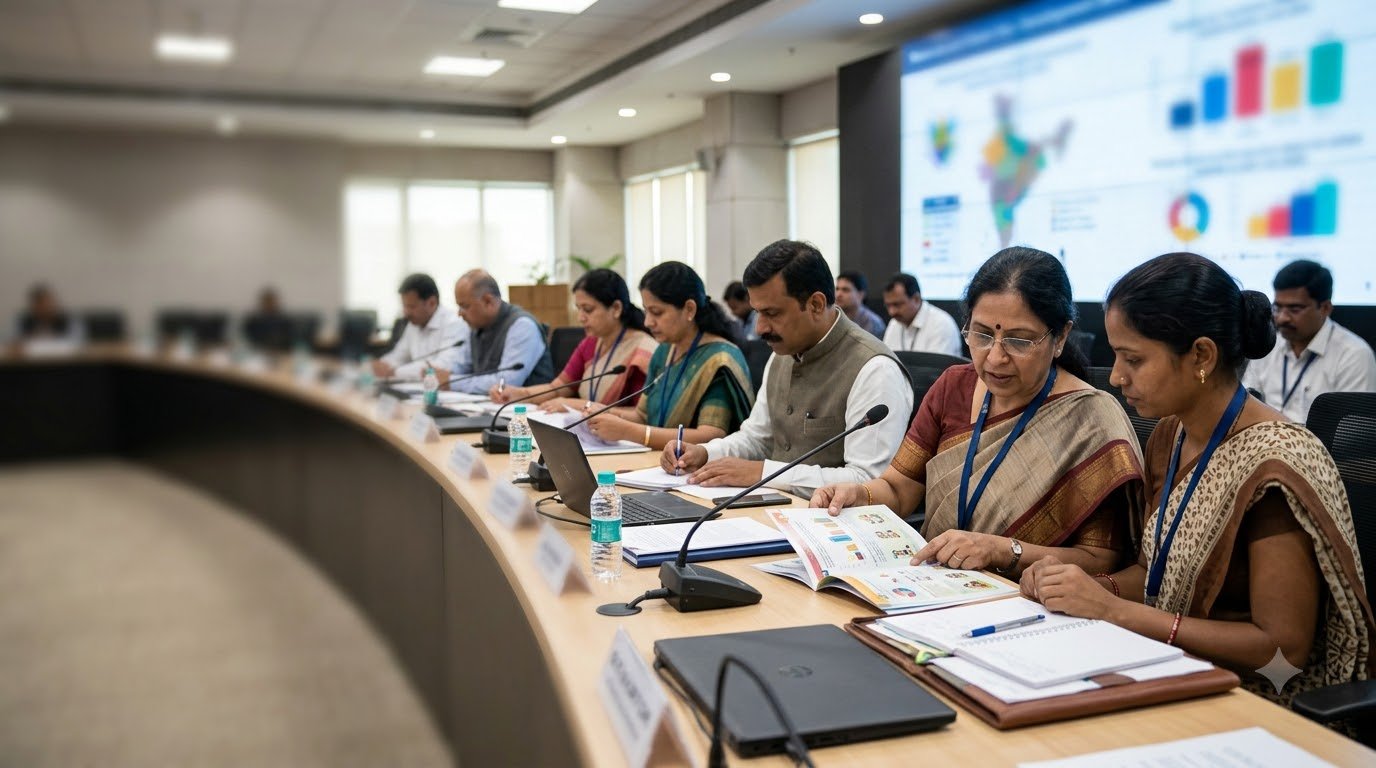
WCD Departmental Summit 2026 India is happening on October 8 and 9, 2026 — a two-day national summit of the Ministry of Women and Child Development (MWCD) in New Delhi, chaired by Union WCD Minister Annapurna Devi, bringing together senior officials from states and union territories to strengthen Centre-State coordination in child welfare and women’s empowerment.
The summit — attended by state-level WCD ministers, secretaries, and commissioners from across India — is deliberating on four major themes that directly affect Indian families: transforming Anganwadi Centres, strengthening child protection, ensuring women’s safety, and enhancing women’s empowerment programmes.
For Indian parents whose children attend Anganwadi Centres, or who benefit from government maternal and child health schemes, the outcomes of this summit have practical implications for services that may change in the months ahead.
What Is Being Discussed — 4 Summit Themes
Theme 1 — Transforming Anganwadi Centres
The first and central theme of the summit is transforming Anganwadi Centres — India’s frontline child nutrition, early childhood education, and maternal health infrastructure — to improve both nutrition outcomes and early childhood education quality.
What this means for Indian parents:
India has approximately 14 lakh Anganwadi Centres serving children aged 0-6 years and their mothers. These centres provide supplementary nutrition, pre-school education, immunisation support, health check-ups, and referral services.
The summit is discussing specific improvements — upgrading infrastructure, improving the quality of supplementary nutrition (the context of the new SNP Menu Boards and Hot Cooked Meal guidelines launched during Poshan Maah 2026), strengthening the pre-school education component (ECCE — Early Childhood Care and Education), and improving frontline worker capacity.
Action for Indian parents: September’s Poshan Maah introduced Anganwadi Management Committees — if your local Anganwadi has not yet held a community meeting, this summit’s follow-up is likely to reinforce that requirement. Your participation in your local Anganwadi’s management committee is now formally encouraged by the Ministry.
Theme 2 — Strengthening Child Protection Mechanisms
The second theme is child protection — including the functioning of Child Welfare Committees (CWCs), the Integrated Child Protection Scheme (ICPS), and mechanisms for identifying and supporting children in difficult circumstances.
What this means for Indian parents:
Child protection under Indian law covers not just abuse and neglect but a broader spectrum of vulnerability — children in conflict with the law, children without family care, children affected by trafficking, and children in working situations.
The summit is examining how states are implementing the Protection of Children from Sexual Offences (POCSO) Act 2012 and the Juvenile Justice (Care and Protection of Children) Act 2015 — the two key legislative frameworks for child protection in India.
Key message for parents: Know that Child Welfare Committees exist in every district of India. If you are aware of a child in your neighbourhood or community who is in a vulnerable situation — not attending school, working instead of studying, or appearing to be in a difficult family situation — you can contact your local Child Welfare Committee or the Childline helpline (1098) to report concerns.
Theme 3 — Women’s Safety — Effective Institutional Frameworks
The third theme addresses women’s safety — including One Stop Centres (Sakhi Centres), which provide integrated support to women affected by violence, and the functioning of Women Help Desks at police stations.
What this means for Indian parents:
One Stop Centres are available in most districts — they provide crisis intervention, medical assistance, legal support, and shelter for women affected by any form of violence. These centres are free, confidential, and available to all women regardless of economic background.
The summit is reviewing how effectively states are operationalising these centres — including staffing, awareness, and the quality of services provided.
Theme 4 — Women’s Empowerment Initiatives — Improving Impact
The fourth theme is the effectiveness of flagship women’s empowerment schemes — Pradhan Mantri Matru Vandana Yojana (PMMVY), Beti Bachao Beti Padhao, and other central government schemes that support women’s economic participation and wellbeing.
PMMVY — what Indian pregnant women need to know:
The Pradhan Mantri Matru Vandana Yojana provides Rs 5,000 in cash incentive to pregnant and lactating women for the first live birth — disbursed in instalments against specific antenatal and postnatal conditions.
The summit is discussing improving PMMVY coverage and saturation — ensuring all eligible women are enrolled and receiving benefits. If you are pregnant with your first child and not yet registered for PMMVY, contact your ASHA worker or nearest Anganwadi immediately — registration is the first step to receiving the benefit.
5 Key Implications for Indian Families
1. Anganwadi Services Will Improve
The summit’s focus on Anganwadi transformation — following Poshan Maah 2026’s structural changes (SNP Menu Boards, Hot Cooked Meals, AMC meetings) — signals that Anganwadi service quality improvements are a continuing government priority. Parents of children under 6 who use their local Anganwadi can expect incremental improvements in the quality of nutrition and early education services.
2. Child Protection Reporting Becomes Easier
Strengthened child protection mechanisms mean that the pathway for reporting child welfare concerns — Childline 1098, Child Welfare Committees — will be more accessible and better staffed. Indian parents who have concerns about children in their community have a formal route to report them.
3. PMMVY Coverage Is Expanding
The focus on PMMVY saturation means that eligible women who have not yet registered are likely to be proactively reached by ASHA workers in the coming months. If you are pregnant or a new mother and have not yet registered for PMMVY — don’t wait to be found. Register at your nearest Anganwadi or government health centre now.
4. One Stop Centres Are More Accessible
Women in any district of India who need support related to domestic violence or any form of violence can access a One Stop Centre. The summit’s focus on improving their functioning means these services should become more effective and accessible.
5. Centre-State Coordination Improves Service Delivery
The fundamental purpose of the summit is improving how central government schemes are delivered at the state level — ensuring that the policies designed in Delhi actually reach families in districts and villages. Better Centre-State coordination means better ground-level implementation of schemes Indian families are entitled to.
MumPappaHub’s Take
The WCD Departmental Summit represents the government’s annual mechanism for reviewing how child and women welfare schemes are working — and pushing states to improve implementation.
For Indian parents, the most immediately actionable outcomes are: ensuring PMMVY registration for eligible first-time mothers, participating in your local Anganwadi Management Committee, and knowing the Childline number (1098) for child protection concerns.
The summit’s emphasis on Anganwadi transformation — particularly the early childhood education component — is encouraging. Quality ECCE (Early Childhood Care and Education) at Anganwadi Centres, if delivered effectively, represents one of the highest-impact educational investments available for Indian children aged 3-6.
Related Reading on MumPappaHub:
- Poshan Maah 2026 Launched India
- Anemia in Pregnancy India
- Baby Food Recipes India 6-12 Months
- Iron Rich Foods Babies Toddlers India
- Baby Vaccination Schedule India 2026
- Newborn Care Tips
- Normal Delivery Tips India
Source: Ommcom News. “Dy CM Pravati Parida Attends WCD Departmental Summit In New Delhi.” October 8, 2026. Ministry of Women and Child Development, Government of India.
MumPappaHub — Real talk for real Indian parents. mumpappahub.com
