
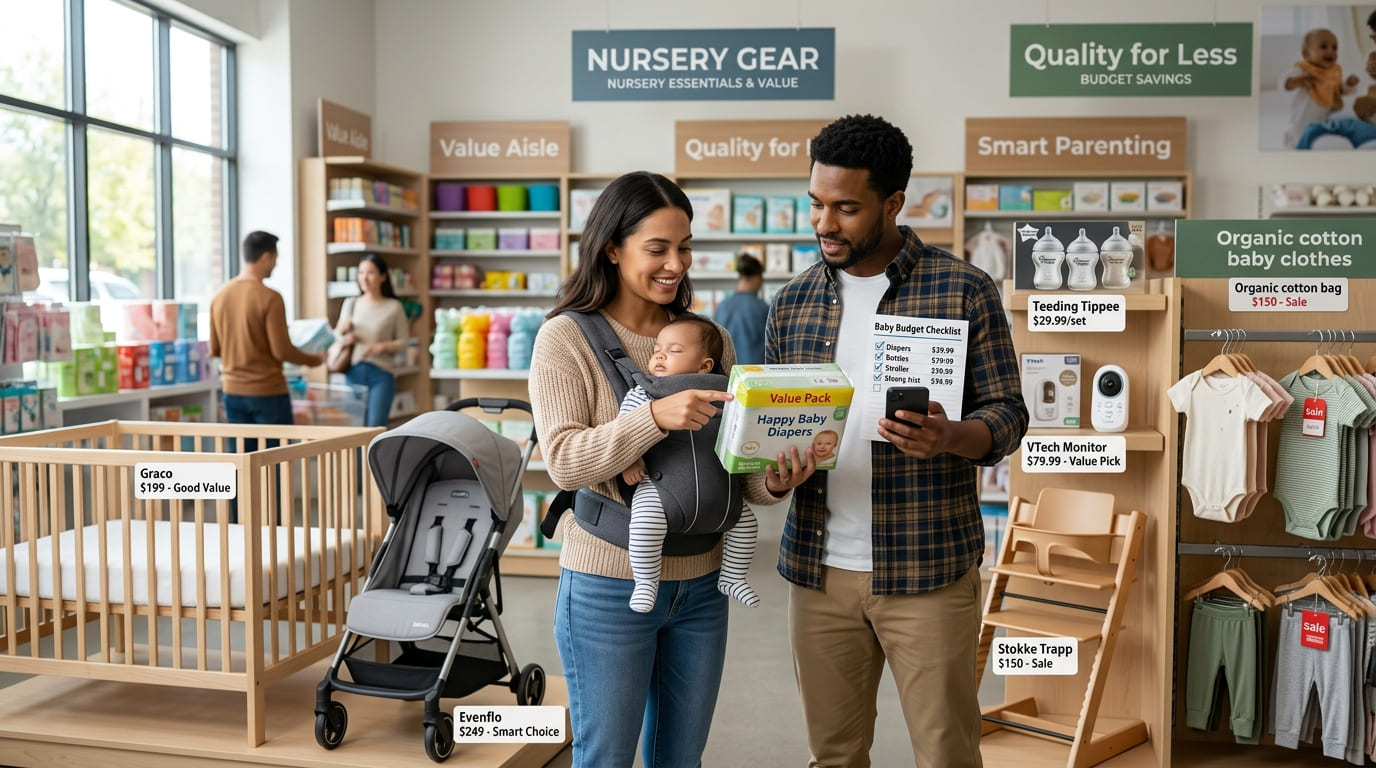
Becoming a parent is one of the most joyful experiences in the world — but let’s be honest, it can also be overwhelming for your wallet. From cribs to carriers, diapers to developmental toys, the list of “must-have” baby products seems never-ending. And if you are shopping in India or on a tight global budget, the pressure to buy the “best” can feel even more intense.
Here is the truth: you do not need to spend a fortune to give your baby the best start in life. In 2026, smart parents — from Mumbai to Manchester — are discovering that affordable baby products can be just as safe, effective, and high-quality as expensive ones. You just need to know what to look for.
This guide is your shortcut. Whether you are a first-time parent or expecting your second child, we have done the research so you don’t have to.
Why Budget-Friendly Does Not Mean Low Quality
Many parents assume that expensive equals safe. That is simply not true. What matters is whether a product meets certified safety standards — not the price tag on the label.
In India, look for BIS (Bureau of Indian Standards) certification on baby products. Globally, certifications like EN 71 (Europe) and ASTM (USA) are your quality benchmarks. A Rs. 500 silicone teether with BIS certification is far safer than a Rs. 2000 fancy-branded one without it.
The key insight for 2026: many Indian and international brands are now producing affordable baby gear that meets the same safety standards as premium global brands — sometimes even manufactured in the same factories.
Top Budget-Friendly Baby Product Categories (With Smart Buying Tips)
1. Feeding Essentials
Feeding gear is where many parents overspend early on. Here is what you actually need — and what you can skip.
What to buy affordably:
- BPA-free feeding bottles — Brands like Chicco, Pigeon, and Dr. Brown’s offer reliable, budget-friendly options widely available in India and internationally. Pigeon is especially popular across Asia for its affordability and safety record.
- Silicone bibs and spoons — Avoid cheap plastic. A set of food-grade silicone spoons and bibs costs very little and lasts for years.
- Steel or glass storage containers — Much cheaper long-term than disposable pouches for homemade baby food.
Smart tip: Skip expensive formula dispensers and bottle warmers. A thermos flask maintains the right water temperature just as effectively at a fraction of the cost.
2. Sleep Essentials
Safe sleep is non-negotiable — but a safe sleep environment does not have to be expensive.
What to buy affordably:
- Firm, flat mattress — The most important thing in any crib or bedside bassinet is a firm, flat, breathable mattress. You do not need an expensive “smart mattress.” Look for ones with a washable cover and proper ventilation holes.
- Cotton muslin swaddles — Indian brands like Kicks & Crawl and R for Rabbit offer beautiful, affordable organic muslin swaddles that are perfect for Indian climates and worldwide shipping. 3–4 swaddles are more than enough.
- Convertible crib — If budget allows, invest here. A crib that converts into a toddler bed saves you from buying a separate bed at age 2–3.
What to skip: Fancy crib mobiles with LED lights and Bluetooth. A simple hanging mobile does the same developmental job.
3. Diapering on a Budget
Diapering is one of the biggest ongoing costs for any parent. Being smart here saves thousands over time.
Budget strategies:
- Cloth diapers — In India, cloth diapering is making a strong comeback. Modern cloth diapers (MCDs) from brands like SuperBottoms are reusable, skin-friendly, and save enormous amounts of money in the long run. One-time investment of Rs. 2,000–4,000 can replace thousands spent on disposables.
- Disposable alternatives — If cloth is not practical for you, brands like Mamy Poko Pants and Pampers Active Baby offer reliable, affordable disposable options. Buy in bulk during sale seasons like Amazon Great Indian Festival or Flipkart Big Billion Days.
- DIY diaper rash cream — Coconut oil with a small amount of zinc oxide is a classic, affordable, and effective remedy used by generations of Indian mothers.
4. Baby Clothing
Babies grow incredibly fast — spending a lot on clothing is one of the easiest ways to waste money.
Budget strategies:
- Buy one size up — Babies outgrow newborn sizes in weeks. Buy 0–3 month sizes sparingly and stock more 3–6 month clothing.
- Choose multipacks — Plain cotton onesies in multipacks are far more economical than individual branded outfits.
- Second-hand is perfectly fine — Unlike car seats and cribs, second-hand clothing is safe, hygienic when washed properly, and a huge money-saver. Platforms like Facebook Marketplace, OLX India, and Instagram resale communities have growing baby clothing sections.
- Invest in one good winter layer — If you live in a colder region, one good quality fleece sleepsuit is all you need instead of multiple expensive sets.
5. Play and Development
Baby toys do not need to be expensive to be developmental. In fact, the best developmental tools are often the simplest.
What to buy affordably:
- Wooden rattles and teethers — Simple, safe, stimulating, and long-lasting. Available on Amazon India, FirstCry, and local handicraft stores for very affordable prices.
- Black and white contrast cards — Newborns respond strongly to high-contrast patterns. Print a set at home or buy a simple card set for under Rs. 200.
- Stacking rings and shape sorters — Classic toys that develop motor skills and problem-solving. No batteries, no apps, no upgrades needed.
What to skip: Battery-operated “educational” toys that make noise. Research consistently shows open-ended play — stacking, sorting, building — builds more brain connections than flashy electronic toys.
Worldwide Budget Baby Shopping: Where to Buy Smart
| Platform | Best For | Region |
|---|---|---|
| FirstCry | Widest baby product range, frequent sales | India |
| Amazon India | Bulk buying, price comparison | India |
| Hopscotch | Affordable baby clothing | India |
| Amazon Global | International brands at good prices | Worldwide |
| Daraz | Budget baby products | South Asia |
| AliExpress | Basic accessories (always check safety certs) | Worldwide |
| Facebook Marketplace | Second-hand gear | Global |
The 3 Golden Rules for Budget Baby Shopping in 2026
Rule 1: Safety First, Price Second
Always check for relevant safety certifications before purchasing. A cheap product with no certification is never a bargain.
Rule 2: Buy Multi-Use, Not Single-Use
Ask yourself: will this product be useful in 12 months? Products like convertible strollers, adjustable high chairs, and modular storage systems pay for themselves over time.
Rule 3: Borrow, Rent, or Buy Second-Hand When Possible
Expensive gear like bouncers, swings, and jumperoos are used for only a few months. Borrowing from family or renting through platforms is far smarter than buying new. In India, communities like local mother’s Facebook groups are excellent for this.
Frequently Asked Questions
Q: Are Indian baby product brands safe and reliable?
Yes, absolutely. Indian brands like SuperBottoms, R for Rabbit, Mee Mee, and Babyhug have invested significantly in meeting BIS and international safety standards. Many export their products globally. Always check for certification labels regardless of brand origin.
Q: What baby products should I never buy second-hand?
Never buy second-hand car seats, cribs, or baby helmets. These have strict safety standards that may have changed, and structural integrity cannot be verified after prior use.
Q: How much should I realistically budget for baby’s first year?
In India, a realistic and smart budget for a baby’s first year — covering essentials across feeding, sleeping, clothing, and basics — ranges from Rs. 15,000 to Rs. 40,000 depending on choices. In Western countries, the equivalent smart budget is approximately USD $800–$1,500. Many families spend 3–4x more than this without necessarily getting better outcomes for their child.
Related Reading
Want to save money while also choosing products that last for years? Read our guide on baby products that adapt through multiple stages of your child’s growth:
The 2026 Conscious Parent’s Guide: Choosing Baby Products That Grow With Your Child
Final Thoughts
The best baby product is not the most expensive one — it is the one that keeps your baby safe, works for your lifestyle, and fits your budget without financial stress. In 2026, Indian parents and global parents alike have more high-quality, affordable options than ever before.
Trust your instincts, check the certifications, connect with your parent community, and remember: what your baby needs most is your time, love, and presence — none of which have a price tag.
Found this guide helpful? Share it with a parent-to-be in your life. And don’t forget to explore MumPappaHub for more practical parenting guides, nutrition tips, and baby care advice tailored for Indian families.

2 Comments