
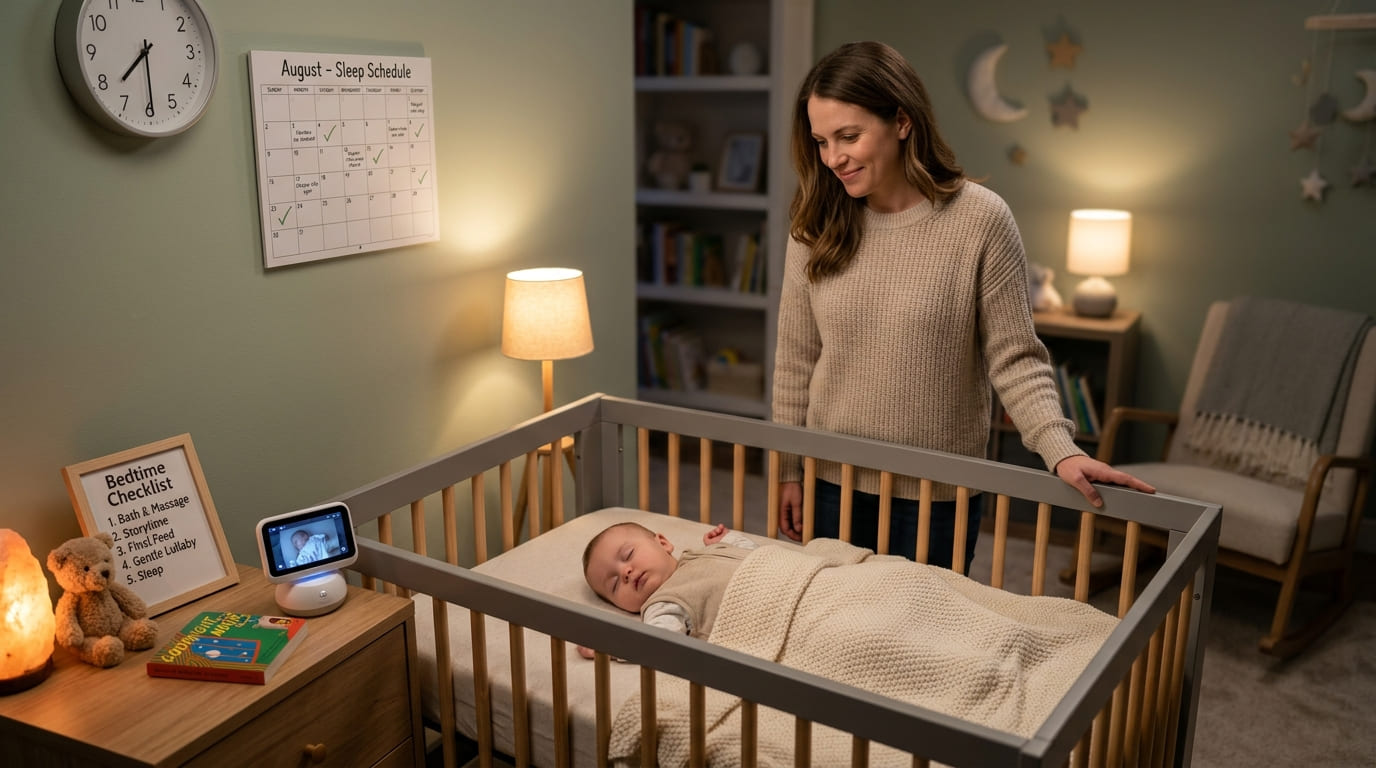
The topic of baby sleep training is often shrouded in confusion, guilt, and exhaustion. If you are reading this at 2:00 AM, rocking a wide-awake infant, please know this: You are not failing. Sleep is a developmental process, not a skill babies are born with. Just like walking or talking, some babies pick it up quickly, while others need a bit more guidance and time.
Sleep training is essentially the process of helping your baby learn to settle themselves to sleep and, eventually, connect their sleep cycles. It isn’t about ignoring your baby’s needs; it is about empowering them with the tool of self-soothing.
Understanding the “When” and “Why”
Most experts agree that babies are generally ready for formal sleep training between 4 and 6 months of age. By this time, their circadian rhythms are more established, and they are capable of going longer stretches without needing a middle-of-the-night feed.
Before diving into methods, ensure you have a solid foundation:
- The Routine: A predictable sequence (bath, book, bed) creates a “sleep cue.”
- The Environment: A dark, cool room with white noise works wonders.
- The Health Check: Ensure your baby is fed and healthy before starting any training. If you are unsure about their overall development, you can check our Child Development Milestones guide to ensure they are on the right track.
3 Popular Sleep Training Methods
There is no “one size fits all” approach. Choose the method that aligns with your parenting philosophy and your baby’s temperament.
1. The Ferber Method (Graduated Extinction)
This method involves checking on your baby at set intervals. You put them down awake, leave the room, and return after a specific period (e.g., 3 minutes, then 5, then 10) to offer verbal comfort without picking them up.
- Best for: Parents who want a structured approach and feel comfortable with their baby crying for short intervals.
2. The Chair Method (Fading)
You sit in a chair next to the crib while your baby falls asleep. Every few nights, you move the chair further away toward the door until you are eventually out of the room.
- Best for: Parents who want to be physically present but want to gradually reduce their intervention.
3. The Pick-Up/Put-Down Method
When your baby cries, you pick them up to soothe them until they are calm, then put them back down. You repeat this as many times as necessary.
- Best for: Parents who prefer a high-touch, responsive approach, even if it requires more patience and physical energy.
Sample Sleep Schedule (For a 6-Month-Old)
Consistency is the secret sauce of sleep training. While every baby is different, here is a template to start from:
- 7:00 AM: Wake up and first feed.
- 9:00 AM: Morning Nap (approx. 1.5 hours).
- 12:30 PM: Second Nap (approx. 1.5 hours).
- 3:30 PM: Final short “cat nap” if needed (30–45 minutes).
- 6:30 PM: Start bedtime routine.
- 7:00 PM: Asleep for the night.
Parenting Note: If your baby’s sleep was disrupted by illness, remember to be gentle. You can revisit our tips on What to Do When Your Baby Has a Fever to ensure they are comfortable before resuming your routine.
Expert Tips for Success
- Consistency is King: Once you pick a method, stick with it for at least 7–10 days. Switching methods halfway through confuses your baby.
- Focus on Day Sleep: A baby who is overtired at bedtime will have a much harder time settling. Ensure their daytime naps are consistent.
- The “Dream Feed”: Many parents find success with a “dream feed” (a quiet, dark feeding right before you go to bed) to help bridge the gap to morning.
- Mental Preparation: Sleep training is as much about you as it is about the baby. Keep your own physical health in mind; if you feel like you are at a breaking point, reach out to your support system or explore the emotional guidance in our Baby Blues vs. Postpartum Depression article.
How This Fits Your Broader Journey
- Self-Care: Don’t forget your own recovery. Using the gentle techniques in 5 Safe Postpartum Exercises to Rebuild Your Core can help boost your stamina for those long nights.
- Practical Prep: Ensure your nursery is set up for success; having the right Essential Baby Products (like blackout curtains or a trusted white noise machine) makes a huge difference.
- Presence: As they get older and sleep better, you will have more energy to engage in “Analogue” play—revisit our guide on The Rise of the ‘Analogue Bag’: Reclaiming Screen-Free Parenting in 2026 for ways to connect during the day.
Frequently Asked Questions (FAQ)
No. Research suggests that sleep training does not negatively affect the attachment between parent and child. A well-rested baby (and a well-rested parent) is often a happier, more bonded pair.
Yes! Regression is normal. If your routine is disrupted, just restart your sleep training method from day one, and you will usually find they pick it back up much faster than the first time.
This is a conversation for your pediatrician. Once your baby has reached a certain weight and age, your doctor can advise when it is medically safe to drop those feeds.
Yes, these methods are universal and work regardless of whether you are breastfeeding or formula feeding. If you are struggling with milk supply, don’t forget our guide on Top 7 Foods to Naturally Increase Breast Milk Supply.
Conclusion: Trust Your Instincts
You are the world’s best expert on your baby. If a sleep training method feels wrong, stop. There is no moral victory in pushing through a method that leaves you and your baby distressed. Take a step back, rest, and try again when you feel ready.
Sleep training is a season, and just like your baby’s name or their first steps, this phase will become a part of your family’s unique story. Stay patient, keep your routine consistent, and remember that you are doing a magnificent job. Soon enough, these long nights will be a distant memory, replaced by mornings full of laughter and the joy of a well-rested family.
2 Comments