
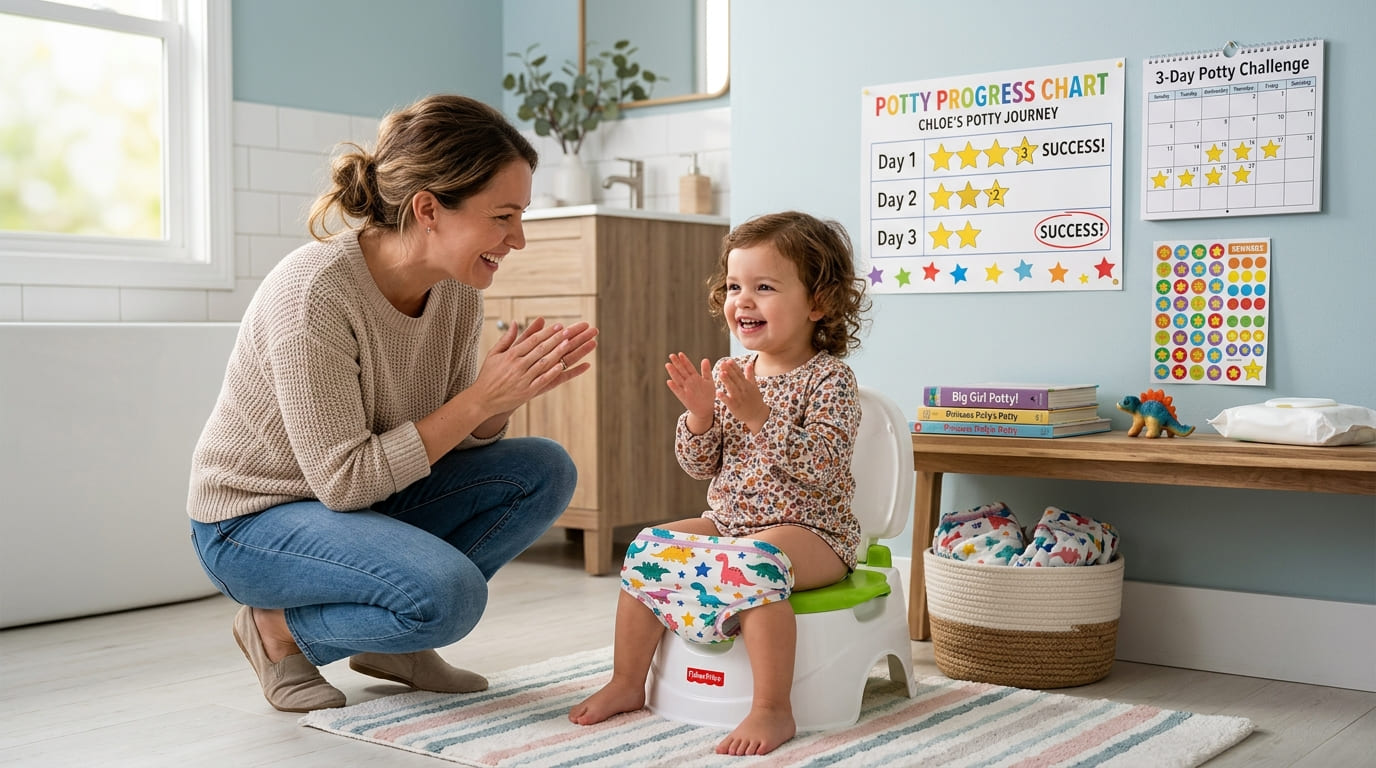
Of all the milestones your child will achieve in their first few years of life—learning to smile, crawling across the living room floor, or taking their very first wobbly steps—there is one milestone that strikes a unique mix of intense excitement and sheer terror into the hearts of parents: Potty Training.
The thought of finally ditching expensive diapers and bulky diaper bags is thrilling. However, the reality of cleaning up puddles from your living room rug, navigating public restrooms with a frantic toddler, and dealing with stubborn bathroom standoffs can make the process feel incredibly overwhelming.
If you are currently staring at a mountain of diapers and wondering how to transition your fiercely independent toddler to the toilet, take a deep breath. Potty training does not have to be a multi-month battle of wills. With the right preparation, a clear strategy, and a massive dose of patience, you can guide your child through this transition smoothly.
In this exhaustive, comprehensive guide, we are breaking down everything you need to know about potty training. We will cover the undeniable signs of readiness, the exact supplies you need, a step-by-step breakdown of the famous “3-Day Method,” and expert troubleshooting tips for the most common roadblocks—like the dreaded “refusal to poop.”
The Psychology of Potty Training
Before we dive into the schedules and sticker charts, it is absolutely vital to understand the psychology behind potty training. For the first two or three years of your child’s life, they have been conditioned to use a diaper. A diaper is warm, it is immediately accessible, and it requires zero interruption to their playtime.
You are now asking them to completely rewire their brain, recognize internal physical sensations they have previously ignored, stop whatever fun activity they are doing, walk to a different room, and release their bodily fluids into a giant, noisy, water-filled bowl. From a toddler’s perspective, this is a massive and terrifying ask!
Furthermore, toddlers are at a developmental stage where they are desperately seeking control over their own lives. You cannot force a child to sleep, you cannot force a child to eat, and you absolutely cannot force a child to pee or poop. If potty training becomes a high-pressure power struggle, the toddler will always win. The key to successful training is shifting the dynamic from you training them to you empowering them to learn a new, grown-up skill.
The 7 Undeniable Signs of Potty Training Readiness
One of the biggest mistakes parents make is starting potty training based on the calendar rather than the child. Just because your neighbor’s child was potty trained at 18 months does not mean your 2-year-old is ready. Starting before your child is biologically and emotionally ready will only result in months of frustrating accidents.
Look for a combination of these physical, cognitive, and emotional signs of readiness (usually appearing between 22 and 30 months of age):
Physical Signs
- Staying Dry for Longer Periods: If your toddler is suddenly waking up dry from their two-hour afternoon nap, or if you check their diaper after two hours of play and it is completely dry, their bladder muscles are maturing enough to hold urine.
- Predictable Bowel Movements: If your child poops at roughly the same time every day (e.g., right after breakfast or right before their bath), their digestive system is regulated enough to anticipate bathroom trips.
Cognitive Signs
- Understanding Basic Instructions: Potty training requires following multi-step directions. Your child should be able to follow commands like, “Please pick up the toy and put it in the basket.”
- Awareness of the Act: Does your child suddenly stop playing and stare off into space, grunt, or hide behind the living room curtains when they are filling their diaper? This means they are making the crucial cognitive connection between the physical sensation and the act of eliminating.
Emotional Signs
- Disliking Dirty Diapers: If your toddler pulls at a wet diaper, cries when it is heavily soiled, or specifically asks to be changed, they are showing a desire for cleanliness.
- Interest in the Bathroom: Do they follow you into the bathroom, flush the toilet for you, or ask questions about what you are doing? Curiosity is a massive motivator.
- Seeking Independence: A toddler who constantly says “I do it myself!” when dressing or eating is showing the exact independent spirit required to master the potty.
The Preparation Phase: What You Need Before Day 1
If you have determined that your child is ready, it is time to prepare your environment. You cannot decide to start potty training on a random Tuesday morning without the right gear. Here is your ultimate shopping and preparation list:
- The Right Equipment: You have two options. You can buy a standalone, floor-level “potty chair,” or you can buy a seat-reducer that fits securely over your regular toilet (paired with a sturdy step stool). Many experts recommend the floor-level potty chair for beginners because it allows the child to plant their feet firmly on the ground, which provides the physical leverage needed to push out a bowel movement comfortably.
- A Mountain of Underwear: Let your toddler pick out their own underwear featuring their favorite cartoon characters or colors. Buy at least 15 to 20 pairs. They will go through a lot of them in the first week.
- Immediate, High-Value Rewards: Potty training requires immediate positive reinforcement. Have a stash of small, high-value rewards ready. This could be M&Ms, small stickers, mini marshmallows, or a single gummy bear. The reward must be given the second they succeed on the potty.
- Clear Your Schedule: If you are using the 3-Day Method, you need three consecutive days where you do not leave the house. No grocery runs, no playdates, no park trips. Cancel your plans and prepare to stay home.
- Protect Your Furniture: Roll up expensive rugs, put a waterproof mattress protector on your couch, and have enzyme-based cleaning sprays and paper towels easily accessible in every room.
The Famous 3-Day Potty Training Method: Step-by-Step
The 3-Day Method (often referred to as “Bootcamp”) is intense, exhausting, and highly effective. By removing the safety net of diapers entirely, the child learns through natural consequences.
Day 1: The “Naked Day”
- The Setup: As soon as your child wakes up, take off their nighttime diaper. Announce cheerfully, “Bye-bye diapers! You are a big kid now, so we are throwing the diapers away!” (Actually put them in a trash bag together). For the entire day, your child will be completely naked from the waist down.
- Push the Fluids: Offer them their favorite drinks constantly. Diluted juice, water, or milk. You want them to have to pee as much as possible so they have multiple opportunities to practice.
- The Hawk-Eye Observation: You cannot look at your phone, and you cannot do chores. You must watch your child like a hawk. Look for their unique “tell”—dancing from foot to foot, grabbing their crotch, or suddenly freezing.
- The “Uh-Oh” Moment: When they inevitably start peeing on the floor, do not yell or scold them. Gasps or anger will scare them. Instead, simply say, “Uh-oh! Pee goes in the potty!” Scoop them up mid-stream and run them to the potty chair. Even if they only get a single drop in the bowl, praise them wildly and give them a reward.
- The Goal: By the end of Day 1, the goal is for the child to realize that they are peeing as it is happening and to finish the stream in the potty.
Day 2: The “Commando” Phase
- The Setup: On Day 2, your child will wear loose-fitting pants, shorts, or a dress, but no underwear. (Underwear feels too much like a tight diaper and can trigger muscle memory to just release their bladder).
- Prompting: Instead of asking, “Do you have to go potty?” (to which a toddler will always say “No”), use declarative statements. Say, “It has been a while. It is time to sit on the potty and try.” Set a timer and have them sit on the potty every 60 to 90 minutes.
- The Short Outing: In the late afternoon, take a very short, 20-minute outing. Go for a walk around the block or drive to a nearby drive-thru. Have them try to use the potty right before you leave. This teaches them that they have to hold it when they are outside the house.
Day 3: The Transition to Normalcy
- The Setup: Continue with loose clothing and no underwear. By Day 3, your child should be initiating the trips to the potty or at least telling you immediately when they feel the urge.
- The Bigger Outing: Take a slightly longer trip, perhaps an hour to a quiet park. Bring a portable travel potty with you. Show them where the potty is in the trunk of the car and remind them, “If you need to go, tell me, and we will use your special travel potty.”
- Celebrate: By the evening of Day 3, celebrate their massive achievement. They might not be 100% accident-free, but the fundamental foundation has been permanently laid. You can introduce actual underwear on Day 4 or 5 once they are highly confident.
Troubleshooting the Biggest Potty Training Roadblocks
Even with the best preparation, you will likely hit a few bumps in the road. Here is how to handle the most common, highly-searched potty training problems.
Problem 1: Refusing to Poop on the Potty (Withholding)
This is the number one issue parents face. A child will happily pee in the toilet, but when it comes time to poop, they will hold it in for days, hide in a corner, or demand a diaper.
Why it happens: Pooping feels very different from peeing. For a toddler, seeing a piece of their body fall away into a watery hole is psychologically alarming. Furthermore, if they have ever had a hard, painful bowel movement, they associate the toilet with pain. If they withhold their poop, they become constipated, which makes the next poop even more painful, creating a vicious cycle of fear.
How to fix it:
- Do not force them to sit: Forcing a terrified, crying child to sit on the toilet will only increase their anxiety.
- The Diaper Compromise: If they have been holding it for two days and are in pain, hand them a “poop diaper.” Tell them, “You can poop in this diaper, but you have to go stand in the bathroom while you do it.” Once they master that, the next step is wearing the diaper while sitting on the potty. Eventually, you cut a hole in the diaper so the poop falls into the water, until they realize they don’t need the diaper at all.
- Optimize their Diet: Aggressively push high-fiber foods (pears, peaches, plums, oatmeal) and hydration to ensure their stool is incredibly soft and easy to pass. You want the poop to basically fall out as soon as they sit down, requiring zero painful pushing.
Problem 2: Boys Sitting vs. Standing
Many parents wonder if they should teach their little boys to stand up to pee right away.
How to fix it: Experts overwhelmingly agree that boys should learn to pee sitting down first. If you teach them to stand to pee, they will not want to sit down to poop. Teach them to sit, push their penis gently downward into the bowl, and master the mechanics of both peeing and pooping from a seated position. Once they have completely mastered bowel movements on the toilet (which can take months), you can introduce standing up to pee as a “fun new trick.”
Problem 3: The Potty Training Regression
Your child was perfectly potty trained for three months, and suddenly, they are peeing their pants three times a day. What happened?
Why it happens: Regressions are incredibly common and are almost always triggered by a major life transition. A new baby sibling arriving, moving to a new house, starting preschool, or even recovering from a severe viral illness can cause a child to regress. It is their subconscious way of asking for the extra attention and care they received when they were a “baby.”
How to fix it: Do not punish them, and do not make them feel ashamed. Go back to basics for a weekend. Implement the timer again, offer high-value rewards for successes, and most importantly, carve out 15 minutes of uninterrupted, one-on-one play time with them every day to satisfy their emotional need for connection.
The Truth About Nighttime Potty Training
Parents often ask, “If we are ditching daytime diapers, do we ditch nighttime diapers too?”
The medical answer is NO.
Daytime potty training is a behavioral skill that can be taught. Nighttime dryness is a biological milestone that cannot be trained.
In order for a child to stay dry all night, their brain must mature enough to produce a hormone called Antidiuretic Hormone (ADH), which slows down urine production while they sleep. Secondly, the neural pathway between their bladder and their brain must be strong enough to wake them up from a deep sleep if their bladder gets full.
For some children, this biological maturity happens at 2.5 years old. For others, it does not happen until they are 5, 6, or even 7 years old. Both are completely normal and largely determined by genetics (if you or your partner wet the bed as a child, your child is highly likely to do the same).
The Strategy: Keep your child in overnight pull-ups or diapers for sleep. Do not restrict their water intake before bed (this causes dehydration), and do not wake them up in the middle of the night to pee (this disrupts their crucial restorative sleep). Simply wait. Once your child wakes up with a completely dry overnight diaper for 14 consecutive mornings, their body is biologically ready, and you can switch to nighttime underwear.
The Magic Scripts: What to Say During Accidents
The words you use during potty training will shape your child’s internal dialogue and self-esteem. Accidents are not failures; they are a mandatory part of the learning process.
- Instead of: “Why did you do that? I just asked you if you had to go!”
- Say this: “Oops! You had an accident. Pee goes in the potty. Let’s clean up your body together and try again next time.”
- Instead of: “Are you a baby? Babies wear diapers!”
- Say this: “Learning something new is really hard work. Your bladder forgot to tell your brain, but you are getting so much stronger every day.”
- Instead of: “Do you need to go to the potty?” (Yields a “No”).
- Say this: “It is time to pause our game and go potty. We will leave your blocks right here, and they will be waiting for you when you get back.”
Conclusion: Trust the Process
Potty training is messy, emotionally taxing, and guaranteed to test your patience. There will be moments where you want to give up, put the diaper back on, and try again next year. When you feel overwhelmed, remember that you are teaching your child a fundamental life skill. Keep your tone neutral, celebrate the tiny victories wildly, and know that one day very soon, diapers will be a distant memory. You and your toddler have got this!