
News Source: Ministry of Health and Family Welfare, Government of India | September 3, 2026
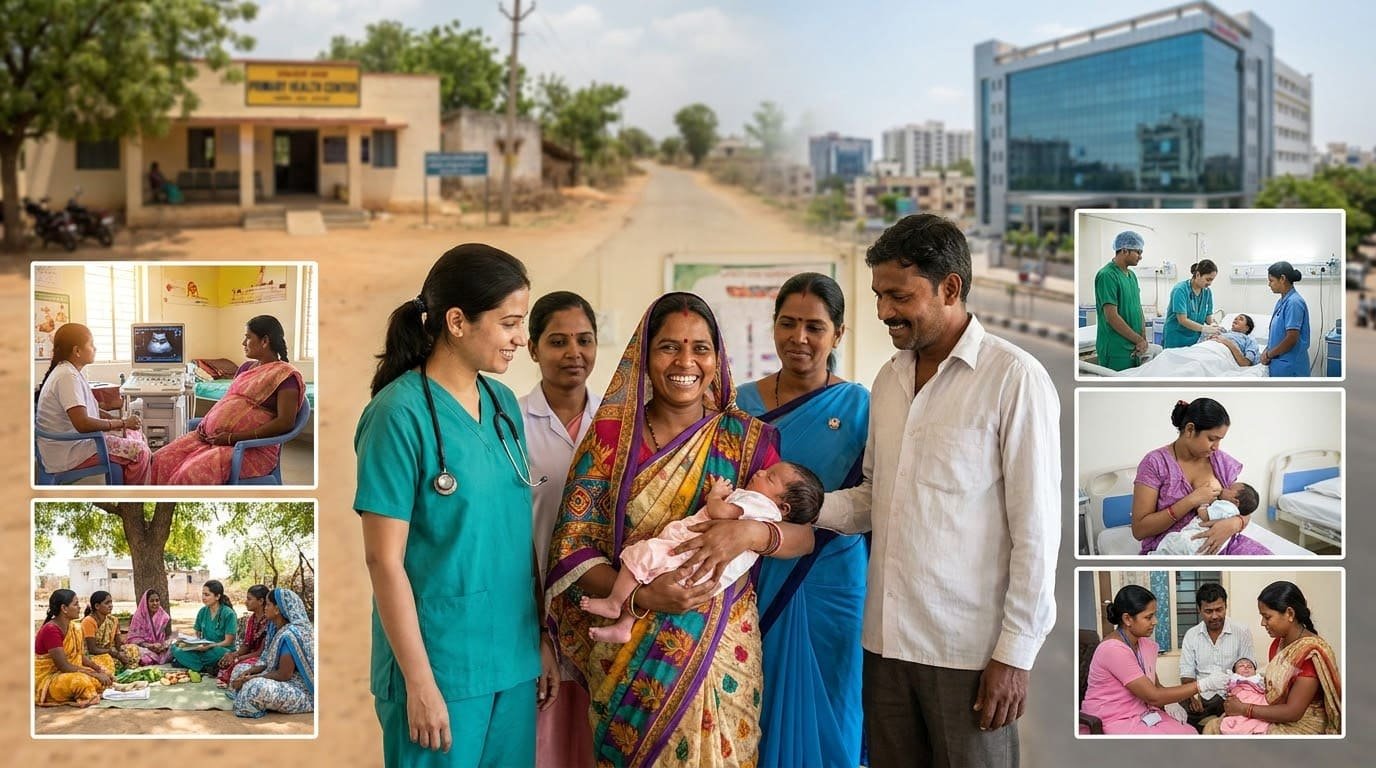
SUMAN Roadmap 2030 India maternal newborn care took a significant step forward on September 3, 2026, when the Ministry of Health and Family Welfare convened a national workshop specifically focused on accelerating India’s continuum of care for mothers and newborns through 2030.
For Indian pregnant women and new mothers — this workshop and the roadmap it advances directly affects the quality of care you can expect at government health facilities across the country.
What Is SUMAN?
SUMAN stands for Surakshit Matritva Aashwasan — which translates as “Assured Safe Motherhood.” It is the Government of India’s flagship initiative to provide every pregnant woman and newborn access to dignified, respectful, quality healthcare at public health facilities, completely free of cost.
Launched in October 2019 under the Ministry of Health and Family Welfare, SUMAN guarantees a set of rights and entitlements to every pregnant woman and newborn who visits a government health facility:
For pregnant women:
- Free antenatal care at every visit
- Free delivery — both normal and caesarean
- Free treatment for sick newborns and mothers
- Zero tolerance for denial of healthcare or poor quality treatment
- Respectful and dignified maternity care — no mistreatment
For newborns:
- Free essential newborn care at birth
- Free treatment of sick newborns
- Access to Newborn Care Corners, Special Newborn Care Units (SNCUs), and Newborn Stabilisation Units (NBSUs)
The SUMAN Roadmap 2030 — What’s New
The September 3 national workshop focused on SUMAN Roadmap 2030 — a strategic plan to accelerate progress toward zero preventable maternal and newborn deaths at public health facilities by 2030.
Key targets of the Roadmap 2030:
Zero preventable maternal deaths at public health facilities — meaning every death that could have been prevented with available care and timely intervention should not happen.
Zero preventable newborn deaths at public health facilities.
Zero preventable stillbirths at public health facilities.
These are ambitious targets that link directly to India’s commitment to the United Nations Sustainable Development Goals for maternal and child health.
The workshop brought together health officials from states and union territories, healthcare providers, and programme managers to review progress, identify gaps, and accelerate implementation.
India’s Maternal Health Progress — Context
The SUMAN Roadmap 2030 comes at a time of genuine improvement in India’s maternal health indicators:
India’s Maternal Mortality Ratio has declined from 254 deaths per lakh live births in 2004-06 to 97 in 2018-20 — a reduction of over 60% in fifteen years. Eight Indian states — Kerala, Maharashtra, Telangana, Andhra Pradesh, Tamil Nadu, Jharkhand, Gujarat, and Karnataka — have already achieved the SDG target of below 70 maternal deaths per lakh live births.
The NFHS-6 data (2023-24) shows institutional delivery rates at 90.6% — meaning more than 9 in 10 births now happen in hospitals and health centres. Antenatal care coverage has reached 95.9%.
The Roadmap 2030 addresses the remaining gap: ensuring that women who reach facilities receive genuinely quality, respectful care — not just institutional care in name.
What This Means for Indian Pregnant Women
Your Rights Under SUMAN
Every pregnant woman attending a government health facility has rights under the SUMAN scheme:
You have the right to:
- Free antenatal check-ups, blood tests, ultrasound, and medicines
- Free normal delivery with skilled attendants
- Free caesarean section if medically required
- Respectful, dignified treatment — no verbal abuse, no mistreatment
- Information about your care in your own language
- A companion of your choice during labour and delivery (where facilities allow)
If you experience denial of services or mistreatment: You can report it. Every SUMAN-enrolled facility has a complaint mechanism. The toll-free helpline — 104 — handles maternal health complaints.
The PMSMA Connection
The Pradhan Mantri Surakshit Matritva Abhiyan (PMSMA) — India’s free antenatal check-up scheme on the 9th of every month at government facilities — works alongside SUMAN. Every pregnant woman is entitled to at least one check-up by a specialist doctor on the 9th of each month at their nearest government health centre.
For guidance on what to ask at your antenatal visits, our hospital bag checklist India guide covers preparation for labour and delivery. For early pregnancy guidance, our first trimester survival guide covers what to expect in the first twelve weeks.
The Newborn Care Dimension
The SUMAN Roadmap 2030 also specifically addresses newborn care quality:
Special Newborn Care Units (SNCUs): Dedicated units for sick or premature newborns in district hospitals — currently operational at 27,328 facilities across 36 states and union territories.
Newborn Care Corners: Present at every labour room and operation theatre to provide immediate care at birth — warmth, resuscitation, breastfeeding support.
Home-Based Newborn Care (HBNC): ASHA workers visit newborns at home in the first days and weeks after birth — particularly critical for families in remote areas or with limited transport access.
For new mothers — the SUMAN framework means that if your baby needs specialised care after birth at a government facility, it should be available free of cost. If you’re not aware of what’s available at your nearest district hospital, ask your ASHA worker.
MumPappaHub’s Take
The SUMAN Roadmap 2030 is significant not just for its targets — but for its framing. The commitment to “zero preventable deaths” at public health facilities is a quality standard, not just a coverage target.
India has achieved remarkable improvements in getting women to deliver in facilities. The next frontier — which SUMAN directly addresses — is ensuring that what happens within those facilities is genuinely safe, respectful, and skilled.
For Indian pregnant women reading this: know your rights under SUMAN. Free antenatal care, free delivery, respectful treatment — these are not favours from the government. They are your entitlements. If you are attending a government health facility and are denied any of these — you can report it.
For more on what to expect during pregnancy and delivery in India, our early signs of labour guide and pregnancy week by week guide cover the journey in detail.
Related Reading on MumPappaHub:
- Early Signs of Labour
- Hospital Bag Checklist India
- First Trimester Survival Guide
- Pregnancy Insomnia: What Helps
- Pregnancy Diet Chart India
- Pregnancy Yoga for Normal Delivery
- Baby Blues vs Postpartum Depression
- How to Increase Breast Milk Supply
- Newborn Care Tips
Source: PIB Summaries — Ministry of Health and Family Welfare, Government of India. “National Workshop on SUMAN Roadmap 2030.” September 3, 2026. Legacy IAS Academy PIB Summary compilation, September 4, 2026.
MumPappaHub — Real talk for real parents. mumpappahub.com
