
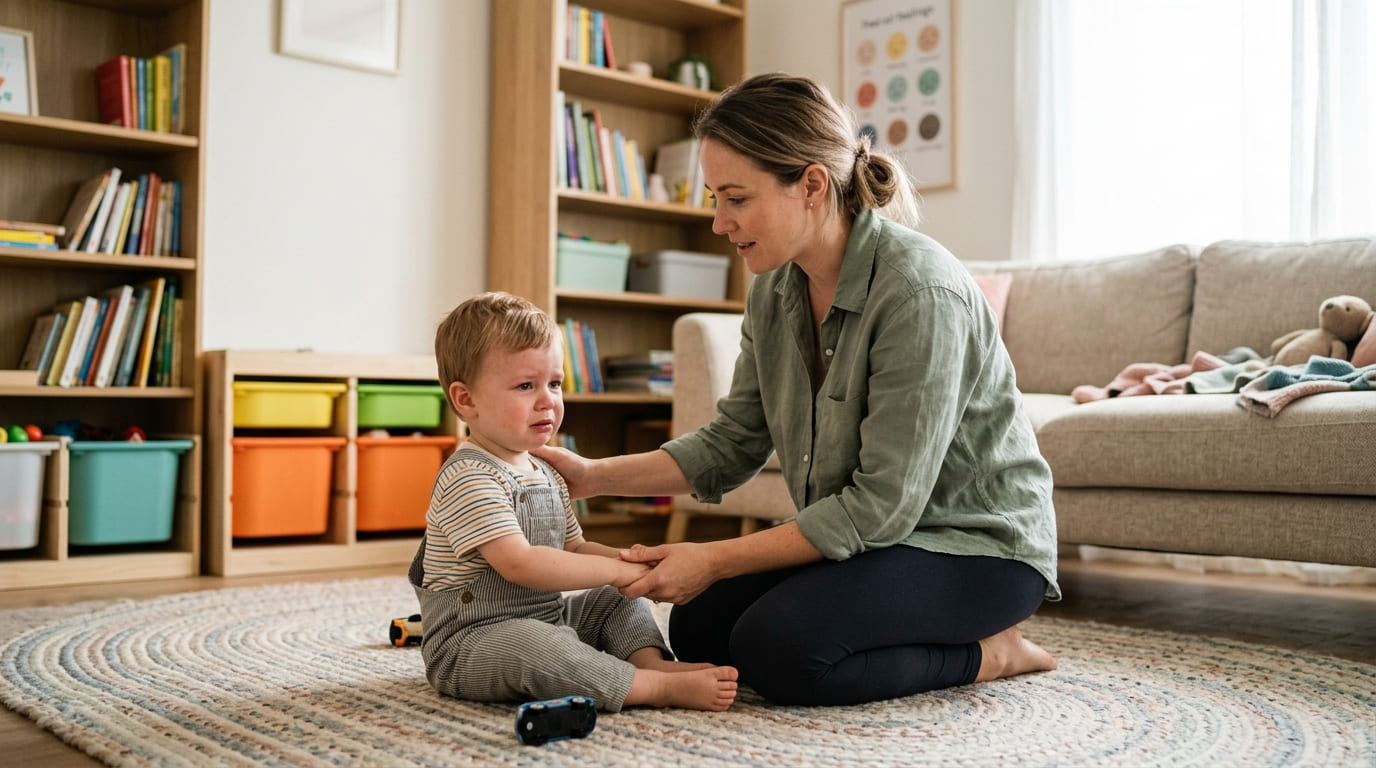
If there is a universal experience of parenthood that tests the limits of human patience, it is the toddler tantrum. One moment, your child is a sweet, laughing angel; the next, they are a puddle of fury on the supermarket floor because you cut their toast into squares instead of triangles.
If you find your own heart rate spiking, your jaw clenching, and your patience thinning during these episodes, you are in good company. Tantrums are not a sign of bad parenting—they are a sign of a developing brain. Your toddler is experiencing big, overwhelming emotions, and they simply do not have the vocabulary or the neurological maturity to manage them yet.
Here are 8 proven, compassionate strategies to help you navigate the “storm” without losing your own composure.
1. Identify the “H.A.L.T.” Trigger
Often, a tantrum isn’t just about the toast; it’s about a physiological need. Before reacting, ask yourself if your toddler is Hungry, Angry, Lonely, or Tired.
- The Approach: When you realize a tantrum is brewing, scan for these physical triggers. A snack or a nap can sometimes dissolve a meltdown in minutes.
- Connection: Managing these physical needs is part of the foundational care you started during their newborn days, much like when you were learning their rhythms in our guide on 10 Essential Newborn Care Tips Every First-Time Parent Needs to Know.
2. Practice the “Pause” Before You React
Your child is a mirror. If you respond to their shouting with your own shouting, you are teaching them that volume is how we solve problems.
- The Approach: When the screaming starts, take three deep, slow breaths. This isn’t just for you; it is a powerful non-verbal message to your child that you are not in a state of panic.
- The Calm: Your ability to remain the “anchor” in their storm is the most important lesson you can teach them about self-regulation.
3. Validate the Feeling, Limit the Behavior
A common mistake is telling a child, “Don’t be sad” or “Stop crying.” Instead, validate the emotion while holding the boundary.
- The Approach: Say, “I can see you are very upset that we have to leave the park. It is hard to stop playing when you are having fun. But we are going home now.”
- The Result: This tells your child that their feelings are heard and understood, which often reduces the need for them to “turn up the volume” to get your attention.
4. Offer “The Power of Choice”
Toddlers crave independence. Often, tantrums are simply a desperate attempt to assert control over their tiny world.
- The Approach: Instead of saying “Put your shoes on,” try, “Do you want to put your red shoes on or your blue shoes?”
- Internal Link: Giving them small, safe choices fosters the same confidence they need as they grow, much like how you nurtured their independence through creative play with an Analogue Bag.
5. Create a “Calm Down” Corner (Not a Time-Out)
Shift the narrative from punishment to recovery. A “calm down corner” is a safe space filled with soft pillows, books, or a few sensory toys.
- The Approach: Invite them to go there with you. “I can see you’re feeling really big feelings. Let’s go to the quiet corner together until we feel better.”
- Internal Link: This space helps them learn the art of self-regulation, a skill that evolves alongside their Child Development Milestones.
6. Keep Your Language Simple
When a child is in the middle of a tantrum, their “logical brain” is offline. They cannot process long explanations about why they can’t have a candy bar.
- The Approach: Use short, clear phrases. “No hitting. Hitting hurts.” Or, “Hands to yourself.”
- Human Touch: Sometimes, silence is the best language. Simply sitting near them and offering a gentle, non-intrusive presence shows them they aren’t alone in their distress.
7. Distraction and Redirection
Toddlers have a very short attention span. If a tantrum is starting, you can often pivot their focus before the point of no return.
- The Approach: “Oh, look at that dog over there! I wonder if he’s going for a walk?” It’s not about ignoring their feelings; it’s about shifting the focus to something new once the initial storm passes.
8. Model Your Own “Repair”
Even with the best intentions, you will eventually lose your cool. That’s okay! Parenting is a practice, not a performance.
- The Approach: When you regain your calm, apologize to your child. “I’m sorry I yelled. I was feeling frustrated, but I should have used my gentle voice. Let’s try again.”
- Connection: This is one of the most important lessons you can teach them: that it is okay to make mistakes, as long as you work to “repair” the relationship afterward.
Supporting Your Mental Wellbeing
Parenting is a marathon. If you feel like your patience is chronically depleted, it is important to check in with your own health.
- Emotional Resilience: If you feel overwhelmed, seek support. Read our guide on Baby Blues vs. Postpartum Depression for perspective on managing the emotional tolls of parenthood.
- Practical Energy: Consistent sleep for the whole family makes a massive difference in your ability to stay patient. Revisit our Complete Guide to Baby Sleep Training if you are still struggling with restless nights.
Frequently Asked Questions (FAQ)
If your child is in a safe space and the tantrum is purely for attention or frustration, ignoring it (while staying close by to ensure safety) can be an effective strategy. However, if they are distressed, they need your presence.
Absolutely not. Tantrums are a normal developmental stage. They are the “growing pains” of emotional intelligence.
Most toddlers’ tantrums last anywhere from 2 to 10 minutes. If they are lasting much longer or happen frequently throughout the day, it is worth discussing with your pediatrician.
Yes! A tired, hungry, or frustrated child is more likely to melt down. If mealtime is a major trigger, refer to our guide on How to Handle a Picky Eater: 5 Stress-Free Strategies.
Conclusion: You Are Their Anchor
The toddler years are a whirlwind of growth, noise, and incredible joy. Tantrums are simply the price of admission for the privilege of watching them discover who they are. By staying calm, you are teaching them that emotions are manageable and that they are safe even when they are feeling “big.”
Be patient with yourself. You are doing a profound, difficult, and wonderful job. You are the steady hand they need to guide them through the world. Keep breathing, keep loving them, and know that each of these moments is a brick in the foundation of the emotional strength they will carry for the rest of their lives.

2 Comments