
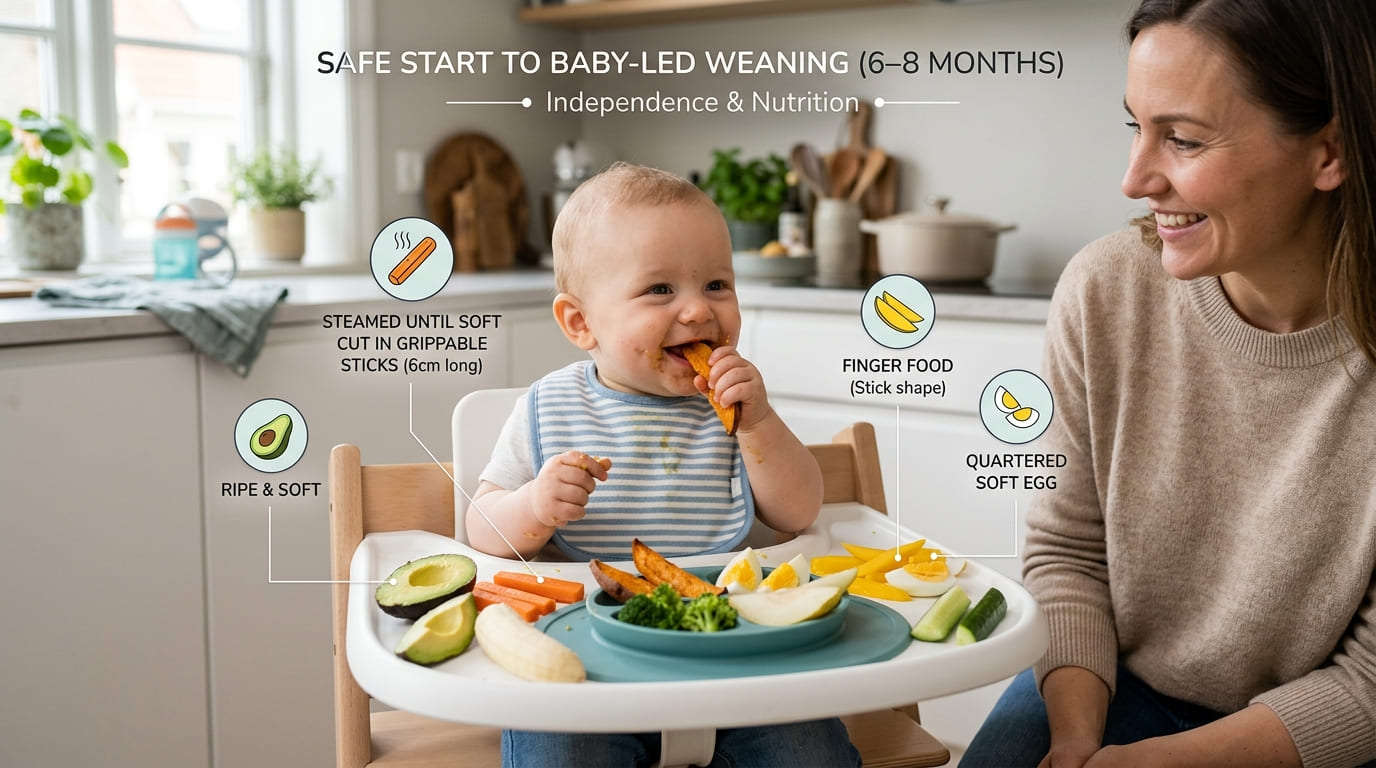
For decades, the standard advice for introducing solid foods to a baby involved spoon-feeding them smooth, watery purees. However, over the last few years, a revolutionary approach called Baby-Led Weaning (BLW) has taken the parenting world by storm.
Instead of waiting for an adult to spoon-feed them, Baby-Led Weaning allows infants (usually starting around 6 months of age) to feed themselves exactly what the rest of the family is eating. They grasp soft, safely prepared foods with their own hands, explore the textures, and decide exactly how much they want to eat.
While BLW offers incredible benefits—such as developing fine motor skills, encouraging independent eating, and preventing picky eating later in life—it can also be deeply terrifying for new parents. The fear of choking is the number one reason parents hesitate to try this method.
In this comprehensive beginner’s guide, we will break down the safety rules of BLW, explain the crucial difference between gagging and choking, and provide a list of 10 safe, nutritious first foods and exactly how to prepare them.
Signs of Readiness: When to Start BLW
You should never start solid foods (purees or BLW) until your baby is developmentally ready. The World Health Organization recommends waiting until the baby is roughly 6 months old and displays these three key signs:
- They can sit up completely unassisted and hold their head steady.
- They have lost the “tongue-thrust” reflex (they don’t instantly push everything out of their mouth with their tongue).
- They show an active, eager interest in your food.
The Golden Rule: Gagging vs. Choking
Before you hand your baby a piece of food, you must understand the difference between gagging and choking.
Gagging is normal and safe. It is a biological reflex that prevents choking. A baby’s gag reflex is located much further forward on their tongue than an adult’s. When a baby gags, they will make loud coughing sounds, their face might turn red, and they might even vomit slightly. As scary as it looks, you should never intervene. Let them cough it out.
Choking is silent and dangerous. Choking happens when the airway is completely blocked. The baby will not be able to cough, cry, or make any sound. Their face or lips may turn blue. This requires immediate medical intervention (infant CPR and back blows).
Always ensure your baby is sitting completely upright in a high chair, and never leave them unattended while eating.
10 Safe First Foods for Baby-Led Weaning
When cutting food for a 6-month-old, the general rule is to cut it into thick strips roughly the size and length of your adult index finger. Babies this age do not have a “pincer grasp” (they cannot pick up small things with their thumb and index finger). They use their whole palm to grab food, so the piece needs to be long enough to stick out of their fist so they can actually bite it.
1. Avocado
Avocados are the ultimate first food. They are naturally soft and packed with healthy fats for brain development.
- How to Cut: Cut the avocado into long, thick wedges. Because it can be very slippery, you can leave the skin on the bottom half of the wedge so the baby has a “handle” to grip, or roll the slice in crushed hemp seeds for added texture.
2. Sweet Potato
Sweet potatoes are naturally sweet, highly digestible, and full of Vitamin A.
- How to Cut: Peel the sweet potato and cut it into thick, finger-sized spears. Roast or steam them until they are completely soft (you should be able to easily squish the spear between your thumb and forefinger).
3. Banana
Bananas are universally loved by babies and require zero cooking.
- How to Cut: Cut a banana in half. Leave a couple of inches of the peel on the bottom half to act as a non-slip grip.
4. Broccoli
Broccoli is a nutritional powerhouse, and the shape is naturally perfect for little hands to hold.
- How to Cut: Cut the broccoli into large florets with a long stem attached. Steam them until the florets are very soft and tender. The baby will hold the stem and chew on the soft, bushy top.
5. Eggs
Eggs are a fantastic source of protein, iron, and choline. (Note: Eggs are a common allergen, so introduce them slowly and watch for reactions).
- How to Cut: Whisk an egg and cook it as an omelet or a firm scrambled egg patty. Slice the cooked omelet into thick, finger-length strips.
6. Carrots
Raw carrots are a major choking hazard, but when cooked properly, they are excellent for BLW.
- How to Cut: Peel and cut the carrots into long, thick sticks. Boil or roast them until they are incredibly soft and mushy.
7. Toast with Peanut Butter
Introducing allergens early (like peanuts) is now highly recommended to prevent allergies later in life.
- How to Cut: Lightly toast a piece of bread (toasting prevents the bread from becoming a gummy choking hazard in their mouth). Spread a very thin, almost translucent layer of smooth peanut butter on top. Cut the toast into long strips.
8. Zucchini
Zucchini is mild in flavor and cooks down into a very soft, manageable texture.
- How to Cut: Cut the zucchini into spears or wedges. Sauté or steam until soft, but not so mushy that it falls apart in their hands.
9. Ripe Melon
Cantaloupe, honeydew, or watermelon provide great hydration and a soothing texture for teething gums.
- How to Cut: Cut the melon into long, rectangular strips. Ensure the fruit is very ripe and soft. You can leave the rind on the bottom for an easy grip.
10. Meat (Steak or Chicken on the Bone)
Meat provides critical iron and zinc. At 6 months, babies mostly suck on the meat to extract the juices rather than actually chewing and swallowing it.
- How to Cut: Offer a large, thick piece of steak (bigger than the baby’s mouth so they cannot swallow it whole) or a chicken drumstick with all the cartilage, skin, and loose pieces of meat removed. They will happily gnaw on the bone!
Enjoy the Mess!
Baby-Led Weaning is incredibly messy. Food will end up in their hair, on the floor, and everywhere in between. Strip your baby down to their diaper, put a mat under the high chair, and let them explore. You are building the foundation for a lifetime of healthy eating!

3 Comments