
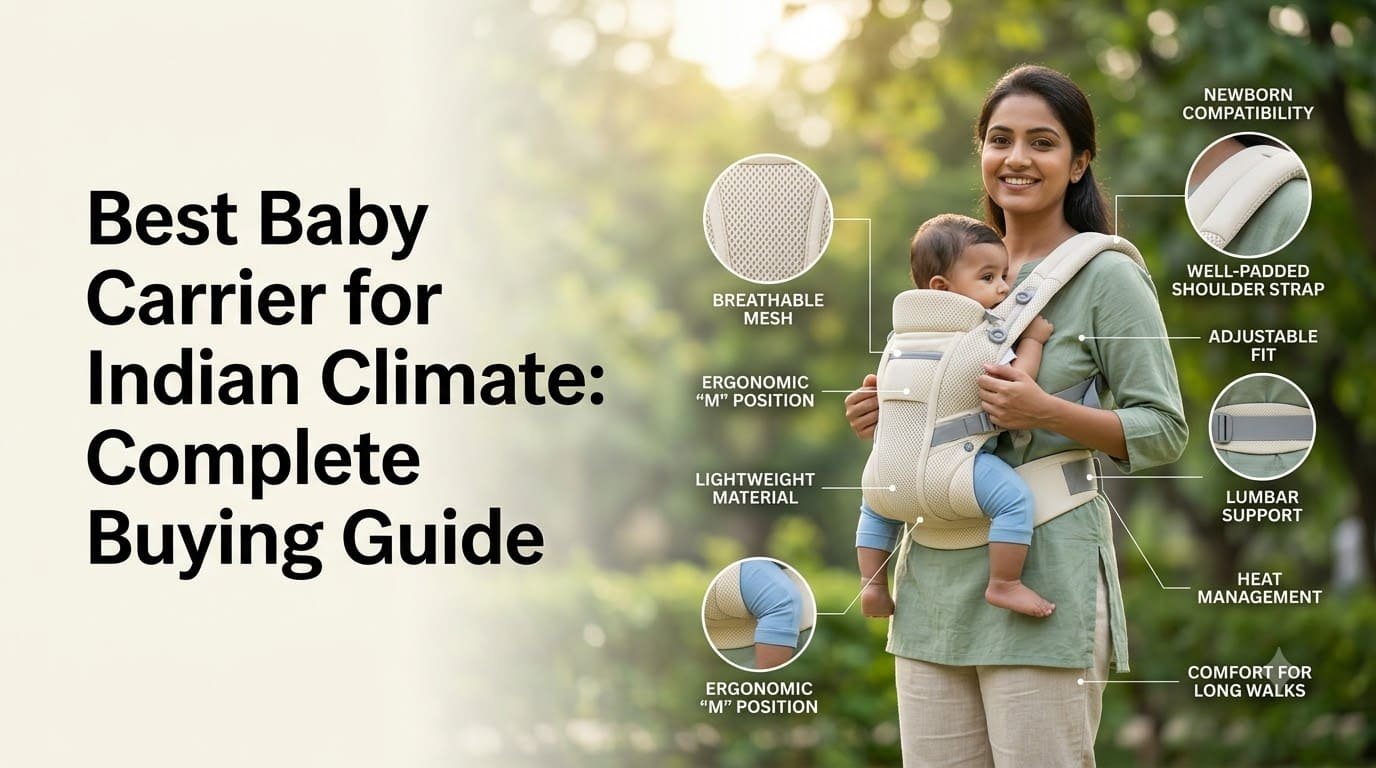
Somewhere between the third grocery run with a baby on one hip and the fourth time you’ve had to cancel plans because carrying your baby in your arms left your back aching, most Indian parents start seriously shopping for the best baby carrier for Indian climate.
But shopping for a carrier in India isn’t quite the same as shopping for one anywhere else. A carrier designed for a cool European climate, with thick padded fabric and minimal ventilation, becomes genuinely uncomfortable — for both parent and baby — in Mumbai’s humidity or a Delhi summer afternoon. What works beautifully in Indian conditions is a specific combination of breathability, ergonomic support, and a fit designed for Indian body types.
This guide walks through exactly what to look for, the carrier types available, and specific product recommendations suited to Indian weather and everyday use.
Why Climate Matters More Than You’d Think
Heat and humidity change what “comfortable” means
A baby carrier sits directly against both the parent’s body and the baby’s body for extended periods — sometimes hours at a stretch. In a hot, humid climate, this creates a real risk of heat rash, prickly heat, and general discomfort for the baby, and sweat-soaked discomfort for the parent.
The World Health Organization notes that infants are more vulnerable to heat-related discomfort and illness than adults because their bodies regulate temperature less efficiently — which makes fabric choice in a baby carrier a genuine health consideration in Indian summers and the pre-monsoon heat, not just a comfort preference.
What this means for fabric choice
Breathable cotton, mesh panels, and moisture-wicking blends aren’t marketing terms to skip past — they directly affect how comfortable both of you will be during a thirty-minute walk in April heat or a humid August afternoon. Thick, heavily padded carriers designed for colder climates trap heat against the body, which is exactly what you want to avoid.
Carrier Types Explained
Soft structured carriers (SSC)
These are the most popular type in India — a padded, buckle-based carrier with shoulder straps and a waist belt, supporting the baby in an upright position. They typically offer multiple carrying positions: front-facing-in, front-facing-out, hip, and back carry, depending on the model and the baby’s age.
Best for: parents wanting one carrier that lasts from early infancy through toddlerhood.
Hip seat carriers
A structured seat that straps around the parent’s waist, with the baby sitting on the seat rather than being fully suspended by straps. These take significant weight off the shoulders and are particularly popular for quick errands, market trips, and situations where you’re carrying the baby for shorter stretches.
Best for: parents who want quick on-off convenience and shoulder relief during frequent short carries.
Ring slings and wraps
Fabric-based carriers using a long piece of cloth or a ring-and-fabric design. These are typically the lightest and most breathable option, making them genuinely well-suited to Indian heat, though they have a steeper learning curve for positioning correctly.
Best for: newborns, breastfeeding on the go, and parents who prioritise breathability above all else.
Kangaroo-style carriers
A structured carrier styled after front-carry designs, typically with a windproof hood and cushioned support, often marketed for newborns through early toddlerhood.
Best for: parents wanting a straightforward, foldable option with good head support for younger babies.
What to Look for When Buying
Breathable fabric. Mesh panels, 100% cotton, or moisture-wicking blends. Avoid heavy synthetic padding as a primary material for regular Indian-weather use.
Ergonomic hip and spine support. Look specifically for carriers supporting the “M-position” — knees higher than hips, forming an M-shape — which is the position recommended for healthy hip development in infants.
Proper fit for the caregiver’s frame. Several Indian brands now design straps and waistbands specifically calibrated for South Asian body types, which can make a meaningful difference in comfort compared to carriers designed primarily for larger Western frames.
Age and weight range. Confirm the carrier suits your baby’s current age and has room to grow — most quality carriers cover a range from a few months up to two or three years, sometimes further with a hip seat.
Ease of cleaning. With India’s dust, heat, and frequent spit-up, a machine-washable carrier is far more practical than one requiring special care.
Adjustability for sharing between caregivers. If both parents or other family members will use the carrier, adjustable straps that accommodate different body sizes matter.
Recommended Baby Carriers for Indian Climate
The following recommendations are based on breathability, ergonomic design, and suitability for Indian weather conditions.
For newborns to early infancy
A soft structured carrier with a detachable head cushion and breathable mesh panelling works well for the newborn stage, offering head and neck support while keeping airflow around the baby’s skin.
Check Newborn-Stage Baby Carrier on Amazon →
For everyday use, 4 months onward
A hip seat carrier with a detachable seat and multiple carry positions offers versatility as your baby grows, while taking pressure off the parent’s shoulders during longer carrying sessions.
Check Hip Seat Baby Carrier on Amazon →
For hot-weather, lightweight use
A 100% cotton ring sling or lightweight wrap is the most breathable option available, ideal for short carries, breastfeeding on the go, and peak summer months.
Check Cotton Ring Sling on Amazon →
For working parents needing daily durability
A premium ergonomic carrier with reinforced stitching, adjustable lumbar support, and long-wear comfort suits parents who use a carrier daily over an extended period.
Check Premium Ergonomic Baby Carrier on Amazon →
Safety Guidelines for Using a Baby Carrier in Indian Heat
Check on your baby’s temperature periodically — feel the back of the neck rather than hands or feet, which are less reliable indicators.
Avoid carrying during the peak heat hours of the day, typically between noon and 3 PM, when possible.
Dress your baby in light, breathable cotton clothing underneath the carrier rather than heavier fabrics.
Keep your baby hydrated with regular breastfeeding or water breaks if they are older than six months, especially during longer outings.
Ensure the carrier allows for proper airflow — check that mesh panels or ventilation points aren’t obstructed by extra padding or inserts you don’t need.
Watch for signs of overheating: flushed skin, unusual fussiness, or damp hair at the neckline are early signs to take a break and cool your baby down.
For more on keeping your baby safe and comfortable during India’s hot months, see our guide on summer baby care tips.
Baby Carrier vs Stroller: Which Makes Sense for Indian Conditions?
Many Indian parents ask whether a stroller might simply be easier than a carrier, particularly given uneven pavements and crowded markets. In practice, the two serve different purposes rather than replacing each other.
A carrier works better for uneven terrain, crowded spaces like markets and public transport, quick errands, and situations needing both hands free. A stroller works better for longer walks on smooth ground, situations where you want your baby to nap comfortably, and carrying additional bags or supplies alongside your baby.
Most Indian parents find they eventually use both, depending on the situation — a carrier for daily convenience and a stroller for longer, planned outings.
If you’re also comparing broader baby product options, our guide to budget-friendly baby products and our review of baby products that grow with your child cover additional gear worth considering.
FAQ — Baby Carriers for Indian Climate
Q: What age can I start using a baby carrier?
Q: What age can I start using a baby carrier?
Most soft structured carriers with a newborn insert or detachable head support are suitable from birth, provided the carrier offers adequate head and neck support. Ring slings and wraps are also widely used from the newborn stage. Always check the specific manufacturer’s minimum age and weight guidelines before use.
Q: Is it safe to use a baby carrier in Indian summer heat?
Yes, with the right fabric choice and reasonable precautions. Choose a breathable, mesh or cotton-based carrier, avoid peak heat hours, dress your baby in light clothing, and monitor for signs of overheating. Heavier, heavily padded carriers designed for colder climates are best avoided for regular daytime use in Indian summers.
Q: How long can a baby safely stay in a carrier at one time?
There’s no strict universal limit, but most paediatric guidance suggests taking breaks every one to two hours to check positioning, allow movement, and monitor comfort, particularly in hot weather. Newborns and younger infants generally need more frequent breaks than older babies and toddlers.
Q: Which carrier position is best for hip development?
Look for carriers supporting the “M-position,” where the baby’s knees are positioned higher than their hips, forming a natural M-shape. This position is widely recommended by paediatric and hip-health organisations for supporting healthy hip joint development in infants.
Q: Can a baby carrier be used for breastfeeding?
Ring slings and certain soft structured carriers can be adjusted to support discreet breastfeeding while carrying, though this typically requires some practice. If breastfeeding on the go is a priority, look specifically for carriers marketed with this feature and consider starting with guidance from a lactation consultant or experienced parent.
More from MumPappaHub — Read These Next:
- Summer Baby Care Tips
- Budget-Friendly Baby Products 2026
- Baby Products That Grow With Your Child
- Monsoon-Safe Baby Skincare Products
- Newborn Care Tips
- Baby First Year Milestones
About This Article: Written by the MumPappaHub editorial team. Product recommendations are based on breathability, ergonomic design, and suitability for Indian climate conditions. Always check individual product listings for the most current age, weight, and safety specifications before purchase.
MumPappaHub — Real talk for real parents. mumpappahub.com
