
Introduction
Becoming a parent is a beautiful, life-changing journey. However, the moment your little one begins to crawl, your perspective on your home changes entirely. Suddenly, every sharp corner, every loose wire, and every low-hanging cabinet becomes a potential hazard. Home safety is not about living in fear; it is about creating a “Yes” environment. When you child-proof effectively, you provide a safe space where your child can explore, learn, and grow without the constant restriction of a “No!” or “Don’t touch that!”
In this comprehensive, 2000-word deep dive, we will explore room-by-room safety strategies, psychological tips for parenting through this stage, and the hidden dangers that most parents overlook.
Phase 1: The Crawler’s Perspective (Psychology of Safety)
Before you start buying gadgets, try the “Crawler’s Eye View.” Get down on your hands and knees. When you are only 12 inches off the ground, the world looks completely different. You will see dust bunnies that are actually choking hazards, loose screws behind the sofa, and power strips that look like toys.
The Golden Rule: Always anticipate the next developmental milestone. If your baby is rolling, assume they will be crawling next week. If they are cruising, assume they will be climbing by the weekend. Being one step ahead is the hallmark of a prepared parent.
Phase 2: Room-by-Room Safety Breakdown
1. The Living Room: The Hub of Activity
This is where families spend the majority of their time.
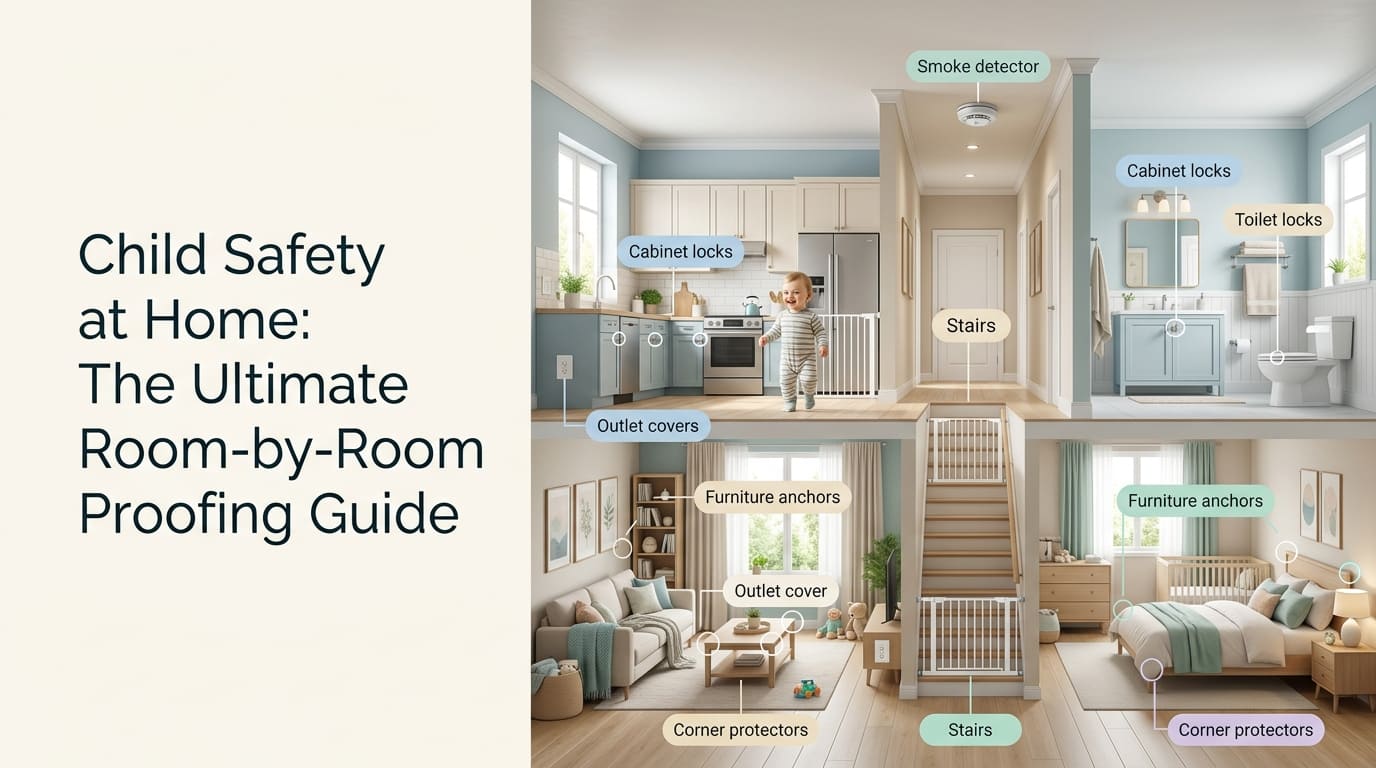
- Furniture Stability: The most significant, yet often overlooked, danger in the living room is furniture tip-overs. Dressers, bookshelves, and TV stands must be anchored to wall studs using professional-grade furniture straps. Never place a heavy TV on a stand that isn’t specifically designed for its weight.
- Electrical Safety: Electrical cords should be tucked behind heavy furniture or placed in cord-hiders. Keep power strips off the floor and out of reach.
- Sharp Edges: Glass tables are common, but they are unforgiving to a toddling child. If you cannot replace them, use soft corner guards. These guards should be durable enough that they don’t fall off when pulled by curious fingers.
2. The Kitchen: Managing the Most Dangerous Room
Kitchens are filled with hot surfaces, sharp objects, and heavy equipment.
- Stove Safety: Always cook on the back burners if possible. If you must use the front, turn the handles toward the back so your toddler cannot reach up and grab them.
- The “Hazardous Items” Lock: Cleaning chemicals, dishwasher detergent pods, and sharp utensils must be kept in cabinets that have child-proof latches. Magnetic locks are highly recommended because they are invisible from the outside and cannot be manipulated by clever toddlers.
- Appliances: Unplug small appliances when they aren’t in use. A toddler pulling on a cord attached to a heavy toaster can cause serious injury.
3. The Bathroom: Water and Chemical Risks
- The Toilet: Drowning can happen in mere inches of water. Keep the toilet lid closed at all times, and install a toilet lid lock.
- Medication Storage: Never keep medicines in the bathroom cabinet if that cabinet is accessible. Store all prescription and over-the-counter medications in a high, locked box in a different room.
- Water Temperature: Set your water heater to 120°F (49°C) to prevent accidental scalding in the tub. Always test the water temperature with your wrist before letting the baby touch it.
4. The Bedroom: Sleep and Beyond
- Window Treatments: This is a silent killer. Cordless blinds are the only safe option. If you have older blinds with dangling cords, cut the loops or secure them high above the reach of the child.
- Crib Safety: Keep the crib minimalist. Heavy blankets, pillows, and crib bumpers are significant suffocation risks for infants. Use a tight-fitting sheet and nothing else.
- Toy Boxes: If you have a heavy wooden toy box, ensure it has a soft-close hinge. A heavy lid falling on little fingers is a common, painful injury.
Phase 3: Hidden Dangers You Might Overlook
Beyond the standard baby-proofing, keep an eye out for these “stealth” hazards:
- Button Batteries: Found in remote controls, greeting cards, and some toys. If swallowed, they cause catastrophic internal burns within hours. Ensure every battery compartment is screwed shut.
- Houseplants: Many common houseplants are toxic if ingested. Research your plants; if they are poisonous, move them to a hanging pot or remove them entirely.
- Pet Supplies: Cat litter and pet food are choking hazards and can harbor parasites. Keep these away from toddler-accessible areas.
Phase 4: Developing “Safety Habits”
Baby-proofing is only half the battle. The other half is parenting behavior:
- Supervision is King: No amount of plastic covers can replace active supervision.
- Emergency Preparedness: Have your pediatrician’s number, poison control, and the nearest urgent care address saved on your phone and posted on the fridge.
- Modeling Safety: If your child sees you using a seatbelt, wearing a helmet, and handling knives safely, they will naturally learn to respect these rules.
Frequently Asked Questions (FAQs)
Start at least two months before you think your child will be mobile. It takes time to install everything, and it is better to have it done early.
Yes. While the top is more critical, a gate at the bottom prevents your toddler from attempting to climb the stairs when you aren’t looking.
Use a gate for stairs and doorways where you need to maintain visibility (so you can see/hear them). Use doors (with handles high up) for areas like the laundry room or basement.
It’s a toss-up between the kitchen and the bathroom. Both rooms have elements (heat, sharp objects, water, chemicals) that can be fatal if the child is unsupervised.
Conclusion
Child-proofing is not a one-time project; it is an ongoing process that changes as your child grows. It is an investment of time, money, and effort that pays dividends in your child’s safety and your own peace of mind. Remember, the goal isn’t to create a sterile, bubble-wrapped home; the goal is to create a secure environment where your child feels free to learn, fail, and succeed.
As your child grows and masters these spaces, you’ll find them tackling new milestones. Keep our Child Development Milestones Guide bookmarked so you know exactly how to support them as they move from exploring your home to exploring the world.

1 Comment