
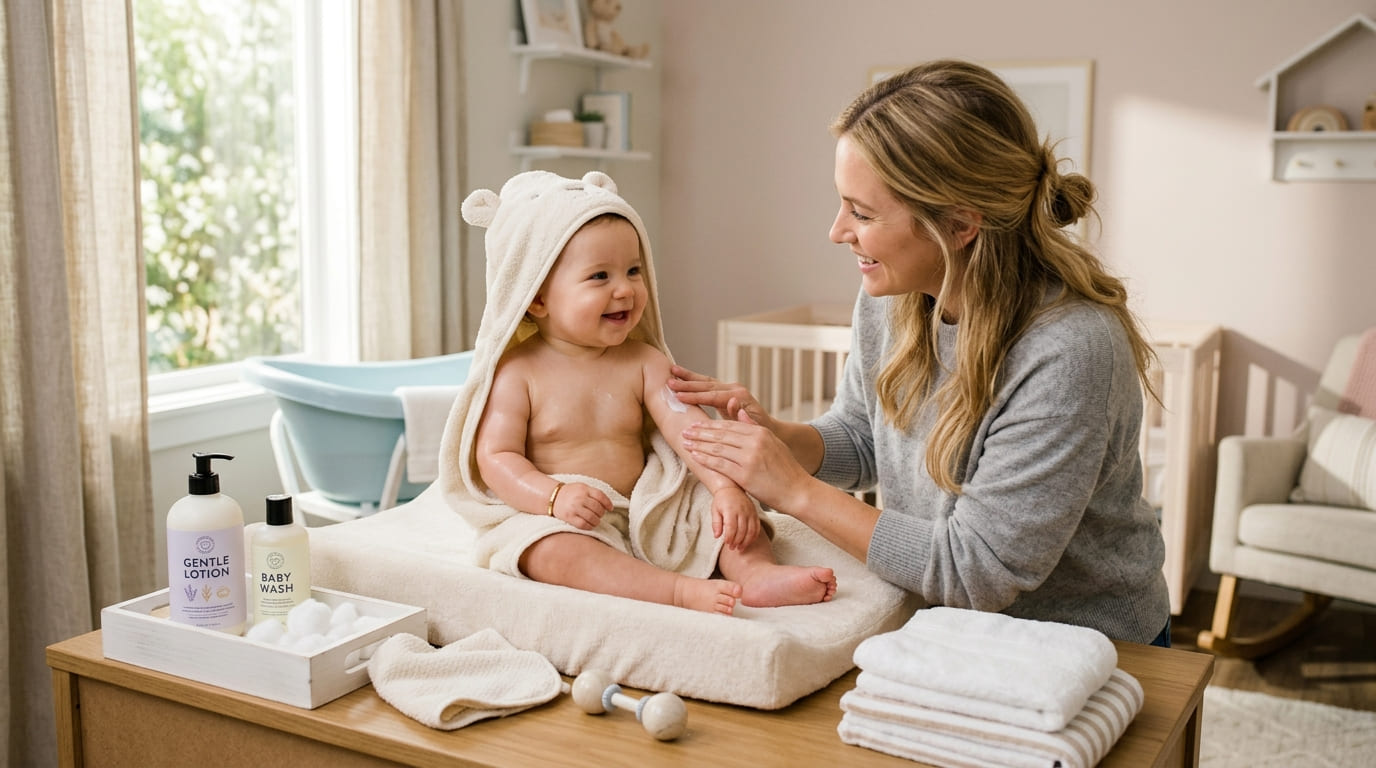
A baby’s skin is almost five times thinner than adult skin and loses moisture much faster. This is why a newborn’s soft, smooth skin can suddenly turn dry, flaky, or rashy within days — especially in India’s varying climates, from Delhi’s dry winters to Mumbai’s humid summers.
The good news is that babies don’t need a 10-step skincare routine. In fact, less is more. What they need is a simple, consistent daily routine using the right products at the right time. This guide walks you through exactly that — step by step, season by season.
Why Baby Skin Needs Special Care
Newborn skin has a few unique characteristics that make it different from adult skin:
- Thinner outer layer — absorbs substances more easily (both good and bad)
- Underdeveloped oil glands — dries out faster, especially in the first few weeks
- Higher surface-area-to-body-weight ratio — products applied get absorbed proportionally more
- Still developing natural pH balance — harsh products can disrupt this easily
This is exactly why pediatricians recommend fragrance-free, mild, and minimal products — not because baby products are a marketing gimmick, but because baby skin genuinely behaves differently.
The Daily Baby Skin Care Routine (Step by Step)
Step 1: Cleansing — Not Every Day Needs a Full Bath
Many Indian parents feel a daily bath is “necessary,” but pediatricians generally recommend 2-3 full baths a week for newborns, with simple face/hands/diaper-area cleaning on other days.
How to cleanse:
- Use lukewarm water — test on your wrist, not your hand
- A mild, soap-free, pH-neutral cleanser (or plain water for the first few weeks)
- Keep bath time short — 5-10 minutes is enough; longer baths strip natural oils
Step 2: Pat Dry — Don’t Rub
After bathing, gently pat the skin dry with a soft cotton towel. Rubbing can cause micro-irritation on delicate skin. Pay extra attention to skin folds — neck, underarms, behind the ears, and diaper area — where moisture often gets trapped.
Step 3: Moisturize Within 3 Minutes
This is the step most parents skip — and it’s the most important one. Apply moisturizer within 3 minutes of bathing, while the skin is still slightly damp. This locks in moisture far more effectively than applying to fully dry skin.
What to look for in a baby moisturizer:
- Fragrance-free or very mildly fragranced
- No alcohol, parabens, or sulphates
- Ceramide or natural oil-based formulas (coconut oil, sunflower oil) work well for Indian climates
- BIS-certified or dermatologically tested
Indian brands to consider: Mamaearth, The Moms Co., and Himalaya Baby Care offer fragrance-free, dermatologically-tested options widely available across India.
Step 4: Oil Massage (Champi) — Best Before Bath, Not After
Traditional Indian oil massage, done before the bath, can help nourish the skin barrier — coconut oil in particular has natural antimicrobial properties suitable for newborn skin.
How to do it:
- Warm the oil slightly (test on your own wrist first — should feel comfortably warm, not hot)
- Gentle strokes only — avoid pulling or stretching limbs
- 10-15 minutes is sufficient
- Follow with bath to remove excess oil
When to skip: During an active rash, eczema flare-up, or on broken skin — oil can sometimes worsen these conditions.
Step 5: Diaper Area Care
The diaper area is the most rash-prone zone because of constant moisture and friction.
- Clean gently with water (avoid wipes with alcohol or fragrance for newborns)
- Pat completely dry before putting on a fresh diaper
- Apply a thin layer of barrier cream (zinc oxide-based) at every change, not just when a rash appears — prevention is easier than treatment
- Allow some “diaper-free time” daily — a few minutes of air exposure helps prevent rashes
Seasonal Skin Care Adjustments for Indian Climates
India’s diverse climate means a “one routine fits all year” approach doesn’t work.
Summer & Humid Regions (Coastal cities, Mumbai, Chennai)
- Lighter, water-based moisturizers instead of thick oils
- More frequent diaper changes — heat increases rash risk
- Loose, breathable cotton clothing
- Prickly heat powder (talc-free, cornstarch-based) can help, but apply lightly
Winter & Dry Regions (Delhi, North India)
- Thicker, oil-based moisturizers — apply 2-3 times a day if needed
- Avoid long baths — they worsen dryness in winter
- Use a humidifier in heated rooms if the air feels very dry
- Lip and cheek balm for outdoor exposure
Common Baby Skin Issues and What to Do
Cradle Cap
Yellowish, scaly patches on the scalp — common and harmless. Gently massage a little baby oil, leave for a few minutes, then brush with a soft baby brush before bath. Avoid picking at flakes.
Baby Acne
Small red/white bumps appearing around 2-4 weeks, often on cheeks and nose — caused by maternal hormones. Usually clears on its own within a few weeks; avoid using acne products meant for adults or older children.
Heat Rash / Prickly Heat
Small red bumps, common in hot weather, especially in skin folds and on the back. Keep baby cool, dressed in breathable cotton, and avoid overdressing.
Eczema (Atopic Dermatitis)
Dry, red, itchy patches — often on cheeks, elbows, and knees. Regular moisturizing is the first line of defense. If patches are persistent, oozing, or spreading, consult a pediatric dermatologist.
Diaper Rash
Red, irritated skin in the diaper area. Increase diaper-free time, apply barrier cream generously, and switch to a more breathable diaper brand if rashes are frequent.
What to Avoid in Baby Skin Care Products
When checking labels, avoid:
- Fragrance/parfum (unless specifically formulated as hypoallergenic)
- Sulphates (SLS/SLES) — too harsh for baby skin
- Parabens
- Alcohol — found in many “fragrance-free” wipes too, so check carefully
- Talc — modern guidance favors cornstarch-based powders instead
Always do a patch test on a small area of skin (inner forearm) 24 hours before using any new product on your baby.
Frequently Asked Questions
Q: How often should I moisturize my baby’s skin? At least once daily after a bath, and 2-3 times for babies with dry skin or during winter months. Apply within 3 minutes of bathing for best absorption.
Q: Is it safe to use adult sunscreen on babies? No. For babies under 6 months, sun avoidance and protective clothing are recommended over sunscreen. After 6 months, use a mineral-based (zinc oxide/titanium dioxide) sunscreen specifically formulated for babies.
Q: Can I use besan (chickpea flour) or haldi (turmeric) packs on my baby’s skin? While traditional, these can sometimes cause irritation or allergic reactions on newborn skin, and turmeric can stain. It’s best to stick to dermatologically-tested baby products, especially in the first few months.
Q: My baby has very dry skin even after moisturizing — what should I do? Try switching to a thicker, ointment-based moisturizer (rather than lotion), reduce bath frequency slightly, and ensure you’re moisturizing within 3 minutes of bathing. If dryness persists or looks like eczema, consult a pediatrician.
Final Thoughts
A baby skin care routine doesn’t need to be complicated or expensive — it needs to be consistent and gentle. Cleanse mildly, pat dry, moisturize quickly, and adjust based on the season and your baby’s individual skin.
Every baby’s skin is different — what works for your neighbor’s baby might not work for yours, and that’s completely normal. Pay attention to how your baby’s skin responds, and don’t hesitate to consult a pediatrician for anything that seems persistent or unusual.
Found this guide helpful? Share it with a new parent in your circle. For more baby care guides tailored for Indian families, explore MumPappaHub.

6 Comments