
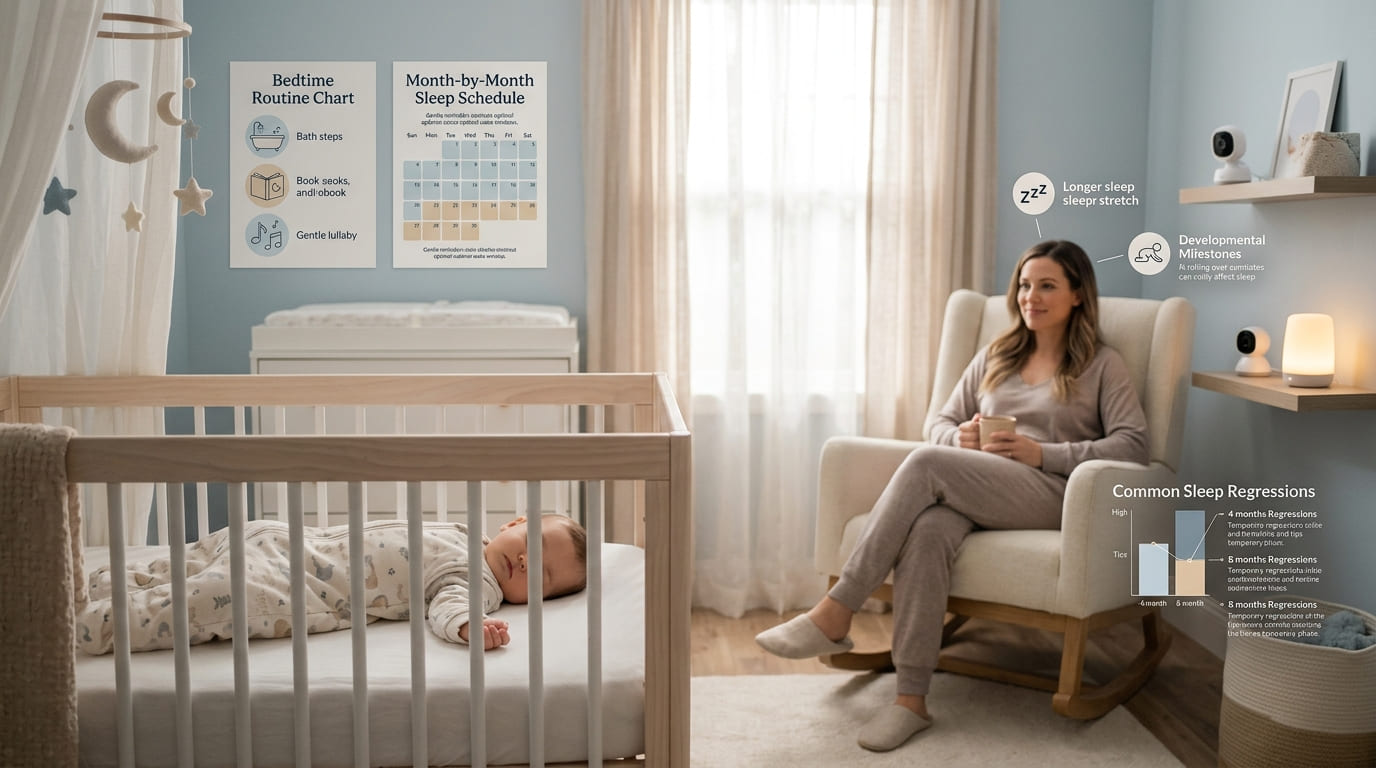
There is a running joke among new parents that the most valuable currency in the world isn’t gold or bitcoin—it is a full, uninterrupted eight hours of sleep. When you bring a new baby home, sleep deprivation is treated like a rite of passage. But when weeks turn into months, and your six-month-old is still waking up every two hours demanding to be rocked, bounced, or fed back to sleep, exhaustion can take a severe toll on your mental health, physical well-being, and parenting joy.
Enter Sleep Training.
Few parenting topics are as highly debated, deeply misunderstood, or intensely searched on Google as sleep training. For some, the term brings up painful images of a baby crying alone in a dark room for hours. For others, it is the life-saving tool that restored sanity and health to the entire household.
The truth is, sleep training is not about “breaking” your baby’s spirit or forcing them to cry. Sleep training is the process of teaching your baby the invaluable biological skill of self-soothing. Just like learning to crawl or chew solid food, falling asleep independently is a milestone that requires practice.
In this ultimate, comprehensive guide, we will break down the true science of baby sleep, analyze the 5 most popular sleep training methods, provide customizable month-by-month sleep schedules, and give you actionable strategies to survive the dreaded sleep regressions.
The Science of Baby Sleep: Why Do They Keep Waking Up?
To understand how to help your baby sleep, you must first understand how human sleep cycles work. Adults and babies alike do not sleep straight through the night in a static state of unconsciousness. Instead, we go through multiple sleep cycles, transitioning from light sleep to deep sleep, and back again.
At the end of every sleep cycle (which lasts about 45 minutes for a baby and 90 minutes for an adult), we enter a very brief period of semi-wakefulness. As an adult, you might open your eyes, roll over, adjust your pillow, fluff your blanket, and go right back to sleep. You don’t even remember doing it in the morning because you know how to transition between sleep cycles independently.
Now, imagine your baby. They can only fall asleep if they are actively being nursed, rocked in your arms, or given a pacifier. When they hit that natural semi-wakeful state at the end of a 45-minute sleep cycle, they look around. The warm arms that held them are gone; the breast or bottle is gone; the pacifier has fallen out of their mouth. Their environment has completely changed.
Naturally, they panic. They cry out because the “sleep prop” they used to fall asleep initially is missing, and they don’t know how to bridge the gap into the next sleep cycle without it.
Sleep training simply removes the external sleep props so that when your baby wakes up between cycles, they can put themselves right back to sleep without your intervention.
When is the Golden Window to Start Sleep Training?
Pediatricians and pediatric sleep consultants overwhelmingly agree that the ideal time to begin formal sleep training is between 4 and 6 months of age.
Before 4 months, a newborn’s biological clock (circadian rhythm) is not fully developed, and they do not produce their own melatonin (the sleep hormone). They genuinely need to wake up around the clock to feed because their tiny stomachs cannot hold enough calories to sustain them through the night. Trying to sleep train a newborn under 4 months is biologically counterproductive and unsafe.
By 4 to 6 months, however, several magical shifts happen:
- Their maternal melatonin stores wear off, and their bodies begin establishing a predictable day/night circadian rhythm.
- They are physically capable of going 6 to 8 hours overnight without a feeding (provided they are hitting their weight milestones and your pediatrician gives approval).
- Their natural Moro (startle) reflex disappears, meaning they no longer startle themselves awake with their own arm movements.
The 5 Most Popular Sleep Training Methods
There is no “one-size-fits-all” approach to sleep training. Every baby has a unique temperament, and every parent has a different comfort level with hearing their child cry. Here is a completely objective breakdown of the 5 most successful, evidence-backed methods used worldwide.
1. The Ferber Method (Graduated Extinction / Check-and-Console)
Created by Dr. Richard Ferber, this is one of the most widely used methods in the world. It strikes a balance between direct intervention and independence.
- How it works: You put your baby down in their crib fully awake, say goodnight, and leave the room. If they cry, you wait for a specific, predetermined interval of time (e.g., 3 minutes) before going back into the room. When you go back in, you offer verbal and physical comfort (patting their tummy, shushing them) for no more than 1 to 2 minutes, but you do not pick them up. You leave again and increase the waiting interval (e.g., 5 minutes, then 10 minutes).
- The Schedule: You increase the waiting times gradually each night.
2. Cry It Out (CIO / Total Extinction)
Despite the intense emotional stigma surrounding this method, clinical studies show it is highly effective and causes zero long-term psychological harm to securely attached babies.
- How it works: You complete a soothing bedtime routine, place your baby in the crib awake, turn off the lights, close the door, and do not re-enter the room until morning (unless you have a scheduled night feed or suspect they are sick/dirty).
- Pros & Cons: It is incredibly difficult for parents to listen to the crying on the baby monitor. However, it is often the fastest method, frequently working within 3 to 4 nights, and involves less confusion for the baby compared to intermittent checks.
3. The Chair Method (Gradual Fading)
This is an excellent, gentle option for parents who absolutely cannot tolerate leaving their crying baby completely alone in a room.
- How it works: Place your baby in the crib awake. Take a chair and place it right next to the crib. Sit in the chair until your baby falls asleep. You can offer verbal shushing or an occasional touch, but you minimize physical contact. Every two to three nights, you move the chair physically further away from the crib—first to the middle of the room, then to the doorway, then out into the hallway, until your presence is completely faded out.
- Pros & Cons: It is gentle and highly comforting for the child, but it requires extreme patience and can take up to two to three weeks to master.
4. Pick Up / Put Down (PUPD)
This is an incredibly gentle, hands-on method designed primarily for highly sensitive babies or younger infants around 4 months old.
- How it works: Put your baby down awake. If they start to fuss or whine, leave them. If their fussing escalates into a full-blown hard cry, immediately pick them up and cuddle them until they completely calm down and become drowsy. The moment they calm down, put them right back into the crib. Repeat this cycle as many times as necessary until they fall asleep.
- Pros & Cons: Very low guilt for parents. However, it can be physically exhausting for your back, and for some older, stubborn toddlers, the constant picking up and putting down can overstimulate and anger them further.
5. The Bedtime Fading Method
This method addresses the timing of sleep rather than behavioral crying techniques. It is perfect for babies who lie awake screaming in their crib for an hour simply because they aren’t tired yet.
- How it works: Track exactly what time your baby naturally falls asleep on their own, even if it is late (e.g., 9:30 PM). For the first few nights of sleep training, make 9:30 PM their official bedtime. Because they are genuinely exhausted, they will fall asleep quickly with minimal crying. Once they master falling asleep independently at 9:30 PM, gradually shift the bedtime earlier by 15 minutes every two nights until you reach your goal bedtime (usually between 7:00 PM and 8:00 PM).
Engineering the Perfect Sleep Environment
Before you implement a single sleep training method, you must ensure your baby’s room is custom-optimized to trigger melatonin production and prevent environmental awakenings. If the environment is wrong, sleep training will fail.
- Absolute Pitch Darkness: A baby’s room should be so dark that you cannot see your own hand in front of your face. Use heavy, high-quality blackout curtains. Even a tiny sliver of sunlight during a nap or a streetlamp at night can halt melatonin production and cause early morning wake-ups.
- Continuous White Noise: The womb was louder than a vacuum cleaner due to the constant rushing of blood through maternal arteries. Silence is actually terrifying to a young baby. Use a loud, continuous white noise machine placed between the crib and the door or window to mask outside traffic, barking dogs, or loud television sounds.
- The Golden Temperature: The ideal room temperature for optimal human sleep is surprisingly cool—between 68°F and 72°F (20°C to 22°C). Overheating is a major risk factor for SIDS and causes frequent nocturnal awakenings. Use a breathable cotton sleep sack instead of heavy blankets.
Month-by-Month Baby Sleep Schedules
To prevent your baby from being overtired (which causes a massive spike in cortisol and adrenaline, making sleep impossible), they must follow age-appropriate “wake windows.” A wake window is the exact amount of time a baby can comfortably handle being awake between sleeps.
Here are the ideal biological sleep schedules for the first year:
4 Months Old (The Transition Phase)
- Wake Windows: 1.5 to 2 hours
- Number of Naps: 3 to 4 naps
- Total Sleep: 12-15 hours total per 24 hours
6 Months Old (The Sweet Spot)
- Wake Windows: 2 to 2.5 hours
- Number of Naps: 3 naps (dropping the final late afternoon catnap soon)
- Total Sleep: 11-12 hours at night, 2-3 hours of daytime sleep
9 Months Old (The Consolidated Routine)
- Wake Windows: 3 to 4 hours (Following a strict 2-3-4 schedule: Awake 2 hours before Nap 1, awake 3 hours before Nap 2, awake 4 hours before bedtime).
- Number of Naps: 2 solid naps
- Total Sleep: 11-12 hours overnight, 2 hours of daytime sleep
12 Months Old (The Pre-Toddler Schedule)
- Wake Windows: 3.5 to 4.5 hours
- Number of Naps: 2 naps (Do not rush to drop to 1 nap yet; most babies need 2 naps until 14-18 months).
- Total Sleep: 11-12 hours overnight, 1.5 to 2 hours of daytime sleep
How to Survive Sleep Regressions Without Breaking the Rules
You successfully sleep trained your baby, and they have been sleeping 11 hours straight for a month. Suddenly, out of nowhere, they wake up at 2 AM screaming, standing up in their crib, or refusing their afternoon nap.
Welcome to a Sleep Regression.
Sleep regressions occur when a baby’s brain undergoes massive cognitive or physical development. Their brain is so incredibly focused on mastering a new skill that it temporarily derails their sleep architecture.
The most common regressions occur at:
- 4 Months: This is a permanent neurological shift where newborn sleep patterns change into adult-like deep/light sleep stages.
- 8 Months: Usually triggered by physical milestones like crawling, pulling up to stand, or intense separation anxiety.
- 12 Months: Triggered by standing, walking, and vocabulary expansion.
The Golden Rule of Regressions: Do Not Reintroduce Old Sleep Props!
A sleep regression typically lasts between 1 to 2 weeks. The biggest mistake parents make during a regression is panicking and reintroducing old habits—like rocking the baby to sleep or offering unnecessary midnight milk bottles.
If you reintroduce old sleep props during a regression, the regression will not end in two weeks. Instead, you will inadvertently train your baby that if they cry long enough during a development milestone, you will go back to rocking them.
The Strategy: Offer extra comfort, extra cuddles, and validation during the day. Double down on a soothing bedtime routine. If they wake up crying at night during a regression, use a gentle check-in method to reassure them that they are safe, but let them use their own self-soothing skills to fall back asleep. This too shall pass!
4 Common Sleep Training Mistakes to Avoid
Avoid these frequent pitfalls to guarantee long-term sleep training success:
- Putting the Baby Down Overtired: Many parents mistakenly think that if they keep their baby awake longer during the day, they will sleep better at night. The exact opposite is true! An overtired baby produces stress hormones that make it incredibly difficult for their brain to settle into deep sleep, leading to frequent nighttime wake-ups and early 5 AM risings. Stick strictly to age-appropriate wake windows.
- Lack of Consistency: You cannot try the Ferber method on Monday, switch to Cry It Out on Tuesday because you’re exhausted, and then rock them to sleep on Wednesday out of guilt. This inconsistency completely confuses the baby’s brain and dramatically escalates their crying. Pick a method and commit to it strictly for at least 14 days.
- Feeding Too Close to Bedtime: Ensure your baby’s final milk feed of the night ends at least 30 minutes before you put them in their crib awake. If they feed right before dropping off to sleep, they will still associate the act of sucking and swallowing with falling asleep, maintaining a subtle food-sleep association.
- Responding Too Quickly: When your baby stirs or whines on the monitor at 3 AM, wait 5 full minutes before rushing into the room. Very often, babies whine or fuss in their sleep as they transition between cycles. If you rush in immediately, you might accidentally wake up a baby who was on the verge of falling right back to sleep on their own.
Conclusion: A Gift of Health for the Whole Family
Choosing to sleep train is a highly personal decision, and it is completely okay if it isn’t the right choice for your family. However, if you do choose to sleep train, know that you are not being selfish. Sleep is a fundamental human biological need. A well-rested parent is a more patient, present, and joyful parent. Likewise, a well-rested baby has a stronger immune system, better emotional regulation, and an optimized brain ready to learn and explore their beautiful world. Stay consistent, trust your child’s capabilities, and get ready to enjoy your sleep once again!

1 Comment